
By George Obulutsa.
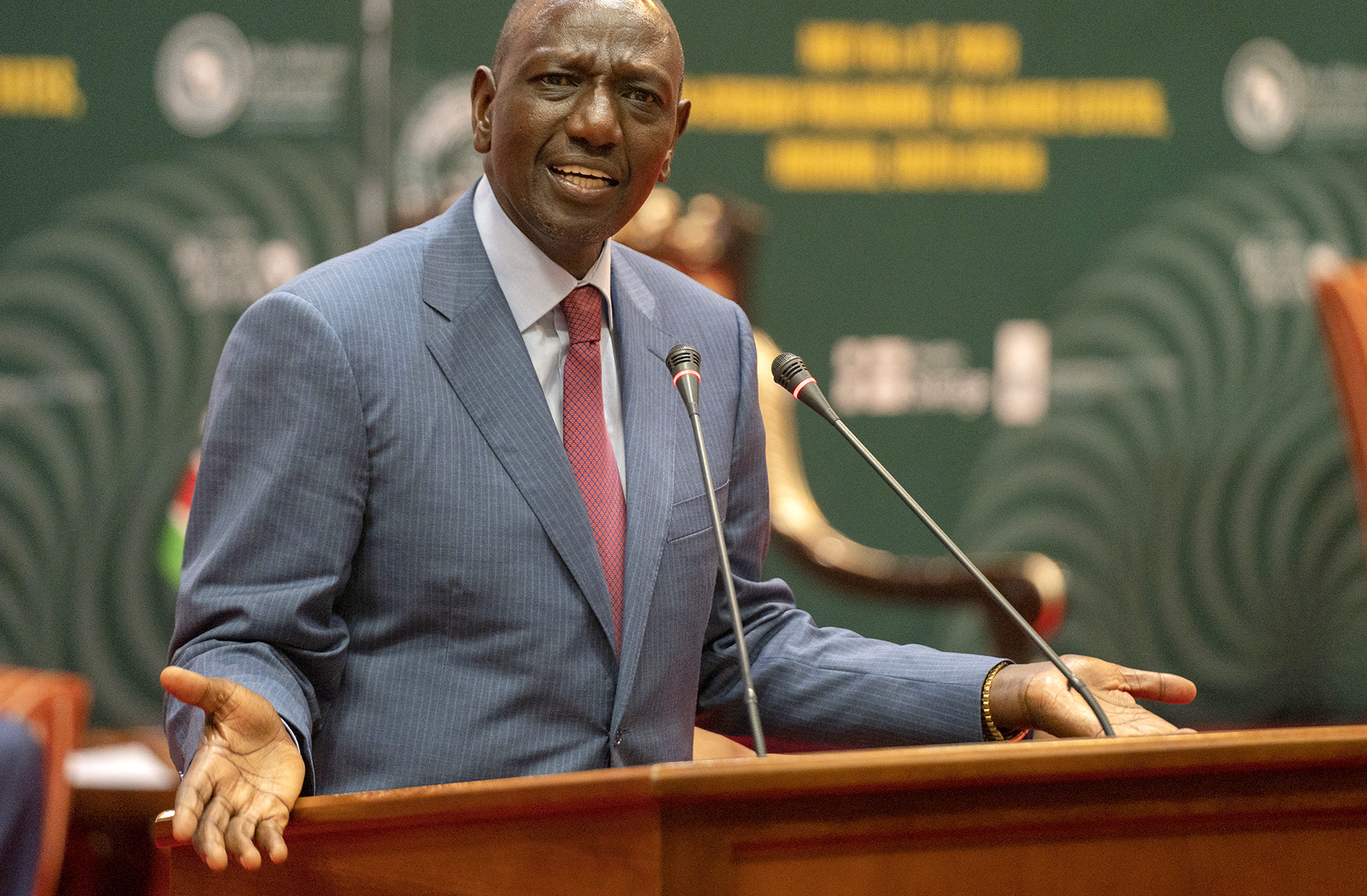
Kenya President William Ruto speaks during a climate change summit at the Pan African Parliament in Midrand, South Africa, on 17 May 2023. (Photo: Ihsaan Haffejee / Anadolu Agency via Getty Images).
Kenya’s economy is expected to expand 4.3% this year and 4.4% in 2027, the World Bank said on Thursday, with this year’s forecast being 0.6 percentage points lower than its November prediction due to the impact of the U.S.-Israel on Iran.
Kenya’s economy grew 4.6% in 2024. The country’s finance ministry expects growth of 5.0% this year and 5.2% in 2027.
“In the short term, higher global energy prices and increased uncertainty are expected to raise production costs, weaken private investment growth and weigh on household purchasing power through higher commodity prices and moderating remittance inflows,” the bank said in its latest economic update.
The bank said adequate agricultural harvests, easing monetary policy, a stable exchange rate and recovering credit to the private sector would help cushion the economy.
East Africa’s biggest economy has been expanding steadily by around 5% a year, but there are near-term risks including the fallout from the war in Iran, which has led to a surge in petroleum prices and disrupted shipping around the Strait of Hormuz.
The World Bank said the after-effects of the Middle East conflict, leading to higher fuel prices and those of other goods dependent on fuel, could push the poverty rate up by 2 to 4.5 percentage points, which could put another 1 million to 2.4 million Kenyans below the $3 per person per day poverty line.
The bank said other downside risks to Kenya’s economic performance included climate-related shocks and political uncertainty related to the electoral cycle.
Kenya is due to hold general elections in August 2027.
“Approaching elections may delay private investment decisions, increase policy uncertainty and slow implementation of structural reforms,” the World Bank said.
“At the same time, pre-election spending pressures could weaken fiscal discipline and delay planned consolidation efforts, while heightened political tensions could adversely affect business and consumer confidence.”
In late June, the World Bank approved a $750 million budget-support loan for Kenya and a $500 million sustainability-linked facility that will cut the country’s reliance on expensive domestic debt and bolster economic reforms.
© 2026 Reuters.