
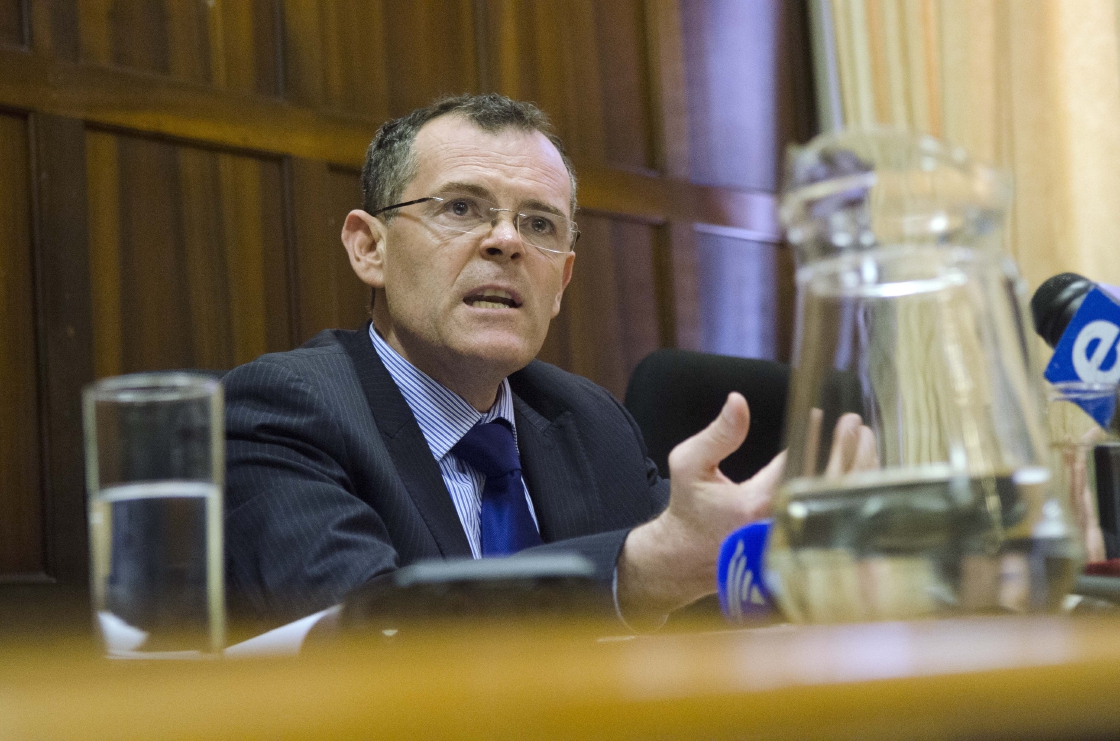
By Lehlohonolo Lehana.
Environment Minister Dr Dion George has welcomed the outcomes of the UN Framework Convention on Climate Change’s (UNFCCC’s) twenty-ninth Conference of the Parties (COP29) that concluded on November 24 in Baku, Azerbaijan.
The parties adopted the Baku Climate Unity Pact consisting of a New Collective Quantified Goal (NCQG) on climate finance, Global Goal on Adaptation and Sharm el-Sheikh Mitigation Ambition and Implementation Work Programme, as well as the key decisions on implementing the Paris Agreement’s Article 6.2 and 6.4.
The adoption of Article 6.2 and 6.4 decision on carbon markets will allow South Africa and other developing economy countries to initiate new carbon market projects, which will facilitate investments in green technologies and economic opportunities, he highlighted.
For South Africa, the decisions that were adopted are a win. While we understand the frustration expressed by some parties, the outcomes are a significant step in the right direction, as it is more than what we had going into the negotiations and we can now build on this, especially given that South Africa will be the next President of the G20,” he said.
Developed economy countries committed to mobilising at least $300-billion a year by 2035 for developing economy countries for climate action.
The agreement also provided signals to private-sector and multilateral development banks to scale up financing to developing economy countries to $1.3-trillion a year by 2035, noted George.
The [new finance goal] decision emphasises the importance of reforming the multilateral financial architecture to make it fit for purpose to address the climate crisis.
It also calls for scaled-up support for climate action from multilateral financial institutions through grant-based and concessional financing,” said Department of Forestry, Fisheries and the Environment (DFFE) chief negotiator and climate change and air quality management deputy director-general Maesela Kekana.
The decision also emphasised the need to reduce barriers and address disenablers faced by developing economy countries, such as limited fiscal space, high levels of debts and high cost of capital, to prevent such barriers and disenablers from becoming conditionalities for access by developing economy countries to climate finance, he added.
On adaptation, parties are on track to finalise the work on the adaptation indicators to track progress in the implementation of the global goal on adaptation, at COP30 in Brazil in 2025.
“The conference also welcomed the rapid institutionalisation of the Loss and Damage Fund. Under the leadership of South Africa and France, the Fund is expected to disburse funds to climate-vulnerable communities in mid-2025,” George said.
Additionally, he welcomed the decision on the Mitigation Work Programme, which will provide further opportunities to share experiences and match investment needs with investors, he said.