
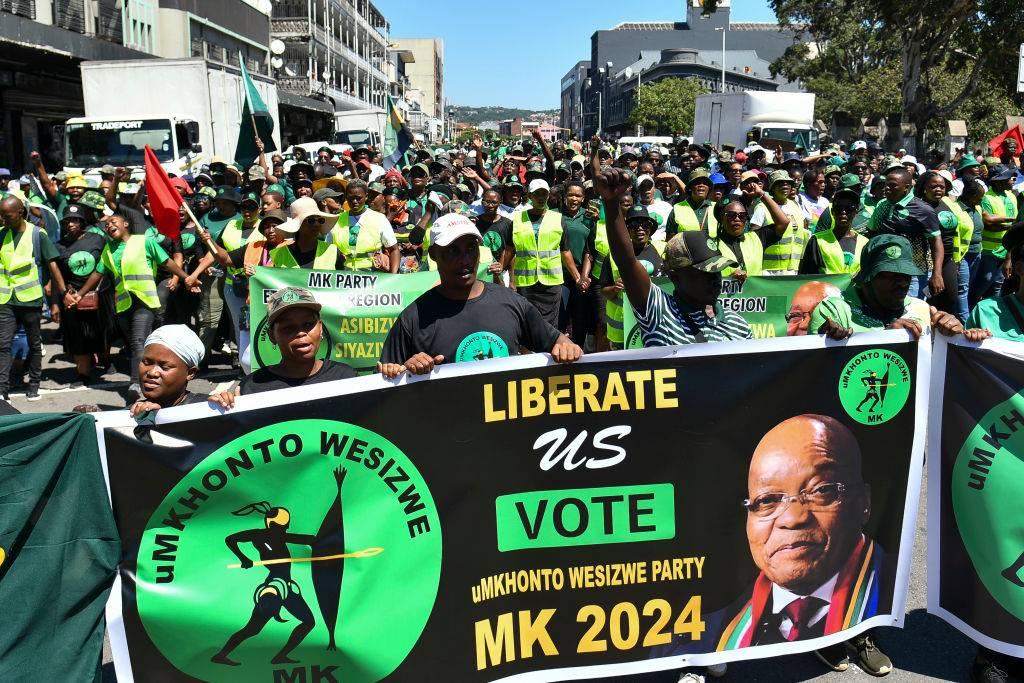
By Lehlohonolo Lehana.
@GettyImages.
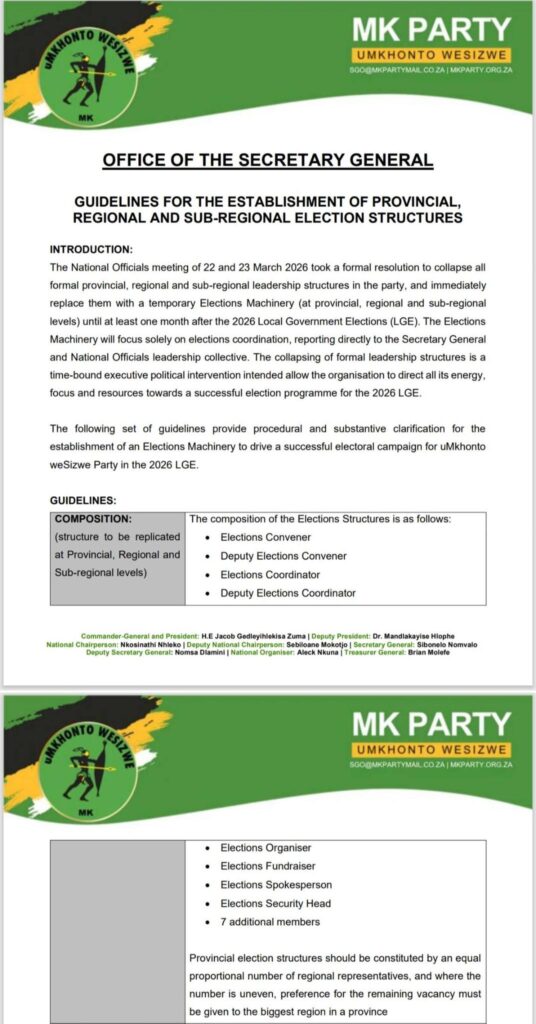
Umkhonto weSizwe (MK Party) has dismantled leadership structures in Gauteng, Western Cape, and Northern Cape, with KwaZulu-Natal (KZN) and Mpumalanga provincial structures, removing figures like Willies Mchunu and Busisiwe Mkhwebane.
The letter in our possession shows this move aligns with the party’s election strategy.
According to a letter from MK Party secretary-general Sibonelo Nomvalo to the party’s provincial and regional leaders, decisions were made by party president Jacob Zuma and other national officials during a meeting held from 22 to 23 March 2026 in Durban.
Mchunu was heading KwaZulu-Natal (KZN) to advance the party’s programmes as it heads to the local government elections in 2026.
Mchunu left the ANC early this month after he criticised the party for not involving the MK party in the government of national unity (GNU) constituted after the 29 May election.
He referenced the formation of the national unity government and the KZN government of provincial unity as key issues influencing his decision.
While Mkhwebane was serving as the Mpumalanga convener, after She dumped the Economic Freedom Fighters (EFF).
She was removed from office as Public Protector in 2023 by President Cyril Ramaphosa on grounds of misconduct and incompetence.
Mkhwebane replaced Mary Phadi in 2024 but her appointment was overturned when the courts ruled Phadi’s suspension was unconstitutional.
Former Secretary-General Bongani Mncwango meanwhile has defected to the Inkatha Freedom Party (IFP), and Nomvalo was appointed as his successor, the eighth person in this role.
The party faces challenges with members calling for the disbandment of the national leadership, and reports of mass resignations.
The newly formed MK party came third in last year’s elections – a major factor in the governing ANC losing its majority for the first time since democratic elections were introduced in 1994.
The party also emerged as the largest party in KwaZulu-Natal, winning 37 out of 80 seats in the provincial legislature. They were followed by the Inkatha Freedom Party (IFP) with 15 seats, the African National Congress (ANC) with 14, the Democratic Alliance (DA) with 11, the Economic Freedom Fighters (EFF) with two, and the National Freedom Party (NFP) with one.
Although the MK party had hoped to secure a clear majority with more than 50% of the vote, disputes over the election results delayed coalition talks. This opened the door for the IFP, ANC, DA and NFP to form a coalition government with a total of 41 seats, leaving the MK out of power.
It remains to be seen how all this will play out, will South Africans will be mindful of all these shenanigans as they weigh up which party they should give their coveted votes to.