
By Lehlohonolo Lehana.
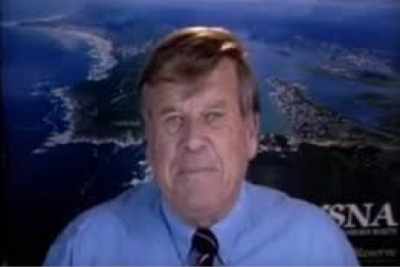
A South African science and mathematics teacher, popularly known on TV programme called the ‘Learning Channel’ on SABC 2, William Smith, has died at the age of 85, his family confirmed.
Smith died at home in Perth, Australia, surrounded by family.
“William was recently diagnosed with advanced, incurable cancer,” his daughter Jessica Smith-Penfold, said in a statement.
“He faced his final moments with grace, expressing contentment in his accomplishments and the impact he made in the fields of education and conservation.
“His legacy will endure through the lives he touched and the difference he made. William will be profoundly missed by his family, friends, and all who knew him.”
In 2019, Smith was awarded a National Order award for his excellent contribution to teaching and demystifying mathematics and science.
Smith made mathematics and science accessible to all pupils for free through television in a groundbreaking 1990s TV programme called the ‘Learning Channel’ on SABC 2.
He started the programme in the 1990s, so he could give disadvantaged pupils access to free extra classes, convincing the public broadcaster to air his offering.
In 2019, Smith received The Order of the Baobab from President Cyril Ramaphosa in recognition of his contribution to maths and science.
Smith had retired and moved to Australia, where he lived with his family.
Smith matriculated at Union High School in Graaff-Reinet in the Eastern Cape.
According to Presidency, Smith obtained a BSc degree in physics and chemistry from Rhodes University, followed by an honours degree (Cum Laude) in chemistry from the same institution. He further obtained a master’s degree from the then-University of Natal (now University of KwaZulu-Natal) in only seven months.
Smith is survived by his wife, Jenny, his three daughters and five grandchildren.
Tributes have been pouring in for Smith
African National Congress (ANC) secretary general Fikile Mbalula said Smith’s impact on education was felt across generations.
“His dedication to making complex subjects accessible and engaging to countless students has left an indelible mark on the fabric of our educational system, “Mbalula said.
“William’s legacy is not just in the knowledge he imparted but in the passion for learning he inspired in so many.”
The Democratic Alliance said Smith transformed maths and science learning for countless students.
“A lifetime of pioneering work in education, especially as South Africa’s most treasured television teacher, who transformed maths and science learning for countless students,” the party said.
The Inkatha Freedom Party (IFP) said Smith’s dedication and passion inspired students.
“His legacy will endure through the countless lives he touched,” the party said.
President Cyril Ramaphosa has expressed his sadness at the passing of Esteemed Member of the National Order of the Baobab, Smith.
Ramaphosa said: “William Smith was an education and cultural icon to our nation.
“The outpouring of affection the nation directed at him when he received his National Order demonstrated, years after his retirement, the place he held in people’s hearts.
“He was synonymous with The Heads of Knysna which was the backdrop to his television presentation decades before we could think of him as the first teacher to teach “remotely”.
“He demystified maths and science for his audience which extended beyond learners to their parents and anyone who wished to revisit these subjects or learn more, long after they had left school.
“William Smith’s passion for his curriculum and for the success of those he taught in classrooms, at matric camps and on TV benefited millions of young South Africans even before our transition to democracy and the dawn of a new dispensation of equal education.
His father was Professor JLB Smith, who identified the coelacanth, and his mother, Margaret Smith, ichthyologist and accomplished fish illustrator.