
By Lehlohonolo Lehana.
Gauteng premier Panyaza Lesufi has set a deadline of January 1 2024 for the comprehensive resolution of the myriad energy-related issues plaguing the province.
Load shedding, infrastructure maintenance and ongoing sabotage, Eskom debt, and the transition to green energy were some of the issues the premier listed as key challenges to be tackled in order to overcome the energy emergency.
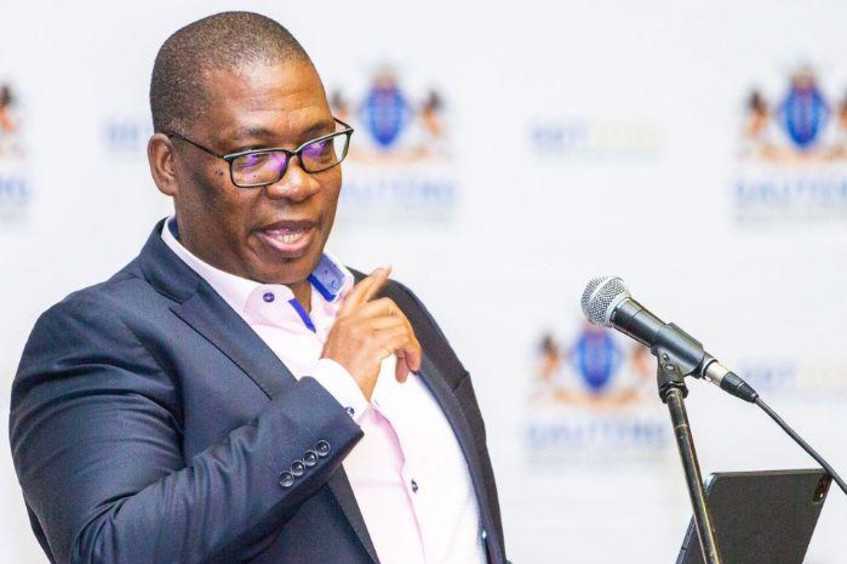
Lesufi spoke at the province’s energy indaba in Midrand on Thursday, where various stakeholders in the energy sector gathered to discuss lasting solutions to the challenge.
The indaba has been tasked with the responsibility to produce ideas on how Gauteng can insulate itself from the ongoing energy crisis in the country.
Lesufi asked Eskom to consider scrapping municipal debt for those who make the requisite application, just as Treasury scrapped troubled utility’s own debt.
It is concerning, he said, that Gauteng municipality owe Eskom a combined R13-billion with the notorious Emfuleni municipality leading the charge.
He commended the Midvaal municipality, the only one in the province that does not owe Eskom a cent, but is instead owed by the power utility.
“If we can’t fix our municipalities, we can’t fix the problem of electricity in Gauteng,” Lesufi told delegates.
“By June 30, all our municipalities were owing Eskom R13-billion. The biggest culprit is Emfuleni with almost half, R7-billion alone, followed by Tshwane owing Eskom R3.5-billion. Ekurhuleni is next, you owe R2.9-billion. At least Joburg owes R1.7-billion and Rand West owes R1-billion.
The premier said only Emfuleni, Rand West and Mogale City took advantage of the window opened by Treasury for municipalities that owe Eskom to demonstrate how they plan to manage their accounts better in the future for their debts to be wiped off.
The municipalities had to do so by the end of May.
He repeated his call for the establishment of an agency within Cooperative Governance and Traditional Affairs (Cogta) to manage debt conflicts between state institutions.
Lesufi added that it is time all and sundry accept that moving towards prepaid meter system is the future to end the crippling crisis that is the municipal electricity billing system.
R1.2 billion has been allocated towards resolving Gauteng’s energy crisis, while the province aims to add 8000 megawatts of electricity to the grid through the Merafong solar plant.
Lesufi said that a handful of entities, including commercial banks and other financial institutions, have already made mention of future partnerships.
Gauteng is not alone in its shift toward being more energy independent; the Western Cape, during its State of the Province Address, also outlined various initiatives to tackle the energy crisis, including R1.1 billion in investment and a massive push for backup generator procurement.