
By Lehlohonolo Lehana.
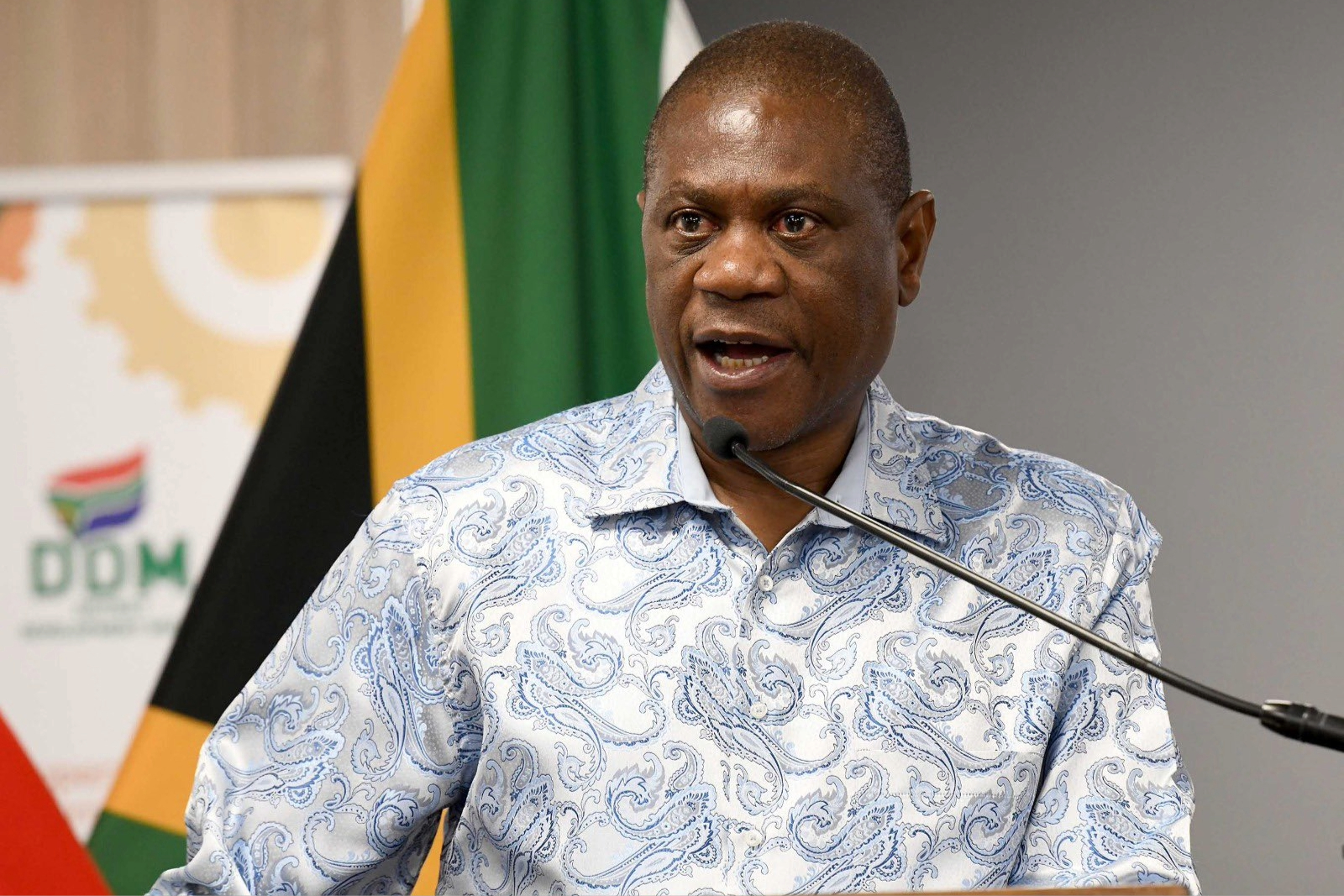
Deputy President Paul Mashatile says the fight against gender-based violence and femicide persists in South Africa and requires a full year of action, not just 16 days.
Mashatile gave the keynote speech at the opening of the 16 Days of Activism for No Violence Against Women and Children campaign in Rustenburg.
He was joined by the Minister in the Presidency for Women, Youth and Persons with Disabilities, Sindisiwe Chikunga, supported by the Department of Social Development, the North West Provincial Government, the National House of Traditional and Khoi-San Leaders and multilateral bodies.
This year’s 16-days campaign is being held under the theme: “30 Years of Advancing Collective Action to End Violence Against Women and Children”, which builds on previous efforts to tackle the root causes of GBVF, fostering a culture of positive masculinity, gender equity, and economic empowerment for women and children.
The sub-theme for the campaign is “Harnessing technology and innovation to combat Gender-Based Violence and accelerate a gender inclusive digital economy”.
The campaign runs between November 25 and December 10, and this year’s theme is ’30 Years of Advancing Collective Action to End Violence Against Women and Children’.
Mashatile pointed to the recent statistics, released by the Human Sciences Research Council (HSRC) and Statistics South Africa (Stats SA), which show that one in three women aged 16 and older has experienced physical violence, while one in five has been sexually abused.
Further, the HSRC’s first-ever GBV survey showed that more than 33% of South African women have experienced physical violence in their lifetime, while 9.8% have faced sexual violence. About 7.3-million women have experienced physical abuse, while 2.1-million have experienced sexual violations.
“These data present a bleak picture of the scope of GBV in our society. This catastrophe impacts millions of South Africans while undermining the pillars of our democracy and economic prosperity. This is not the South Africa we want!” he said.
“We will collaborate towards a plan that prioritises the needs of the most vulnerable and guarantees the inclusion of everyone in our joint endeavour to eradicate violence,” he said.
Mashatile said as part of cabinet’s continuous commitment to combating the scourge, it approved dealing with GBV and femicide as if it were a pandemic.
He also spoke of using technology in the fight against GBV.
“We must have zero tolerance toward gendered violence in online and digital spaces. The rise of the digital economy and the increasing use of technology in our daily lives have introduced new avenues for perpetrators to harm, exploit, and abuse women and children. From cyberbullying and online harassment to the dangers posed by social media platforms, digital spaces can become breeding grounds for violence,” Mashatile said.
He added that mobile apps and AI should also be harnessed in the pushback against GBV and femicide.
Mashatile called on government, traditional leaders, faith-based communities, civil society, business, development partners, communities, and individuals to commit to the fight against GBV, which he said would determine the future of South Africa.
“As we mark these 16 Days of Activism, let us renew our resolve and stand united in this fight for the sake of our mothers, daughters, sisters, and all women in our land. To all women who currently find themselves victims of GBV, we want you to know that we are here for you, we love you, and we encourage you to speak out, and step out. As the government, we will do all it takes to protect you and ensure you have a prosperous future,” he ended.
Chikunga, has highlighted the need for a multifaceted approach that addresses the root causes of gender-based violence and femicide (GBVF), while providing support services for survivors and holding perpetrators accountable.
She said the multifaceted approach includes legal reforms, education programs, economic empowerment initiatives, and community-based interventions.
She said through the 16 Days of Activism campaign, government aimed to rally all of society to reflect, prevent and put an end to the historic and ongoing channels through which violence against women is being reproduced at a systemic, structural, household and individual level.
“We are, therefore, deeply honoured to be among dedicated thought leaders, activists, researchers, and communities of practice who are tirelessly working to address these pressing and pervasive injustices facing women from all walks of life,” Chikunga said.
Meanwhile Human Settlements Minister Mmamoloko Kubayi, has pledged to hand over 16 houses to the victims of gender-based violence and femicide (GBVF) throughout the 16-day period.
Kubayi said the initiative underscores the department’s commitment to providing tangible support to victims and survivors of GBVF.
“By providing safe housing, the goal is to reduce survivors’ reliance on their abusive partners, promoting independence and dignity. It also aims to accelerate collective action and whole-of-society accountability to end violence against women and children.
“Empowering women economically is also crucial in the fight against GBVF, and a safe and secure home serves as a foundation for individuals to build their lives and become productive members of society,” Kubayi said.
According to the Minister, when women are economically resilient, they gain the freedom to leave harmful situations, take control of their lives, and create a better future for themselves and their children.
Kubayi said during the campaign, the department aims to raise awareness and highlight practical efforts to reduce the vulnerability of women affected by GBVF by providing safe shelter.