
By Lehlohonolo Lehana.
The University of South Africa (Unisa) and the Thabo Mbeki Foundation, Cape Town hosted the 16th Annual Thabo Mbeki Africa Day Lecture in Cape Town under the theme “Rebuilding African unity in the age of fragmentation.”
Since its inception in 2010, this annual lecture—held on 25 May—has become one of the continent’s leading platforms for intellectual engagement and policy reflection.
It convenes political leaders, academics, government officials, diplomats, business figures, and civil society to reflect on Africa’s trajectory and the advancement of its development agenda.
This year’s four-day programme opened with a high-level business breakfast organised by TMF with AUDA-NEPAD marking 20 years of the African Union Development Agency (AUDA-NEPAD), a flagship initiative championed by former president Thabo Mbeki. The gathering reflected on progress in advancing regional integration and economic transformation, while reinforcing commitments to Africa’s future. Deputy President Paul Mashatile delivered the keynote address.
University of South Africa (UNISA) Vice-Chancellor Professor Puleng LenkaBula set the scene on rebuilding African unity in the age of fragmentation.
LenkaBula said the lecture remained an important platform for critical engagement on issues affecting Africa and the Global South.
A message was delivered on behalf of the African Union Commission, paying tribute to Mbeki’s contribution to the struggle for African unity and the advancement of the African Renaissance.
The commission described Mbeki as a leader who helped transform the vision of continental unity into practical action and said his call for Africa to build capable institutions, invest in its people, and engage the world with confidence remained relevant today.
The message noted that Africa’s population was expected to exceed 1.5 billion people and that by 2050, one in every four people globally would be African, making unity and collective action increasingly important.
Former Governor of Ekiti State in Nigeria, Dr Kayode Fayemi delivered a keynote address, saying Africa could no longer afford to approach global affairs from a position of dependency.
“Africa must increasingly move from aid diplomacy to interest-based diplomacy,” he said. “We must engage globally not merely as recipients of external assistance, but as strategic actors capable of shaping outcomes.”
Fayemi argued that sovereignty depended on capable institutions and effective leadership, warning that many African states remained vulnerable because critical sectors of governance and development were heavily dependent on external actors. “Sovereignty outsourced is sovereignty diminished.”
He said democratic systems across the continent were also under strain as citizens became increasingly frustrated by poverty, unemployment, corruption, exclusion, and poor service delivery.
While acknowledging that xenophobia often emerged from unemployment, inequality, poor governance, and economic hardship, he said those realities could never justify violence or exclusion.
“If Africans cannot coexist peacefully with one another, then the dream of continental integration will remain fundamentally weakened,” Fayemi said.
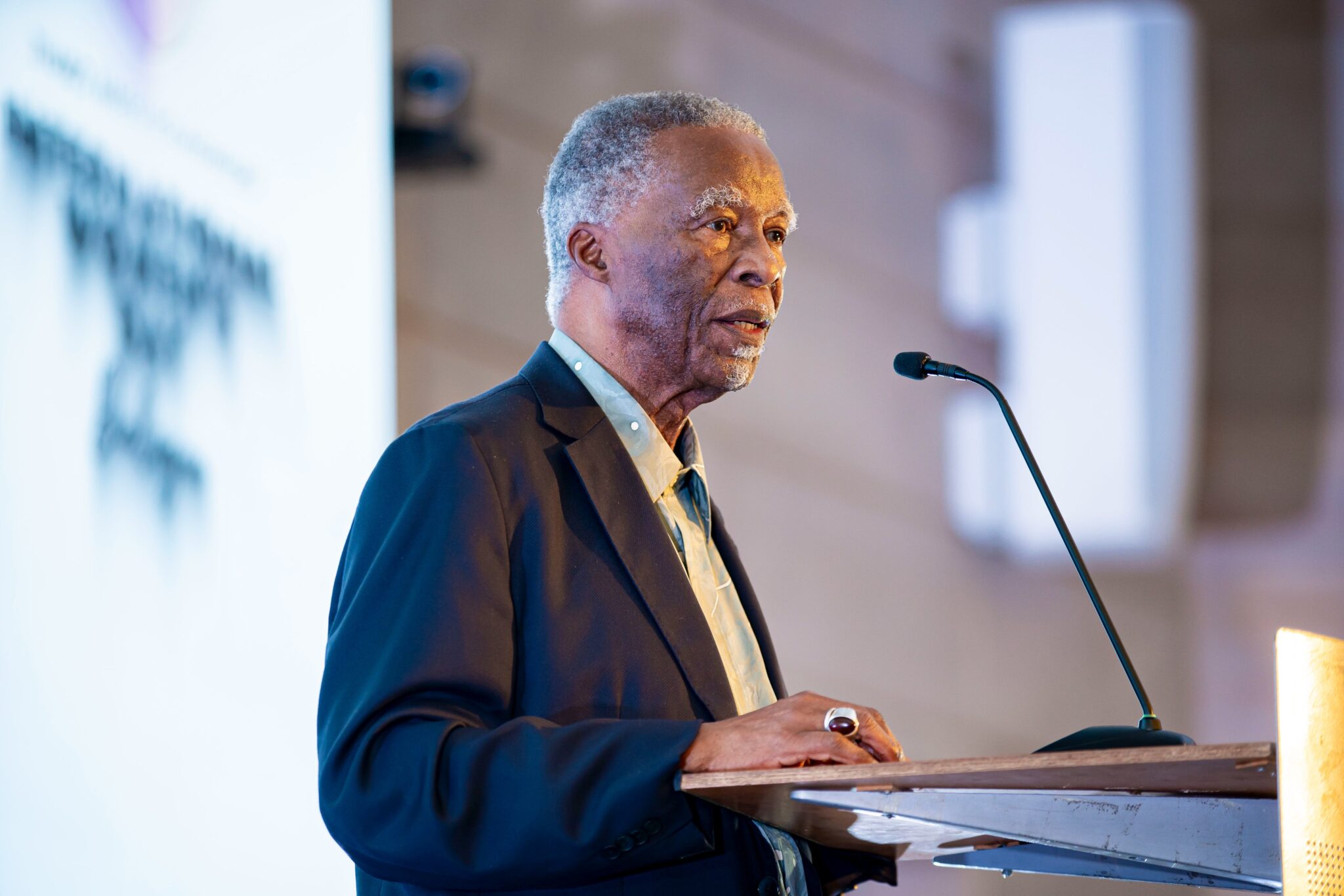
Mbeki fielded questions from delegates during an extended 90-minute discussion alongside the Vice President of King’s College, Prof Fumni Olanisakin, covering issues ranging from governance and economic development to African unity, democracy, and the continent’s role in a rapidly changing world.
Mbeki reflected on efforts to advance African development and said debates around governance, institutions, and economic policy must ultimately be measured by whether they improve the lives of ordinary people.
“One of the major, major, major challenges on the continent is the eradication of poverty. In the end, it’s about changing the lives of our people radically,” Mbeki said.
The former president said addressing it requires true political commitment rather than a reliance solely on external investment.
He insisted that Africa contains the resources required for its own transformation and that policies must be re-centered on the people and agency of the continent.