
By Lehlohonolo Lehana.
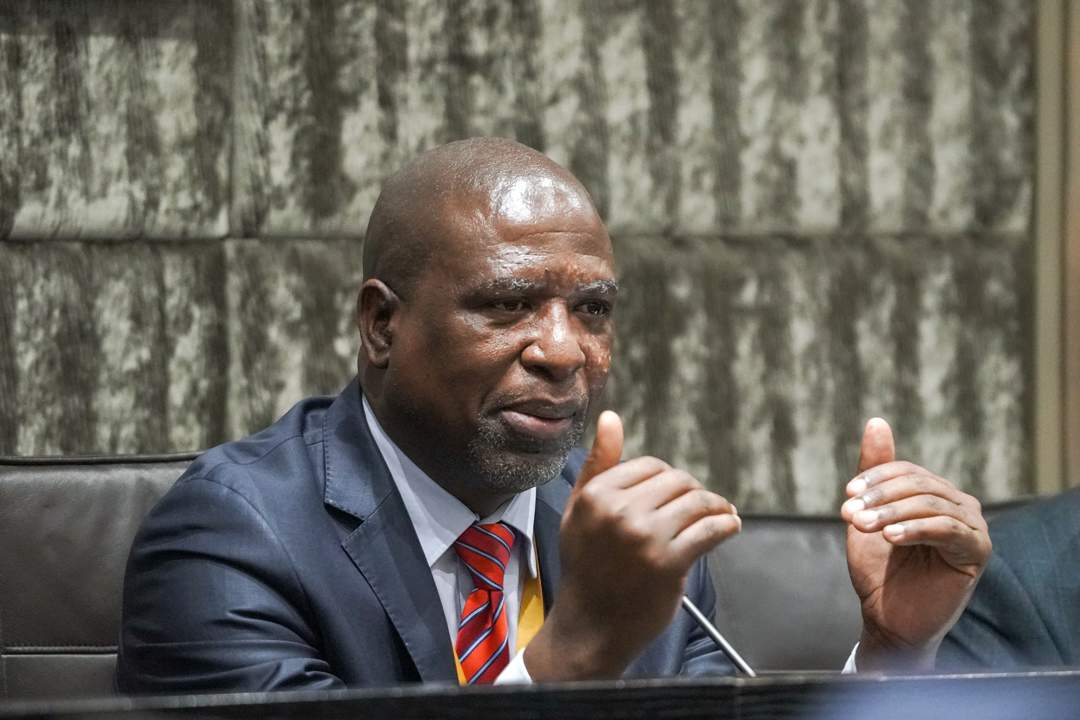
Parliament’s ad hoc committee probing allegations of police corruption made by KwaZulu-Natal police commissioner, Nhlanhla Mkhwanazi, reconvened on Monday to adopt its terms of reference.
The committee was meant to adopt and finalise the terms of reference last week, but MPs failed to agree on the final draft and deferred the matter to today.
According to the draft terms of reference, the scope of the parliamentary inquiry will zoom in on interference within the police, including executive oversight and alleged operational interference by suspended Police Minister Senzo Mchunu.
Monday’s meeting stretched on for more than seven hours and involved a microscopic focus on various submissions from different political parties – and the use of specific words.
At times, various emotions were expressed during the laborious proceedings, with MPs sometimes agreeing, disagreeing, and also expressing anger and frustration.
Among the various issues the ad hoc committee thrashed out earlier in the day was the witnesses that would be called.
The ANC submitted that KwaZulu-Natal Police Commissioner Lieutenant General Nhlanhla Mkhwanazi should be first and that his evidence be used to determine the approach in terms of other witnesses.
This is because the ad hoc committee is set to largely focus on what Mkhwanazi previously alleged.
He had made several accusations, including that a drug cartel based in Gauteng was controllinga high-level criminal syndicate that extended into the SAPS, the Police Ministry, Parliament, official prison structures, the judiciary and other law-enforcing authorities.
During its meeting on Monday, ActionSA’s Dereleen James said it was acceptable for Mkhwanazi to be called as the first witness.
However, she pointed out: “What Mkhwanazi said and mentioned to South Africans is not new.”
James explained that South Africans knew about corruption in the SAPS.
Another of the many issues focused on when fine-tuning and trying to finalise the ad hoc committee’s terms of reference on Monday related to the safety of witnesses.
Most MPs agreed that the submission about witnesses and whistleblowers was important and needed to be fine-tuned.
The DA also submitted that whistleblower confidentiality needed to be kept in mind.
Other issues in this arena included who would ultimately ensure witnesses were kept and safe, assistance for some those making statements, and the safeguarding of documents.
The DA, focusing on another arena, submitted that aspects around the police’s Political Killings Task Team, which was set up in 2018, needed to be assessed.
These aspects included its effectiveness.
Mkhwanazi, during his press conference last month, alleged the task team had been disbanded to shield politically connected suspects from prosecution.
In terms of the ad hoc committee’s evidence leader, the ANC proposed using the legal counsel services “of the National Assembly in an advisory capacity to assist the committee to carry out its work”.
Issues including independence and impartiality then arose.
The EFF’s Leigh-Ann Mathys said a “seasoned evidence leader with full impartiality” was needed.
ActionSA rejected the ANC’s proposal.
The ad hoc committee’s chair, the ANC’s Molapi Lekganyane, said draft specifications needed to be determined with regard to a legal team. As a result the terms of reference remain in draft form pending formal adoption by the committee.