
By Lehlohonolo Lehana.
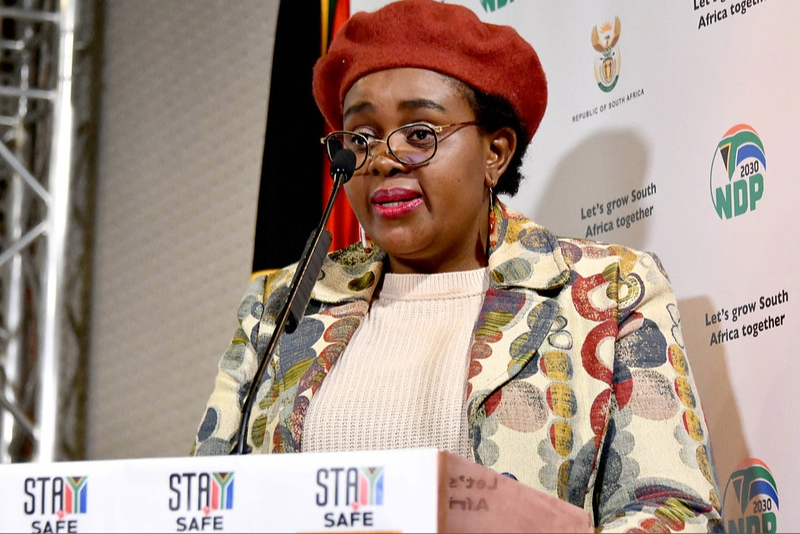
Advocate Xolisile Khanyile, an experienced lawyer with over 23 years in the NPA, was the first candidate in the National Director of Public Prosecutions (NDPP) interviews for new head on Thursday.
Khanyile is also the former Director of the Financial Intelligence Centre (FIC), which deals with combating financial crimes such as money laundering and terrorist financing.
She was grilled over the discrepancies in her CV. While she admitted to the inaccuracies. She wanted the panel to focus more on the details she gave in her interview. But the chair, Minister of Justice Mamoloko Kubayi was concerned about the inaccuracies.
Khanyile was followed by the former Investigating Directorate (ID) head Hermione Cronje, a fifth candidate on day two of the interview process in Pretoria to select a successor for current NDPP Shamila Batohi, who will retire in January 2026.
She officially left the ID — now known as the Investigating Directorate Against Corruption (Idac), a permanent NPA unit — in March 2022.
Cronje’s history with the NPA goes back decades, with her working under former NDPP Bulelani Ngcuka, helping establish the Asset Forfeiture Unit (AFU), and eventually serving as the AFU’s Western Cape head.
During her interview, Cronje recalled being involved in the NPA’s creation in 1998 after Ngcuka recruited her while they were both working in Parliament.
“What it gave me was an incredible vantage point,” she said. Even then, she envisioned a future as NDPP.
“I enjoyed very much working with Bulelani, but I also thought if I am going to national director one day, I’m going to have to get some legal experience.”
According to Cronje, the NPA entered a turbulent period around 2010, worsened by the dissolution of the Scorpions.
She claimed that state capture within the NPA began that same year, driven by questionable appointments.
She said she tried to confront the dysfunction within the NPA, but was instead accused of being negative.
“So I was in an organisation where there was a narrative that everything is fine now in the NPA since the capturers left.”
She admitted she did not have direct prosecutorial experience in her career, but argued that mentorship at the bar council and private practice gave her trial exposure in the high court.
Former National Director of Public Prosecutions (NDPP) Menzi Simelane, was the final candidate to be interviewed.
Simelane was removed as NDPP after Constitutional Court (ConCourt) invalidated his appointment in October 2012.
He had been appointed in December 2009 by then-president Jacob Zuma.
Freedom Under Law (FUL) has since formally objected to his current nomination,while Johannesburg Society of Advocates (JSA) lodged a court bid to have him struck from the roll of legal practitioners.
During the interview, Simelane detailed his career history, including his tenure as director-general of the Department of Justice from 2005 to 2009.
Simelane has rejected claims that he was ever deemed unfit to occupy the role he is vying for again.
He indicated that he was involved in the processes that led to the establishment of the ConCourt.
“Transformation of the legal professions – we did a lot of that. For my sins, I pushed a lot of things I think are following me to this day,” Simelane remarked.
He said one of those controversial efforts was his attempt to abolish traditional bar structures, arguing that the country did not need “these ritualistic, traditional things” common in court settings.
His push for change, Simelane admitted, was not met well.
He emphasised that as director-general, he oversaw the NPA administratively — excluding decisions about prosecutions.
Simelane further claimed that he had no role in the now-disbanded Scorpions, which operated independently under its own legislation.
Simelane was also questioned about the JSA’s application filed with the Gauteng High Court in Johannesburg seeking to have him removed from the roll of advocates.
The application relies in part on the Ginwala inquiry, held in 2007 to assess former NDPP Vusi Pikoli’s fitness for office.
In her report, inquiry chairperson Frene Ginwala wrote that Simelane’s allegations against Pikoli were dishonest.
He was later found guilty of professional misconduct in 2017 after a disciplinary hearing.
On Thursday, Simelane insisted the Ginwala report made only “comments”, not formal findings, and that he was, therefore, unable to challenge it in court.
He said the ConCourt erred in treating those comments as findings. He urged the panel to take note of this.
“The Constitutional Court judgment does not say Simelane is not fit and proper because that’s factual, “Simelane said.
Simelane told the panel that since he has left government and is practicing as an advocate in private practice, he has not done much criminal work. He mainly does administration and constitutional law.
Deputy Director of Public Prosecutions in the Western Cape, advocate Adrian Mopp and Director of Public Prosecutions in the Western Cape, advocate Nicolette Bell are among six candidates competing for the top post at the National Prosecuting Authority (NPA), and were interviewed along with Investigating Directorate Against Corruption (Idac) head Andrea Johnson on Wednesday.