
By Lehlohonolo Lehana.
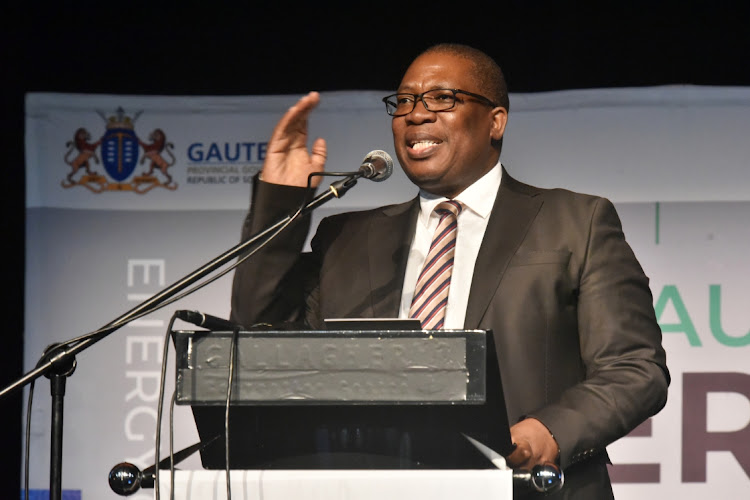
Gauteng Premier Panyaza Lesufi has outlined plans to get back the province on track during his state of the national address (SOPA) Monday night.
Lesufi delivered his fourth State of the Province Address (SOPA) in Tshwane.
The province, which contributes about 40% to national GDP, has an expanded unemployment rate of 39.9%. Its GDP grew by 1.2% over the past year, compared to the national rate of 0.4%.
In 2024, Lesufi made bold promises to tackle unemployment by creating thousands of job opportunities. The promise came after June 2023, when he launched the Nasi iSpani (Here is a Job) campaign, offering 8,000 jobs within the provincial government.
The DA’s Solly Msimanga said Gauteng’s economy had remained stagnant under Lesufi’s leadership, with a notable decline in investor confidence. The DA also raised an issue with the unemployment rate that has risen to 34.4% in the fourth quarter, up from 34.0% in the previous quarter, according to the Quarterly Labour Force Survey.
Build One South Africa’s (Bosa’s) Ayanda Allie echoed similar sentiments, anticipating that Lesufi would attempt to paint a picture of progress and success.
“But what he won’t tell you is the full story — the failures, the mismanagement, and the broken promises that continue to plague Gauteng.”
ActionSA’s Funzi Ngobeni has since called for a comprehensive update on the critical interventions Lesufi previously promised to address Gauteng’s growing crises.
Lesufi said crime prevention remains a priority for the provincial government and intelligence efforts had identified 442 criminal kingpins responsible for crimes such as cash-in-transit heists, kidnappings, hijackings, contract killings, ATM bombings and business robberies.
The province has also moved aggressively against illegal land occupation, demolishing more than 6 600 newly erected shacks and obtaining a standing court order to evict what he termed “mkhukhu mafias”.
On energy security, Lesufi said the provincial government was committed to expanding generation capacity, promoting renewable energy and protecting critical infrastructure.
“We have done what no other province has done by investing over R1.2 billion in energy infrastructure, directly impacting over 43 400 households and reducing the burden of load-shedding,” he said.
Gauteng has partnered with City Power and the Anergi Group’s Kelvin power station near OR Tambo airport, which has already added 180 megawatts to the Johannesburg grid, with plans to expand its capacity to 600MW.
Other projects include an 800MW solar farm in Merafong in the West Rand and the revitalisation of the John Ware power station in the Johannesburg suburb of Fordsburg to generate 200MW.
On job creation, Lesufi announced plans to generate 271150 permanent jobs and 561000 employment opportunities under both public and private initiatives.
Key projects include:
- The second phase of the Tshwane Automotive Special Economic Zone, expected to inject R6.1 billion into the economy and create 4000 construction jobs and 2150 permanent positions.
- A R220 billion infrastructure pipeline set to create 34000 construction jobs and 17000 post-construction.
- The expansion of Lanseria International Airport, which is projected to attract R3 billion in investment and generate 3000 jobs for residents of Diepsloot and surrounding areas.
- The Gautrain expansion, anticipated to create 125000 jobs.
Lesufi revealed plans to upgrade and resurface important roads, such as Garsfontein Road, Malibongwe Drive, and the Golden Highway.
“The Gauteng provincial government, working with municipalities, is committed to addressing potholes on our roads.
“A 72-hour pothole repair commitment and intelligent traffic systems will keep businesses moving and productivity high,” he said.
Lesufi also spoke about the Lesotho Highlands Water Project, which is anticipated to be finished by 2028.
He said that while the province will receive a substantial water supply from this project, significant improvements to municipal infrastructure will be necessary to handle the increased supply.
To monitor, address, and safeguard the province’s water supply, a “war room” has been formed in collaboration with the Ministry of Water and Sanitation and the province’s municipalities.
Watch Live in the video below:
Video Courtesy of GPPG.