
By Lehlohonolo Lehana.
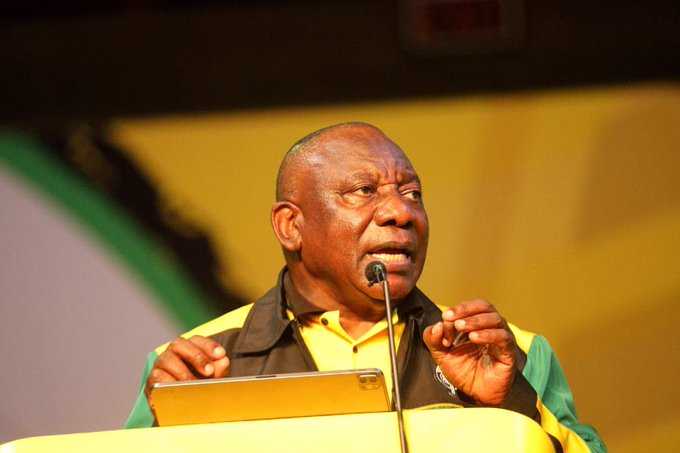
The African National Congress (ANC) held its final rally in Sisa Dukashe Stadium in KuGompo City (Mdantsane) within the Buffalo City Metropolitan Municipality in the Eastern Cape.
Buffalo City, once considered a party stronghold, could go down to the wire this time, with polls putting the party below 50 per cent. Buffalo City is one of two metros that the party currently holds a clear majority in.
President Cyril Ramaphosa urged ANC supporters to turn out in large numbers to vote on Wednesday, November 4, 2026.
Ramaphosa noted that voter apathy severely hurt the party in the May 2024 elections because many supporters stayed home under the false assumption that the ANC had already secured a comfortable win.
He thanked volunteers and candidates who had campaigned across the country, saying their engagements with communities had given the party a clearer understanding of voters’ concerns and expectations.
He said the ANC had listened to workers calling for better employment conditions, women raising concerns about gender-based violence, and young graduates struggling to find jobs.
“We heard very clearly what the aspirations of our people are,” he said.
“We also heard the enthusiasm, as well as the encouragement of our people. We’ve heard them repeating that they want us to work diligently, to advance (their) lives.”
He said the party had also engaged traditional leaders, people with disabilities, residents, business owners and entrepreneurs, who had raised issues affecting their communities and livelihoods.
Ramaphosa singled out youth unemployment, saying young people had told the party that despite obtaining university degrees, many remained without work.
He argued that the ANC’s national footprint and presence in every ward gave it an advantage over other political organisations, which he dismissed as “Mickey Mouse parties”.
The president also defended the party’s councillor selection process, claiming it had allowed communities to choose their preferred representatives rather than leaving the decision to party structures.
He committed to giving councillors 100 days to demonstrate tangible progress on issues affecting their communities.
These promises sound decisive, but the real test will be whether the ANC follows through when accountability threatens internal dynamics. Performance agreements will mean very little if underperforming leaders continue to enjoy protection from party structures or are simply moved from one position to another.
The governing party needs to abandon the culture of political protection and demonstrate that holding office is a responsibility, not an entitlement. Municipal leadership should be determined by competence and the ability to deliver, not loyalty to influential party figures.