
By Lehlohonolo Lehana.
The Border Management Authority (BMA) has unveiled the Easter Operational Plan, which includes the deployment of the advanced security equipment.
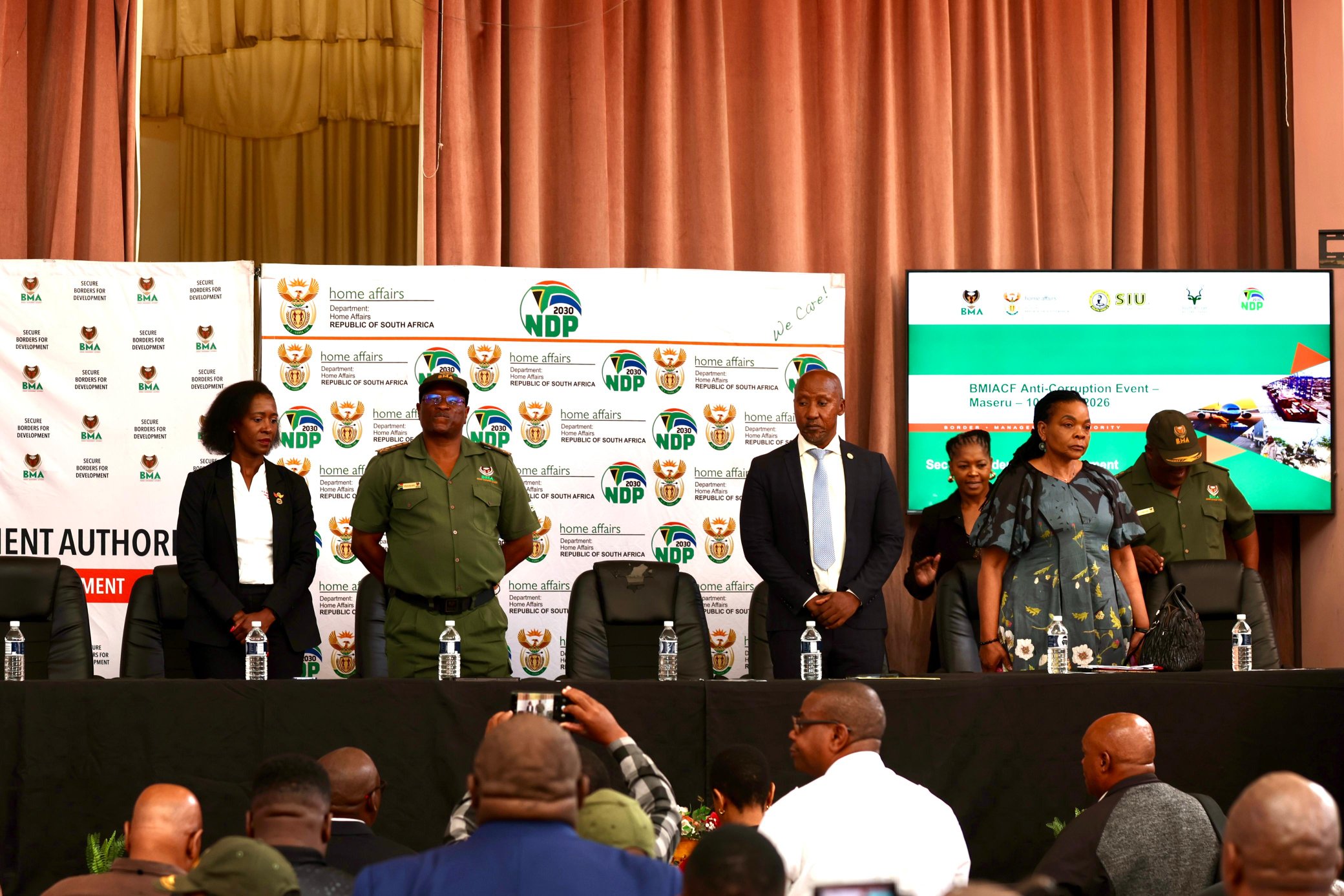
BMA Commissioner Michael Masiapato was briefing the media in Pretoria.
Masiapato says they have introduced highly secured new stamps with unique numbers allocated to specific immigration officers. “This means should any passport be stamped illegally, we are able to link that particular stamp to the official,” he said.
He said that Planning, Execution, Demobilisation and Sustenance are four key phases of the Easter Operational Plan. The planning phase of the plan began at the tail-end of the festive period and will end on Monday, 30 March.
As part of the planning phase, the BMA has held extensive port-based inter-jurisdictional discussions with South Africa’s six neighbouring countries, namely Lesotho, Mozambique, Zimbabwe, Namibia, eSwatini and Botswana.
“These discussions were focused on maintaining streamlined border processes and enhancing coordination of operational modalities. As a result, agreements were reached to adjust operating hours at some of the key ports of entry, which do not operate on a 24-hour basis,” said the Commissioner.
The Groblersbridge port of entry in Botswana will operate on a 24-hour basis on Thursday, 02 April. On Good Friday (03 April) and Saturday, 04 April, the border, which is usually open from 6 am to 10 pm, will extend its hours from 10 pm to midnight. From 05-06 April, the border will be open on a 24-hour basis.
The Kopfontein border will open for 24 hours on 02 and 05 April.
The Kosibay port of entry (Mozambique) will extend its hours from the normal 8 am to 5pm to 6 am to 6pm on 27 March and 10 April.
Eswatini’s Jeppes Reef, whose current hours are 7 am to 8 pm, will open until 10 pm on 02 and 03 April and again on 05 to 06 April. The Mananga port of entry will also extend its hours to 10 pm on 01 and 02 April and 05 to 06 April.
Lesotho’s Sanipass will remain open until 7pm on 01 to 02 April, while the Caledonspoort border will open for 24 hours on 02 April and until midnight on 05 and 06 April. The Van Rooyensgate port of entry will open for 24 hours on 02 April and until midnight on 05 and 06 April.
Monontsa Pass will close at 6pm on 02 and 03 April and again on 05 and 06 April. Qasha’s Nek will close at 10pm on 30-31 March and on 02 April.
Given the existing BMA resource constraints, this phase has focused on integrated stakeholder engagements for the purposes of identifying partnerships that would assist in augmenting our resources. As part of these efforts, the Western Cape Government has allocated approximately 50 officials to support the BMA as Immigration Officers at Cape Town International Airport.
The Gauteng Provincial Government has also maintained its support through the deployment of 80 officers assisting as Immigration Officers at OR Tambo International Airport.
The BMA has also partnered with the Department of Social Development to deploy various social workers to the various ports of entry through their provincial structures as part of efforts to tackle the cross-border social protection challenges, particularly the safeguarding of minors and vulnerable travellers. This includes those without requisite travel documentation and victims of trafficking.
The Department of Tourism has also deployed over 160 tourism safety officers to enhance the seamless flow of traveller movements within the port premises.
He said visa conditions must also be adhered to, and parents travelling with minors must present unabridged birth certificates or authorised affidavits.
“New passport stamps with advanced security features were introduced on August 1, 2025. All travellers are expected to present themselves at designated ports of entry and not use vulnerable border segments,” he added.
Masiapato said ICT teams from the BMA, SARS and DHA will support the smooth operation of movement control systems.
High-risk areas will be monitored through coordinated law enforcement operations, intelligence-led targeting, and increased inspection of persons, vehicles and goods.