
By Lehlohonolo Lehana.
Basic Education Minister Siviwe Gwarube has declared South Africa’s Class of 2026 ready for the National Senior Certificate (NSC) examinations.
Gwarube briefed media on the state of readiness for the 2026 NSC matric examinations.
The final exams officially start on Tuesday, 13 October 2026.
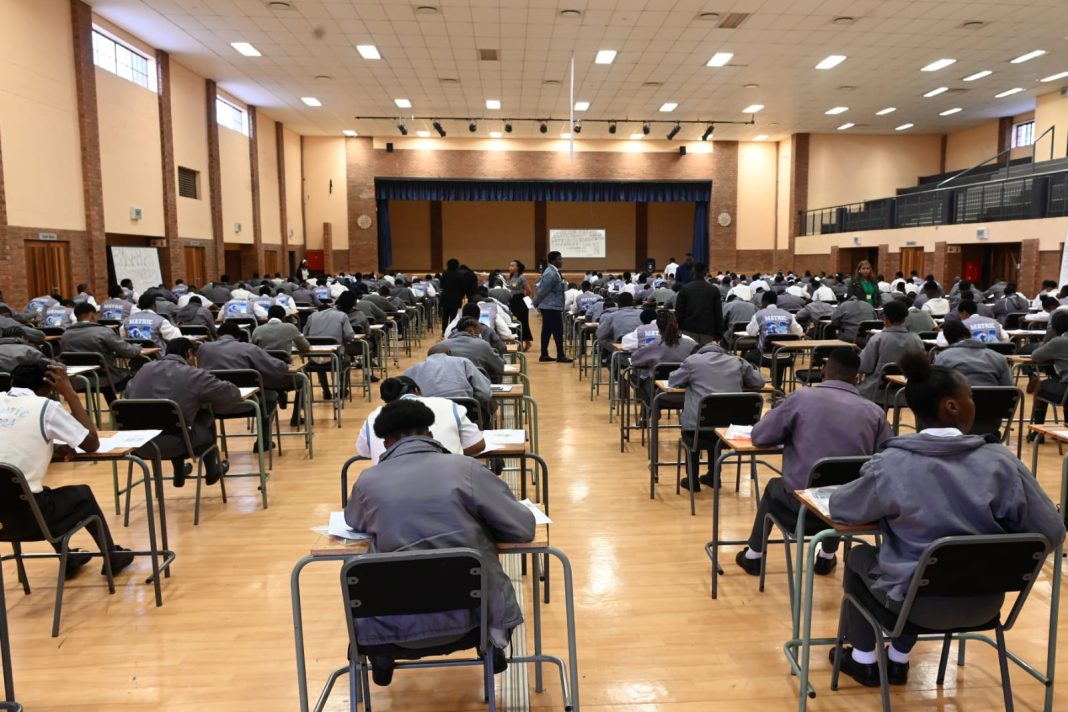
The Class of 2026 is the largest group of matric candidates to date, with 962,832 learners registered across full-time and part-time categories.
Of these, 815,051 are full-time candidates, up by 48,508 from last year. A further 147,781 part-time candidates have registered, including those aiming to improve previous results.
Gwarube said the increase in full-time registrations indicates more learners are remaining in school and completing their secondary education.
“This is a sign of a maturing system, a system on the rise, that is giving near-universal access to education,” she said.
The department has prepared about 7,100 examination centres nationwide. Gwarube said all centres had been audited, with additional monitoring planned for locations identified as higher risk.
She said the setting, moderation and quality assurance of all examination papers and related materials had been completed, with the papers approved by Umalusi.
Security measures have also been strengthened throughout the production and distribution process.
Examination officials have been vetted, while the department is working closely with law enforcement agencies to safeguard the integrity of the exams.
The department has also implemented learner support interventions across all 75 education districts, reaching 159 180 learners at 1 262 centres.
These interventions include additional revision opportunities, teacher support, mock examinations and access to learning materials to address gaps in learner performance.
Gwarube said the department had also considered the effects of the COVID-19 pandemic on the Class of 2026, whose schooling was disrupted during the transition from the Intermediate Phase to the Senior Phase.
The department has used previous examination diagnostic reports to identify persistent learning difficulties and guide teachers in strengthening curriculum delivery and learner preparation.
The Minister said a broader approach to measuring provincial performance would help the education system identify weaknesses and focus interventions where they are most needed.