
By Lehlohonolo Lehana.
The financially troubled SAPO announced ambitious goals to increase its revenue significantly by 2029, aiming to drive more than 25% of its income from the parcel and courier sectors.
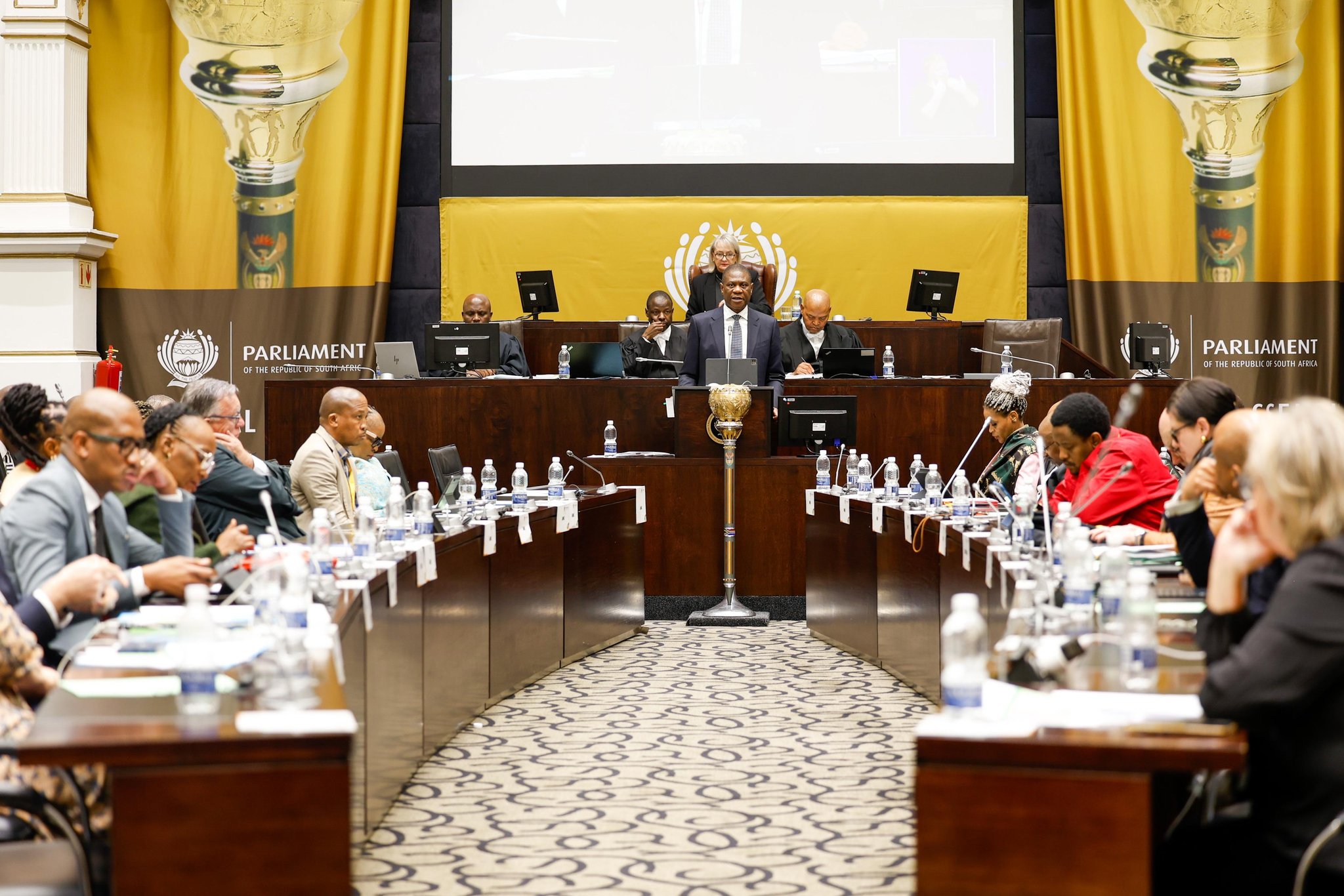
Presenting its latest strategic plan to Parliament, the SAPO outlined its path from bringing in about R1.9 billion in revenue in 2024 to a goal of R5.2 billion by 2029.
This will require a significant restructuring of its revenue base, it said, with targeted growth in both digital services and in couriers and parcels.
According to the group, bulk, franking and registered mail services are expected to decline by between 5% and 7% annually, but this can be stemmed through modernising and digitising operations.
At the same time, international mail and parcel volumes are projected to increase by 50% over the coming years.
It hopes to capture about 5% of the Business-to-Business (B2B) and Business-to-Consumer (B2C) delivery market and gain about 25% of the Consumer-to-Consumer (C2C) market within five years.
It also wants to gain new revenue from connectivity services to underserved areas and expects to gain a significant boost from the AARTO system, once it is rolled out and its mailing requirements are in full effect.
If SAPO’s vision for its business becomes a reality, its courier and parcel services would grow from a paltry R38 million contributor in 2024 to a R1.4 billion behemoth by 2029.
This would also accelerate the Post Office’s path to profitability, it said.
By diversifying its revenue streams, and engaging various “strategic initiatives, operational efficiencies, and focused service offerings”, the group aims to attain profitability by 2028.
The Post Office also faces significant market threats, particularly from the private sector.
It noted that postal operators globally are forming partnerships with e-commerce platforms, logistics providers and SMEs to boost their business.
The group faces escalating operational costs, outdated infrastructure, inefficient processes, limited skills, limited access to funding and has been slow to embrace digital transformation.
Meanwhile Takealot has filed “a notice of intention to amend the notice of motion” in the protracted legal battle by the Independent Communications Authority of South Africa (Icasa) and (Sapo) to maintain a monopoly for Sapo in the delivery of sub-1 kilogram parcels.
Acting Sapo CEO Fathima Gany told Parliament that there had been ongoing meetings with Takealot, which has now filed a notice of intention to amend its legal position in the sub-1 kg dispute.
Sapo, supported by Icasa initially took PostNet and the South African Express Parcel Association (Saepa) to court in 2018. The objective was to uphold the law and prevent these private players from delivering small parcels. However, the private courier firms won that round, especially after larger operators like Takealot joined the legal battle.
“The Post Office currently still has the exclusive licence to deliver sub-1 kg parcels, but this is being encroached upon by the private sector. The case is still pending, and the regulator, Icasa, is currently at the pleading stage, which is scheduled to conclude on 14 August 2025, as per the latest request. The Post Office supports Icasa in this case and will ultimately benefit if their arguments to preserve the monopoly are upheld”
Sapo has acknowledged in its Corporate Plan to 2030 that it faces increasing competition from more agile and technologically advanced private courier services. Without a major overhaul of its digital capabilities, Sapo risks losing even more market share to these competitors, particularly in urban areas, Gany said.