
By Lehlohonolo Lehana.
The Western Cape High Court is hearing a court challenge brought by the AfriForum, the Instititute of Race Relations Legal (IRR) and the Democratic Alliance (DA) against the Expropriation Act.
AfriForum, the DA, and the Institute of Race Relations (IRR) want certain provisions of the Act struck down.
President Cyril Ramaphosa, Public Works, the National Assembly, the Speaker, and the National Council of Provinces (NCOP) chairperson are respondents in the matter.
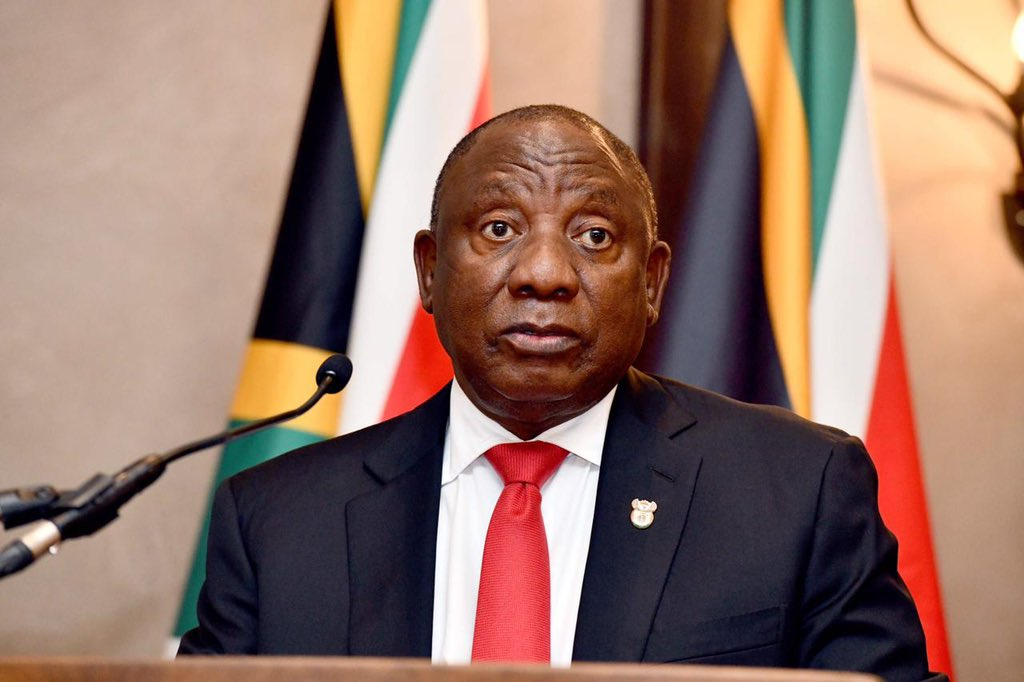
Ramaphosa signed the Expropriation Bill into law in January 2025, setting new guidelines for land expropriation without compensation.
The president said that the new law would assist state organs, including local, provincial, and national authorities, in expropriating land in the public interest.
The Act, which replaces the Expropriation Act of 1975, allows land expropriation without compensation if it’s in the public interest or for a public purpose.
It also irked US President Donald Trump, who claimed that South Africa’s expropriation law is aimed at “seizing ethnic minority Afrikaners’ agricultural property without compensation”.
Trump has said the law will be used to target white farmers for land seizures and has cited it as a reason why the U.S. has withdrawn all financial aid to South Africa and imposed high trade tariffs on the country. The government denies this, and says the law will be aimed at making unused land productive.
Afrikaner farmers are descended from Dutch and other European colonial settlers who first came to the country more than 300 years ago. The Trump administration has offered asylum to Afrikaners who claim persecution.
AfriForum’s legal team led by Henk Havenga kicked off proceedings, arguing that land expropriation must always be subject to compensation.
Havenga argued that Sections 12(3), 12(4), and 19(8) of the Expropriation Act should be scrapped and Section 19(2) amended.
He contended these points are unconstitutional and allow municipalities to invent reasons for expropriation without compensation.
DA legal representative Karrisha Pillay argued that the Act is unconstitutional in that it undermines property rights by allowing “nil compensation”, known as expropriation without compensation.
Pillay told the court that the Act grants the government powers that exceed constitutional limits and creates uncertainty around private property ownership.
According Pillay, the legislation could discourage investment by weakening confidence in South Africa’s legal protections for businesses and property owners.
Vaderland Foundation lawyer advocate Roelof Du Plessis echoed the DA’s stance, arguing the Act is unconstitutional because it undermines private property rights.
“In so far as it may be relevant, we follow the DA approach. Then, with respect to the attack on sections 19.1, 2 and 3, we also follow the DA’s argument.”
IRR is expected to present its heads of argument on Tuesday.
IRR Legal will be represented by advocates David Borgström SC and Janee Karuaihe before a full bench of the Western Cape High Court in Cape Town. The trial is scheduled to run until 7 August.
More than three decades after the end of apartheid, land ownership remains one of South Africa’s most sensitive political and economic issues.
Successive governments have argued that land reform is necessary to address historical inequalities, while business groups and some investors have warned that uncertainty over property rights could undermine investment and economic growth if reforms are perceived as weakening legal protections.
The government has repeatedly said the Expropriation Act does not authorise arbitrary confiscation of land and that any expropriation must comply with constitutional requirements, including judicial oversight and compensation where appropriate.
The High Court will determine whether the Expropriation Act is consistent with South Africa’s Constitution.
Section 25 of the Constitution recognises expropriation as an essential mechanism for the state to acquire someone’s property for a public purpose or in the public interest, subject to just and equitable compensation being paid.