
By Lehlohonolo Lehana.
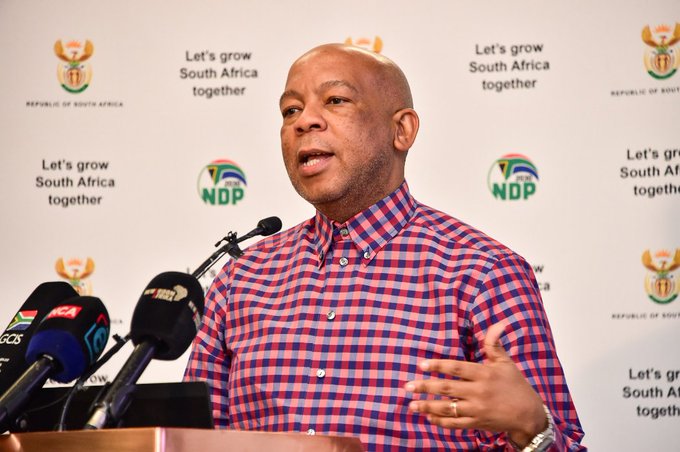
Minister of Energy and Electricity Dr Kgosientsho Ramokgopa hosted a State of the System media briefing where Eskom’s management team provided details on the company’s operational performance.
Eskom escalated load-shedding from stage 3 to stage 6 in early hours of the morning, marking a significant deterioration in power supply situation.
This marks the first time since 10 February 2024 that Eskom has had to resort to stage 6 load-shedding, the most severe level of power cuts it has officially announced to date.
While Eskom has improved its performance over the last year and managed to keep lights on most of the time, the group’s capacity issues have not fundamentally shifted.
Any setbacks or interruptions risk plunging the country back into darkness.
Ramokgopa said that the return to stage 6 load shedding reflects “extraordinary circumstances” and should be considered in the context of an extended period with an uninterrupted energy supply.
However, that does not make the stage 6 load shedding any less regrettable, he said.
“The level of disappointment is well understood, especially because we were on the right path to eradicating load shedding,” he said.
He apologised on behalf of the administration for the setback.
Ramokgopa explained that multiple issues all hit Eskom in quick succession, leading to stage 6 load shedding:
- Five units tripped at Majuba Power Station on Saturday.
- A unit tripped at Medupi.
- Four unit trips at Camden Power Station on Sunday morning.
- Over 7,000MW is offline for planned maintenance.
- Emergency reserves are being used up and need to be replenished for the week ahead.
Ramokgopa said that the high levels of planned maintenance are in line with the power utility’s “calculated aggression” in tackling maintenance.
However, he stressed that this also comes with inherent risks, which are now playing out.
Keeping so many megawatts offline for maintenance means there is a much smaller ‘buffer’ in the event that units fail. So when units go offline as they have now, load shedding has to be implemented.
“That risk has materialised in this instance,” he said.
However, he stressed that this will not be compromised. The aggressive maintenance regime needs to be upheld – risks and all – so that the grid can become more reliable and stable.
Neglecting maintenance would just lead to more trips and breakdowns, making load shedding more frequent as was the case in previous years.
Explaining the sequence of events, he noted that five units tripped at Majuba on Saturday, taking about 3,000MW offline, necessitating stage 3 load shedding.
Overnight to Sunday, four units went down at Camden Power station at about 01h30 in the morning, necessitating the escalation of load shedding to stage 6, the minister said.
He said that there was no indication of sabotage.
Eskom CEO Dan Marokane said that the loss of units at Majbua was due to a transformer overload, which was the main cause of the load shedding experienced this weekend.
The utility is doing a full assessment.
Camden’s failures were related to a valve failure which had another domino effect on various units. The CEO said that the utility has been doing work on this since November and has made progress in this regard.
Of the 10 units lost, six have been returned to service, with 3,200MW being brought back online. Another two units are expected to come back today.
Marokane said all units should be online by Tuesday, with all systems recovered by the end of the week.
The Stage 6 load shedding is necessary to protect enough capacity to restore emergency reserves, which will likely “be used extensively” this coming week.
Meanwhile Ramokgopa has given the strongest indication yet that the next edition of the Integrated Resource Plan (IRP) will include a 10-year delay to the shutdown of certain coal-fired power stations, as was flagged as a possible option when the reworked plan was made public in November.
He indicated that the ‘IRP 2024’ was currently before the National Economic Development and Labour Council, and expressed a desire for these deliberations to be conducted “expeditiously”.
While indicating that he was unable to pre-empt what was contained in the new edition of the IRP, Ramokgopa indicated that the delayed shutdown took account of a socioeconomic impact assessment, as well as the results of a security-of-supply study.
He said the socioeconomic assessment pointed to there being a major economic fallout for Mpumalanga should the stations be shut in line with the decommissioning schedule included in the prevailing IRP 2019, including the shedding of tens of thousands of direct and indirect jobs.
The supply study reportedly found that the pipeline of mostly variable renewable energy generators needed so as to fully replace the dispatchable coal fleet would not be deployed at the pace required to ensure security of supply.
Ramokgopa did not name the stations that would be extended for 10 years, but the draft IRP 2024 options unveiled in November stated that, should the life of the coal plants be extended from 50 to 60 years, the following stations would continue operating: Kendal, Majuba, Lethabo, Matimba, and Tutuka.
The document showed that, under a 60-year scenario, coal-based electricity production would not fall by 10 GW by the mid-2030s as was currently assumed. Instead, coal capacity would hold steady until 2042, when 15 GW would be retired.
The option for a coal life extension to 60 years was not presented as the reference case, however, and the document confirmed that it would result in higher carbon and particulate emissions.
Eskom is already operating its coal plants under an exemption from minimum emission standards (MES), and has indicated previously that it would need to invest R300-billion to ensure full MES compliance.