
By Lehlohonolo Lehana.
Geneva-based Global Initiative Against Transnational Organized Crime Executive Director, Dr Mark Shaw, has painted a broader picture of the challenges confronting South Africa in its fight against organised crime.
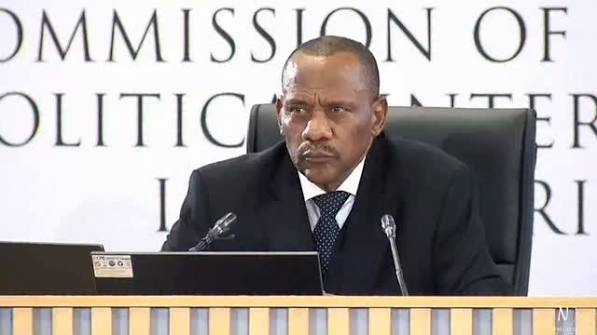
Shaw told the Madlanga Commission of Inquiry that democratic countries such as South Africa can, contrary to popular belief, have resilient systems for confronting organised crime.
While acknowledging that South Africa is among the countries most affected by crime, Shaw argued that international crime data shows democracies can be more resilient than authoritarian states in responding to criminal networks.
He said resilience is partly driven by accountability and feedback mechanisms such as commissions of inquiry, investigative journalism and open public debate.
However, Shaw cautioned that the same openness can expose democracies to criminal infiltration, particularly when organised crime networks seek to infiltrate State institutions.
Shaw described organised crime infiltration as an ongoing relationship between criminal organisations and the exercise of public power.
He stressed that this should not simply be treated as another form of corruption, arguing that its effects are broader, deeper and potentially more damaging to State institutions.
Reflecting on South Africa’s transition from apartheid, Shaw said the democratic project placed considerable emphasis on rebuilding the police service and restoring public confidence in law enforcement.
But he argued that insufficient attention had been given to preventing and dismantling organised crime networks seeking to infiltrate the State.
Shaw warned that the scale of the challenges facing South Africa’s criminal justice system means isolated or piecemeal reforms are unlikely to deliver lasting results.
Instead, he called for a comprehensive package of short-, medium- and long-term interventions aimed at preventing and reversing criminal penetration of State institutions.
Among his immediate recommendations, Shaw called for the swift and lawful appointment of suitably qualified senior officials across the criminal justice system.
“The commission should recommend the prompt and lawful appointment of suitably qualified persons to fill every vacant post in current institutions in a transparent and properly gated appointment process.”
I also think it speaks to the pace of reform that when you look at the cases we considered earlier, particularly the shocks that comes to the system when it comes to a vetting process, where people may resign before being put to account. It is very important strengthen and establish the current institutions that we have while beginning the process of change,” said Shaw.
He also proposed the creation of an Organised Crime Council to provide high-level oversight, coordination and strategic direction in the fight against criminal networks.
Meanwhile former Hawks head Godfrey Lebeya has denied knowing about the Big Five Cartel or its suspected members.
Lebeya was back before the Commission of Inquiry on Wednesday following questioning over the theft of drugs worth an estimated R200-million from Hawks offices in Port Shepstone in 2021.
During his appearance on Tuesday, Lebeya told the Commission that he only became aware the drugs had been stored at the Port Shepstone offices after they were stolen.
He said he could not recall being informed that the drugs had been kept at the facility.
The commission has since been shown photographs of people linked to the cartel, including murder accused Katiso “KT” Molefe, Ze Nxumalo, Steve Motsumi, Ignatius Mothakathi and Nyambose Mthethwa.
He denied interfering, saying he deployed Hawks officers to verify the arrest operation after receiving a call from a civilian known as Malcom X.
The commission also heard that Lebeya previously told a media outlet that Malcolm X was a police informant, a claim Malcolm X denied in an interview with the same outlet.
Lebeya struggled to explain the circumstances surrounding the two interviews.
“I was clarifying, Commissioner, that in my media interview, I did not identify the specific person. I have indicated that we got this from an informant. My expectation was that we’ll not identify the individual so that when the commission starts, it might want to hear that in-camera,” said Lebeya.
The commission further heard that Malcolm X was arrested by the DPCI in October 2023 on allegations of extortion and corruption involving police officials.
The Commission has taken a short recess starting Thursday, 3 September 2026, and is scheduled to resume public hearings on Monday, 14 September 2026.
The Commission was established to investigate allegations made by KwaZulu-Natal Provincial Commissioner Lieutenant-General Nhlanhla Mkhwanazi on 6 July 2025, relating to criminality, political interference and corruption within the criminal justice system.