
By Lehlohonolo Lehana.
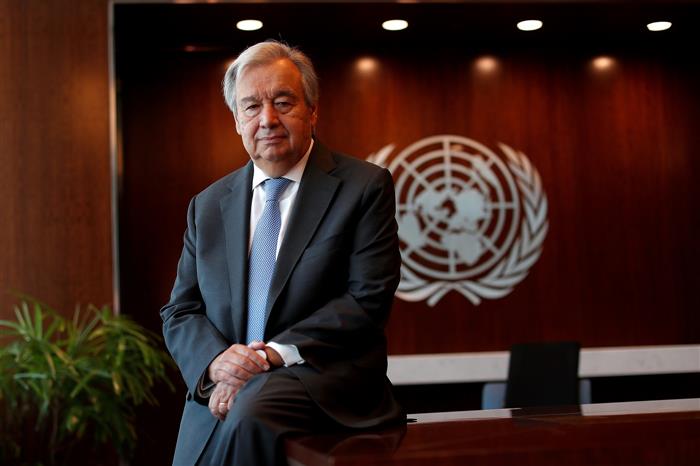
The United Nations (UN) Secretary General Antonio Guterres says G20 has the power to repair the historic injustice and drive reforms that give developing countries – and Africa in particular – a real voice in shaping global policies.
Guterres addressed media ahead of G20 summit scheduled for November 22–23, in Johannesburg, South Africa.
“My message to the leaders is simple: now is the time for leadership and vision. We are living through tumultuous times. “Guterres said.
“Conflicts, climate chaos, economic uncertainty, mounting debt, inequality, and the collapse in global aid are inflicting massive suffering around the world, and rising military expenditure is drawing resources away from development,” he said.
“As the world’s largest economies, the G20 can exert enormous influence to ease this suffering, ensure that economic growth is widely shared, and set our world on a better, more peaceful course for the future.”
Guterres said developing countries — particularly in Africa — are suffering from a perfect storm of shrinking fiscal space, crushing debt burdens, and a global financial architecture that is failing to support or even adequately represent them.
He said Africa must have a fair seat in every forum where decisions are made – from the boards of international financial institutions to permanent seats in the UN Security Council and to other global bodies.
“The G20 has the power to repair this historic injustice and drive reforms that give developing countries – and Africa in particular – a real voice in shaping global policies, and make global economic governance more inclusive, representative, equitable and effective in the years ahead,” Guterres added.
He urged G20 member nations to live up to the commitments made in June in the Financing for Development Conference in Sevilla, Spain, to unlock more finance for developing countries.
He added that all these interventions would help developing countries strengthen their capacity to mobilise domestic resources and to build trade bridges, not trade barriers.
The G20 is a group of 19 countries that includes the richest but also the top developing economies in the world. The European Union and the African Union, which joined in 2023, are also members, making it now a group of 21.
It was formed in 1999 and unlike the Group of Seven, which only includes the richest democracies, it offers some developing countries a forum to raise their problems.
Its focus is the global economy and international development, though it has no charter or permanent secretariat — unlike organizations such as the United Nations. It also doesn’t issue binding decisions and critics say there’s no meaningful mechanism for it to put words into action.
The G20 often struggles to reach real consensus because of the different interests of the big powers like the U.S., China and Russia, as well as those of Western European nations.
The leaders of the United Nations, the World Bank and the International Monetary Fund typically attend G20 summits as guests.
The U.S. will take over the rotating presidency of the G20 from South Africa and while the world’s biggest economy will boycott the talks, a representative from the U.S. Embassy in South Africa will attend a formal handover ceremony at the end of the summit, a White House official said.
The country holding the G20 presidency gets to set the agenda for the annual summit.
South Africa wants climate change and disaster relief, financing green energy transition, easing debt levels for poor countries and addressing global inequality to be priorities for the two-day meeting.