
By Lehlohonolo Lehana.
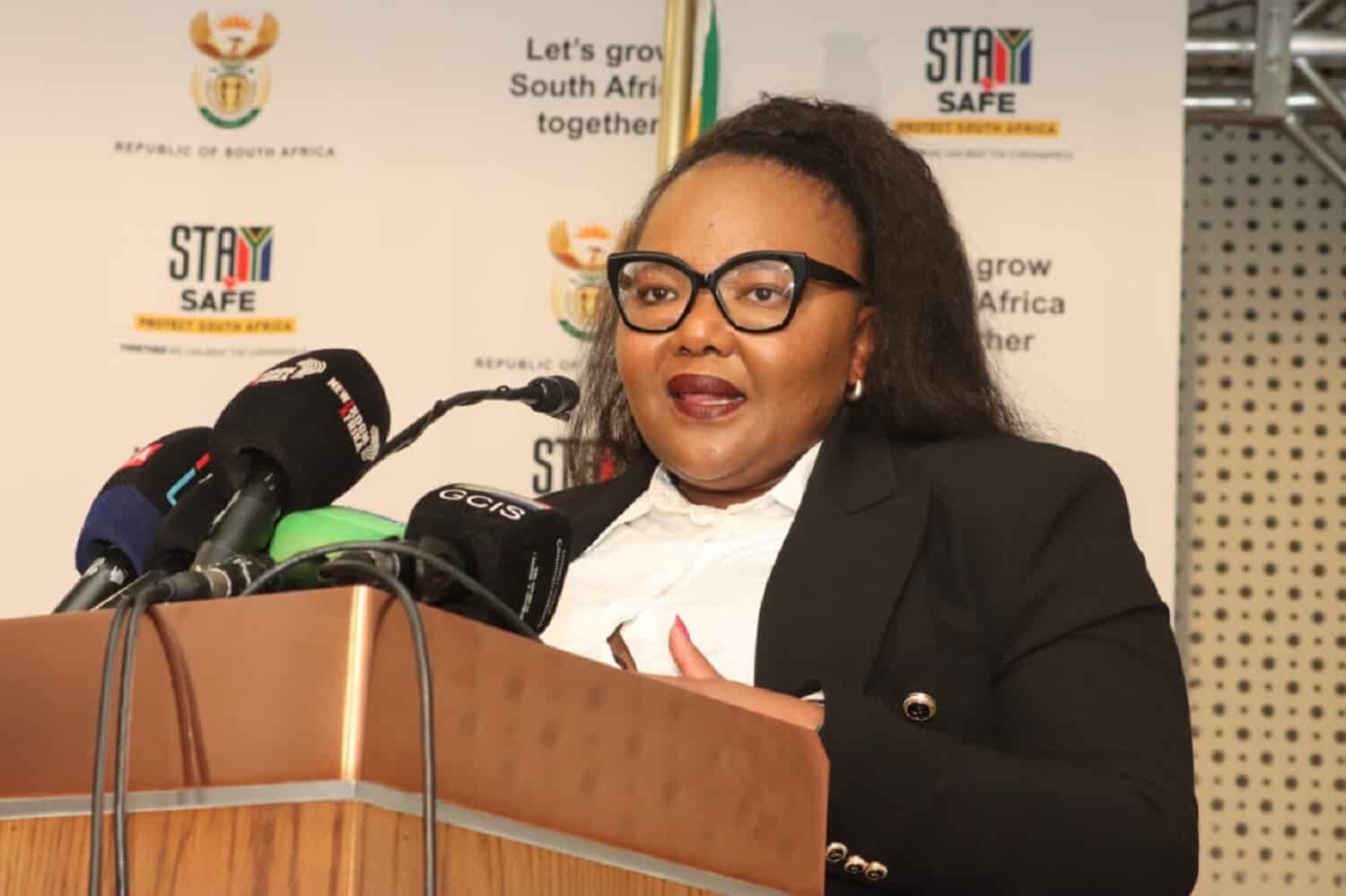
The Minister of Basic Education, Siviwe Gwarube called on all stakeholders to move away from academic elitism and embrace practical skills development to combat the country’s alarming youth unemployment crisis.
Gwarube delivered the keynote address at the Inaugural Policy Dialogue on Entrepreneurship Education.
The event was hosted in partnership with the European Union’s Education for Employability Sector Budget Support Programme.
It aimed to address South Africa’s youth unemployment crisis through an education that empowers learners to be job seekers and job creaters.
Gwarube stressed the foundational importance of literacy in the early years of schooling. Citing findings from the 2021 Progress in International Reading Literacy Study (PIRLS), she noted that a significant proportion of learners in Grades R to 3 are still unable to read for meaning, an alarming indication of the scale of the crisis.
“This is not just a reading problem,” Gwarube emphasised.
“It is an educational emergency. If our children cannot read with understanding by the time they reach Grade 4, they are effectively locked out of the learning process. Reading is the gateway to all other forms of learning.”
The PIRLS 2021 report revealed that 81% of South African Grade 4 learners could not read for meaning in any language, a statistic that places the country among the lowest performers globally. While the COVID-19 pandemic significantly disrupted learning and worsened literacy rates worldwide, the Minister acknowledged that South Africa’s reading crisis predates the pandemic and reflects deeper systemic issues in the basic education sector.
The Minister called for a national, multi-sectoral effort to improve early-grade literacy, including investment in teacher training, improved access to age-appropriate reading materials, and parental involvement in home reading habits.
“Entrepreneurship education, which we are here to discuss today, starts with critical thinking, creativity and problem-solving,but none of that is possible without the foundational skill of reading,” she said.
The Dialogue on Entrepreneurship Education aims to explore how entrepreneurial thinking can be integrated into the curriculum from an early age. However, Gwarube underscored that unless the literacy gap is urgently addressed, such innovations in the education system will be inaccessible to many learners.
The minister stressed that entrepreneurship cannot be taught in isolation, but must be deeply rooted in the South African context, where social impact is as important as profit.
“Entrepreneurship in South Africa must be rooted… a South African entrepreneur cannot just create profit. They must create a shared value for themselves and their communities.”
Gwarube urged the public and private sectors, civil society, and educators to join forces and break silos to co-create sustainable solutions to the employment crisis.
“This gathering for me is more than just about transforming our collective awareness and mindset… It’s about saying, how do we respond to the call of the day? And the call of the day is, how do we create a young person that is ready for work, that can walk into a world of work, be impactful, and create a life of dignity for themselves?”
She also highlighted Africa’s demographic advantage — if properly harnessed.
“The scale of the challenge is huge, but so is the opportunity. Africa is the youngest continent on earth… and by 2050, we will be the home to the world’s largest working-age population.