
By Lehlohonolo Lehana.
The Electoral Commission of South Africa (IEC) says more than 60% of the 66,073 results had been captured by 5pm on Thursday, 05 November 2026.
The commission said 40,202 results slips had been scanned, while 2,238 had undergone independent auditing as part of its verification and quality assurance processes.
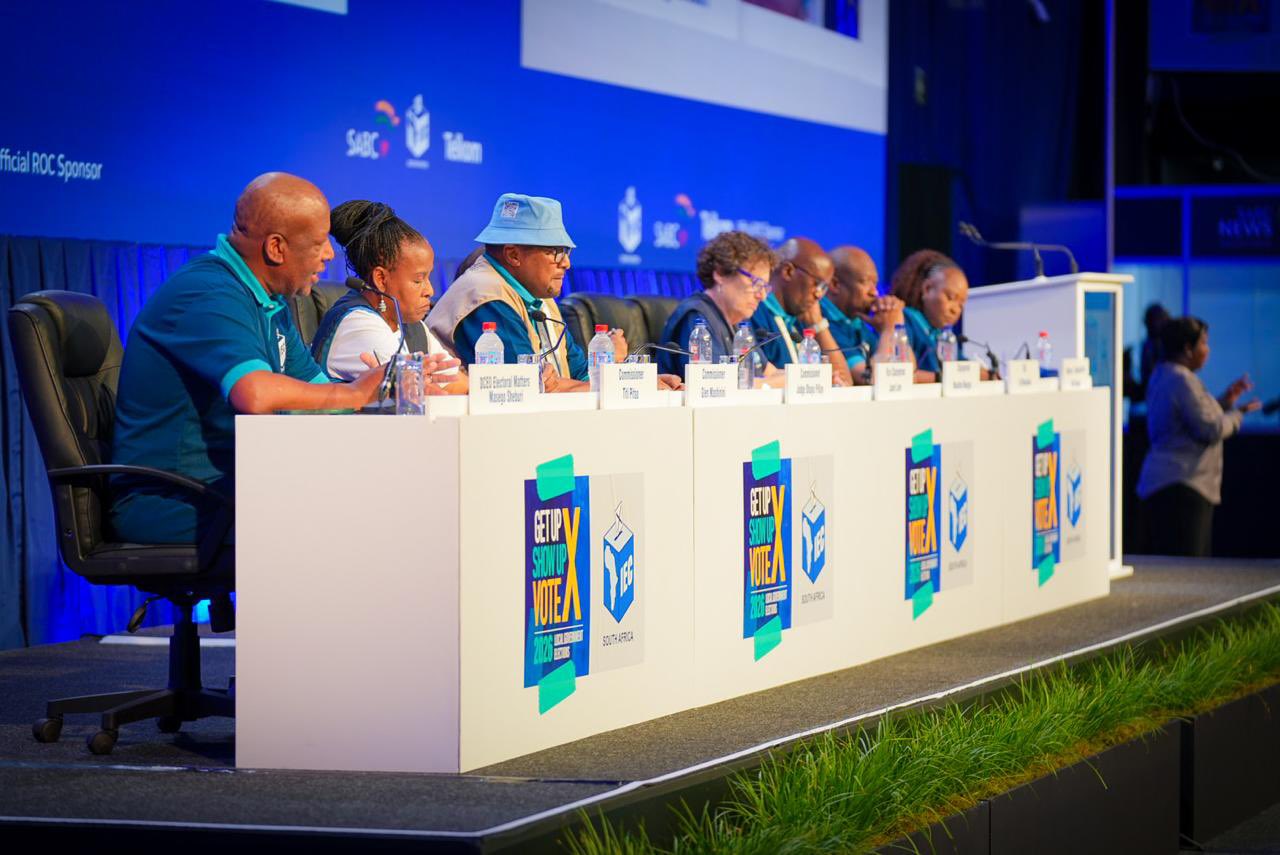
IEC chairperson Mosotho Moepya said the measures were intended to safeguard the integrity of the results.
“These measures are aimed at ensuring the accuracy, transparency and integrity of the results before they are finalised,” he said.
Provincially, the Northern Cape had the highest capture rate at 87%, followed by the Western Cape at 69%, the Free State at 64% and the Eastern Cape at 60%.
Mpumalanga had captured 52% of results, while KwaZulu-Natal stood at 37%. North West and Gauteng were both at 35%, while Limpopo had captured 23%.
The IEC said the figures remained provisional pending the finalisation of objections material to the election.
In addition, the IEC says 65 of the country’s 213 municipalities, about 31%, had completed the capturing, scanning, auditing and exception processes by 5pm on Thursday.
The Northern Cape was furthest along, with 21 of its 26 municipalities completed, representing an 81% completion rate. In the Western Cape, 14 of 25 municipalities had completed the process, giving the province a 56% completion rate.
In the Free State, seven of 19 municipalities had completed the process, while Mpumalanga had completed five of its 17 municipalities.
Six of KwaZulu-Natal’s 44 municipalities had completed the process, compared with one of Limpopo’s 22 municipalities and two of North West’s 18 municipalities.
In Gauteng, none of the province’s nine municipalities had completed the process by 5pm.
Preliminary turnout data from the IEC indicates that the 2026 voter turnout is higher than in 2021, but it is still trailing voter turnouts in previous elections.
The IEC confirmed that at least 15.9 million South Africans cast their vote out of 29.23 million registered voters, giving a preliminary voter turnout of 54.2%. This figure is higher than the 46.2% turnout at the 2021 elections, but still lower than the 57.94% turnout for the 2016 elections and 57.64% turnout for the 2011 elections.
It also revealed it has received more than 800 complaints from political contestants in this year’s local government elections. Concerns are largely centred on the conduct of voting station officials.
Early, anecdotal reports indicate a disparity of votes between suburbs and townships, with suburbs reporting higher voter turnouts. However, the IEC has cautioned against relying on preliminary results and advises that final turnout figures will be made available only after counting is completed.