
By Lehlohonolo Lehana.
The Inter-Ministerial Committee on Migration has wrapped up a briefing on the government’s migration management strategy, as pressure mounts for action on undocumented migration, border security and law enforcement.
Speaking at a media briefing in Tshwane on Sunday, IMC Chairperson and Justice Minister Mmamoloko Kubayi said, government is continuing work to facilitate the return of foreign nationals to their home countries guided by the Five-Point Plan on managing migration which is sensitive to the concerns of South Africans while respecting the principles of human rights and dignity.
“We have seen a tremendous increase in the number of foreign nationals that have either been deported or repatriated. To date [close of business 11 July 20206], a total of 53 449 foreign nationals, have been processed for deportation and repatriation, which is dominated by Malawians, followed by Zimbabweans and Mozambicans.”
“In addition to the repatriation, the normal immigration deportation processes continued. For the month of June 2026, a total 4898 [Malawi – 1929; Zimbabwe – 1384; Mozambique – 1200; Lesotho – 342] were deported, and lastly, for the period 14 June 2026 to 8 July 2026, a total of 2801 [Malawi – 910; Zimbabwe – 903; Mozambique – 755; Lesotho – 187] were deported,” Kubayi reported.
Kubayi has strongly condemned illegal actions by isolated groups conducting identity checks on foreign nationals in South Africa.
This after reports that groups were conducting searches in homes and businesses that are suspected to be housing undocumented migrants.
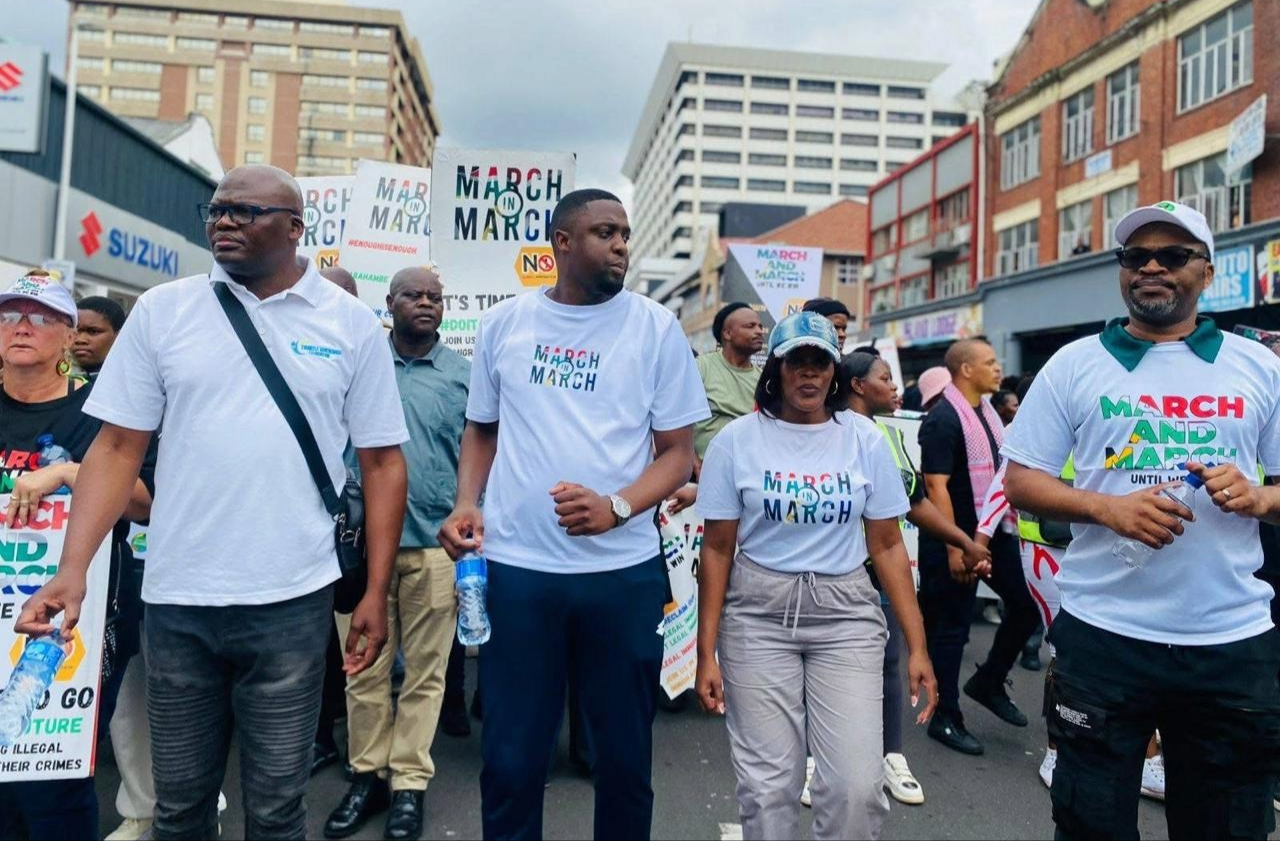
She noted that although South Africans remain within their right to protest against irregular migration, criminality will not be tolerated.
“This is illegal, and members of the community who are part of these activities are warned to refrain from such conduct.”
“Government reiterates that the management of immigration, border management, deportation and facilitated repatriation is the exclusive responsibility of the State, and no individual or group has the authority to take the law into their own hands or to intimidate, threaten or unlawfully remove any person from any community,” Kubayi said.
The Minister emphasised that law enforcement is primed to take action.
“Our law enforcement authorities will not hesitate to act against those who continue to conduct these unlawful searches and identity checks,” she added.
Kubayi said law enforcement has, as of 8 July 2026, opened some 205 cases with 350 suspected persons arrested.
“[Some] 69 cases were pending investigation, and 112 cases were on the court roll in relation to incidents linked to unlawful conduct, intimidation, incitement and related offences.”
Minister of police Feroz Cachalia lauded the police for a successfully maintaining public safety during the demonstrations while respecting citizens’ constitutional right to protest.
He however, warned that acts of vigilantism and criminality will not be tolerated adding that only the state has the authority to enforce the law.
“I expect in the weeks ahead, in the run-up to the elections, some forms of unlawful behaviour to continue, but the police will act. They have a clear responsibility to do so, and the message from the ministry has also been clear and emphatic.”
Cachalia said the recent voter registration weekend demonstrated the importance of effective policing, adding that the Independent Electoral Commission (IEC) had described the police operation during the registration period as the best it had ever experienced.
Many African migrants moved to South Africa around the time white-minority rule ended in 1994, hoping for a better life.
But with South Africa facing an unemployment rate of more than 30%, anti-migrant sentiments have risen.
Xenophobia has long been an issue in South Africa, and has sometimes led to violence.
According to the African Centre for Migration and Society’s (ACMS) xenophobic violence tracker Xenowatch, two people have been killed this year. In 2008, more than 60 people died during a wave of rioting against non-South Africans.