
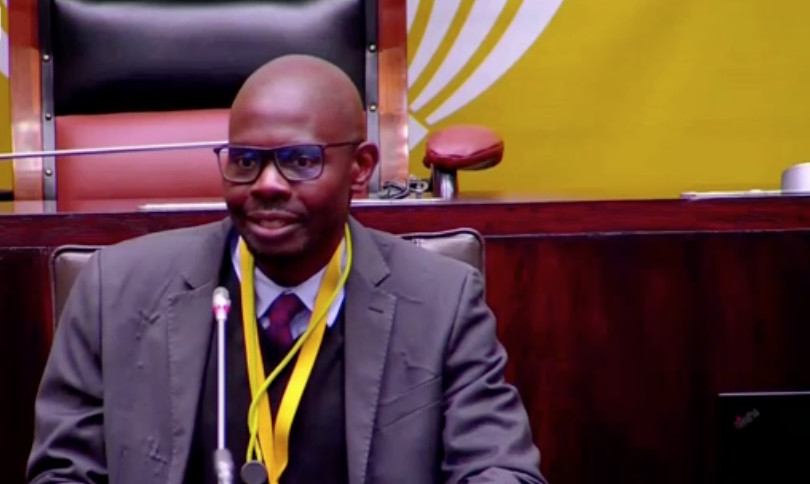
By Lehlohonolo Lehana.
The Impeachment Committee on Section 89 Enquiry resolved to start the process of identifying and recommending an evidence leader who will guide the presentation of evidence before the committee.
The committee met on Wednesday to discuss Terms Of Reference (TOR) for the Section 89 inquiry that will probe events that unfolded after US dollars were stolen from president Cyril Ramaphosa’s farm in 2020.
It considered a comprehensive 40-page draft document outlining rules governing impeachment proceedings. These include definitions, constitutional provisions, procedural guidelines, and the roles of key players in the process.
Addressing members, Parliamentary Legal Services representative Suanne Isaac said the document was intended to serve as a broad foundation for the committee’s work, but would require refinement.
“Chairperson, as you advised or you informed the committee that this is a very comprehensive set of rules. The debate was as to whether this should be incorporated into the National Assembly rules, but it has subsequently been referred to this committee to form maybe the basis for the terms of reference.”
She explained that the draft draws heavily on existing National Assembly rules, while also consolidating them into a single reference framework for impeachment proceedings.
“This is a very long document, and it’s very comprehensive, so I will merely do a very high-level presentation highlighting the different areas.”
The process unfolds against the backdrop of the Constitutional Court’s findings that Parliament previously failed to establish adequate mechanisms to hold a president accountable under Section 89 of the Constitution. This prompted amendments to the National Assembly rules, requiring clearer procedures for impeachment inquiries.
The political parties wanted the committee to tighten its guidelines to ensure Ramaphosa appears before it in person.
They said it should not be optional for him to appear or to give testimony through a proxy.
The MK Party’s John Hlophe said there are questions about the Phala Phala matter that only the President can answer, and he cannot refuse to testify.
“If there’s a case to answer, and he refuses to testify, an adverse inference can be drawn against him in law. That’s how law operates.”
ANC MP Cameron Dugmore urged members to rely on the Constitution rather than over-interpreting the draft rules.
Referring to Section 56 of the Constitution, Dugmore said Parliament already has the authority to summon any person to appear before it or its committees.
“It’s very clear that the National Assembly or any of its committees may summon any person. We should be guided by the Constitution in terms of our powers to summon who we need to appear. So let’s give precedence to the Constitution in terms of that particular issue.”
EFF leader Julius Malema said he plans to table a motion in the National Assembly calling for Speaker Thoko Didiza to relinquish her oversight role over Parliament’s impeachment proceedings against the president, to her deputy, Annelie Lotriet.
The majority of parties in a meeting of the Impeachment Committee expressed their distaste for Didiza’s decision to abide rather than oppose Ramaphosa’s attempt to interdict the work of the committee.
While the ANC said it believes Didiza adopted the correct course of action as a neutral party to the President’s interdict application, the majority of political parties said her posture does not defend Parliament’s authority and responsibility.
Malema said he didn’t trust Didiza to select a suitable evidence leader for the impeachment proceedings.
To ensure an open and inclusive process, political parties represented in the committee have been invited to nominate suitable candidates to serve as evidence leader.
Parties have until Friday, 10 July 2026 to submit names for consideration.
Once nominations have been received and considered, the committee will recommend a preferred candidate to Parliament for formal appointment.
The committee also agreed that the appointment of assistant evidence leaders should be left to the discretion of the appointed evidence leader to allow for an efficient and functional working arrangement.
Furthermore, the committee has agreed to allow political parties 10 working days to study and reflect on the draft Terms of Reference and make written submissions.
The submissions by parties will form part of the draft Terms of Reference the committee will adopt and use to guide its work throughout the enquiry.
The committee also agreed in principle that additional specialist support may be required. This could include investigators with expertise in forensic investigations, exchange control matters and data analysis.
Committee chair Makashule Gana ruled that political parties have been given until July 10 to provide their input to amend the draft terms of reference. Each party will also submit proposals for the appointment of evidence leaders, although the committee will make the final decision on appointments.