
By Lehlohonolo Lehana.
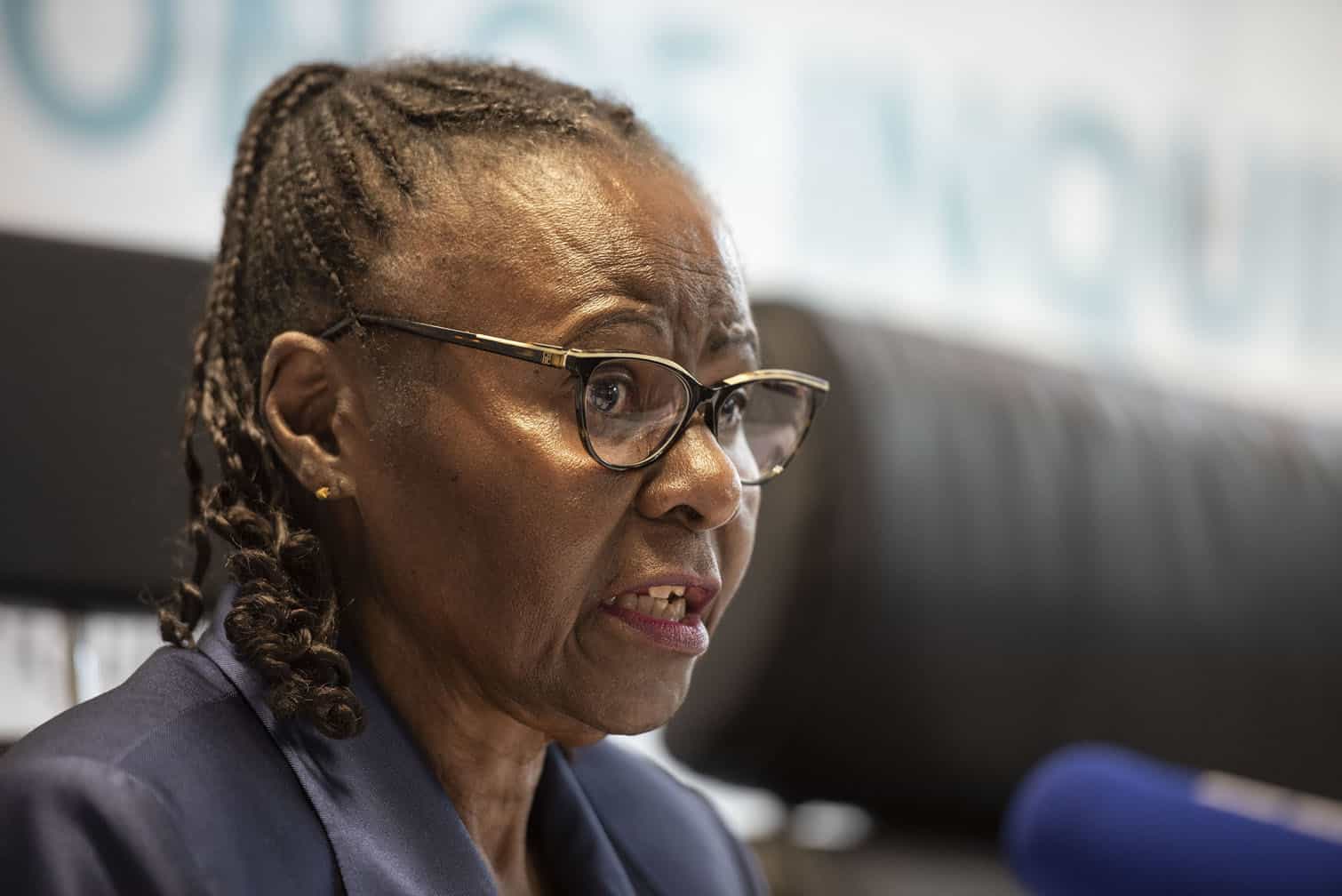
The Constitutional Court has dismissed former presidents Jacob Zuma and Thabo Mbeki’s bid to have Justice Sisi Khampepe recused from the TRC cases inquiry.
Zuma and Mbeki were challenging a Johannesburg High Court ruling that dismissed their application to recuse Khampepe as chairperson of the inquiry.
The former presidents argued that Khampepe’s previous roles on the TRC Amnesty Committee and as National Deputy Director of the National Prosecuting Authority (NPA) in the 1990s create a reasonable apprehension of bias against them.
The apex court handed down its judgment on Monday, allowing Khampepe to remain as chairperson of the Judicial Commission of Inquiry.
However, it granted the two former presidents leave to appeal the High Court’s ruling.
Justice Leona Valerie Theron said: “On application for leave to appeal directly from the High Court of South Africa, Gauteng Division, Johannesburg, leave to appeal is granted. The appeal is partially upheld.”
She said the High Court’s order was set aside and replaced.
“The point in limine raised by the first to fifth respondents in respect of section 47.1 of the Superior Courts Act 10 of 2013 is dismissed,” Theron said.
She added: “The application to review the ruling delivered on 30 January 2026 by the Chairperson of the Judicial Commission of Inquiry to inquire into allegations regarding efforts or attempts having been made to stop the investigation or prosecution of Truth and Reconciliation Commission cases, dismissing the recusal application, is dismissed.”
The apex court’s decision was delivered across three separate judgments. The court resolved a preliminary jurisdictional matter but remained split on the merits of whether a “reasonable apprehension of bias” existed due to Khampepe’s legal history.
The court opted to resolve the merits of the recusal directly rather than sending the matter back to the high court. However, the minority judgment authored by Justice Theron, with three judges concurring, held that the recusal should have been granted.
Khampepe’s overlapping historical roles at the TRC and the National Prosecuting Authority placed her on both the “referring and receiving end” of TRC cases, leaving her in a position to potentially make adverse findings against her former organisation and colleagues, the judges noted.
The minority judgment added that the 2003 “temporal boundary” Khampepe relied on was irrelevant, given that the commission had already summoned witnesses to testify on events predating that year. Consequently, it concluded that “an objective observer would reasonably apprehend bias”.
The second judgment, authored by Acting Justice Robert Nugent, dismissed the recusal application after finding that the former presidents failed to establish a reasonable apprehension of bias. Justice Owen Rogers concurred with Nugent’s ruling in a third judgment, securing the five-judge majority needed to dismiss the application.
Rogers argued that bias should be treated as “an independent ground of review” under the principle of legality for commissions of inquiry, rather than as a subset of procedural irrationality.
The commission, appointed by President Cyril Ramaphosa, consists of Khampepe, retired Northern Cape Judge President Frans Kgomo and advocate Andrea Gabriel, SC.
Ramaphosa joined the court action alongside his predecessors. He claimed to have been unaware of Khampepe’s history as a TRC commissioner, as well as her roles in the NPA and Constitutional Court, when he appointed her. Both Mbeki and Zuma have denied any political interference in post-TRC