
By Lehlohonolo Lehana.
Former president Kgalema Motlanthe has called on South African government take charge of the country’s response to the anti-migrant protests.
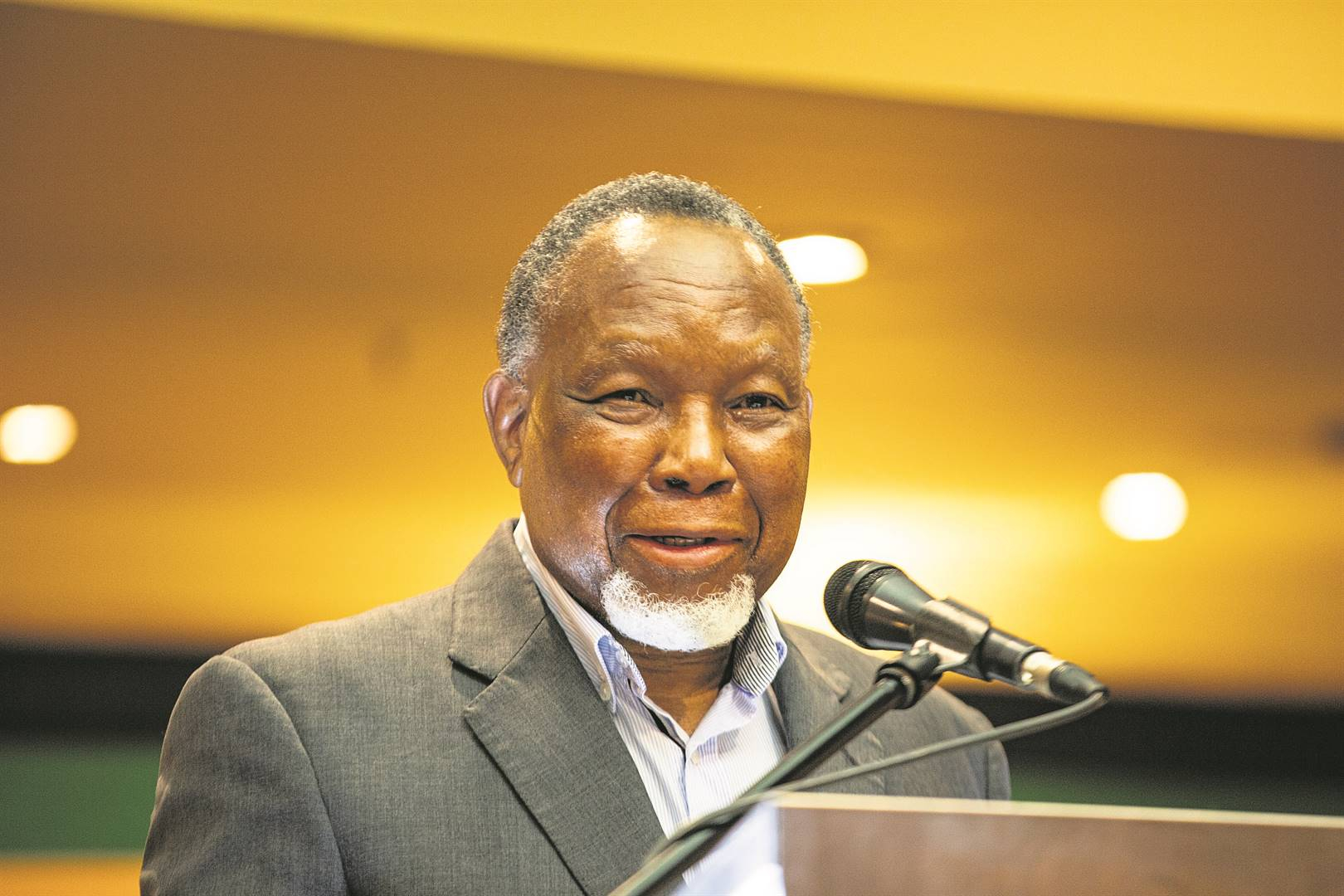
Motlanthe delivered the keynote address at the Kgalema Motlanthe Foundation Winter Seminar in Sandton, Johannesburg, on Thursday.
The seminar, held under the theme “The Continent and Migration”, brought together business leaders, government officials, academics, civil society representatives and international guests to discuss migration, regional integration and economic development.
The event also marked Motlanthe’s 77th birthday.
Motlanthe said the recent demonstrations targeting the undocumented migrants reflected growing competition for scarce jobs and resources in poor communities, but cautioned political leaders against inflaming tensions.
“The recent spate of demonstrations against so-called foreign nationals highlights the competition for limited resources and opportunities in South Africa’s poorest communities,” Motlanthe said.
He said the structure of the economy meant government must remain firmly in control as it responds to the challenges facing the unemployed, the poor and the marginalised.
Motlanthe stressed that South Africa’s economy is closely linked to the rest of Africa.
He called for collaborative solutions that promote regional growth.
“The economy of South Africa is an African economy. You need to come at these issues holistically. South Africa can’t be an island on its own. The issue of migration is not unique to South Africa. We rely on African countries.”
Motlanthe warned that any failure by government to maintain authority would invite lawlessness and “near anarchy” with devastating consequences.
More than 160 000 foreigners have left the country, and several have been killed over the past two months as some groups have increased violent hostility against undocumented migrants, putting Pretoria’s relations with other African governments under strain.
Speaking at the same event, MTN chairperson Mcebisi Jonas warned that removing immigrants from South Africa does not solve the country’s economic challenges.
Jonas said unemployment, inequality and corruption are rooted in governance failures rather than migration.
He urged leaders to address structural economic problems rather than blame foreign nationals, adding that lasting solutions require stronger institutions, improved public services and inclusive economic growth.
The economist Alan Hirsch has consistently argued that South Africa should view immigration as a developmental asset rather than as a security problem. South Africa’s challenge is not too many migrants but too little growth and, I might add, high levels of economic exclusion.
Hirsch has pointed out that South Africa loses many skilled citizens through emigration while simultaneously making it difficult for skilled foreigners to enter and remain. The result is a net loss of talent. Migrants are often disproportionately represented among entrepreneurs and small business owners. They take risks, establish enterprises and create commercial networks that contribute to economic dynamism.
South Africa is home to more than three million foreigners, about 5% of the population, according to official figures – but there are believed to be many more without papers.
The Chairperson of the Inter-Ministerial Committee on Migration, Mmamoloko Kubayi, said South Africa has a three-year plan to upgrade security at the country’s borders and tackle cross-border crime.
Preliminary costs put the project at R10 billion.
Kubayi said the government is taking a broader approach to border management, recognising that illegal movement involves not only people but also goods entering and leaving the country unlawfully.
Kubayi also stressed that the government is strengthening the enforcement of the rule of law, saying authorities are taking action against individuals who resort to vigilantism or take the law into their own hands.
She acknowledged criticism from some South Africans who believe enforcement should focus only on undocumented foreign nationals.
“Those who are within the borders of South Africa, whether you’re South African or non-South Africans, the rule of law must be able to be observed. But again, the issue for us, we say it poses more challenges and which are real issues, because what the migration IMC has allowed us to do is to drill deeper into the issues.”