
By Lehlohonolo Lehana.
The SA Reserve Bank (SARB) Monetary Policy Committee (MPC) unanimously decided to increase the policy rate by 25 basis points to 7.25%, effective 25 September.
At the last meeting in July 2026, the repo rate was held steady (previously noted at 7.00% / 8.5% across varying market contexts).
The majority of economists had expected the 25 bps increase, as the escalation in the Iran war since the last policy meeting has driven up oil prices and dampened the global economic outlook.
The central bank’s six-member Monetary Policy Committee (MPC) held its penultimate meeting this week to weigh the balance of risks, amid a shift in market conditions since its last rate meeting.
While domestic growth remains subdued, the external inflation environment has become more challenging.
This includes higher oil prices amid renewed geopolitical tensions. Brent crude prices fell below the $100 mark on Tuesday after remaining above that level for much of September.
The global benchmark is currently more than 60% higher year to date, with conflict in the Middle East and the Russia-Ukraine war fuelling inflationary concerns.
Recent oil price movements have already pushed local petrol prices up by an average of R1.34 a litre, or 5.3% month on month, in September.
The latest Bureau for Economic Research (BER) Survey of Inflation Expectations provides an important counterweight to the current global risks.
The deterioration in inflation expectations recorded in the second quarter of the year stabilised, while third-quarter expectations for 2026 remained at 4.4%. Five-year expectations eased from 4.1% to 4%.
Expectations for 2027 and 2028 also declined.
Earlier on Wednesday, Statistics SA reported that the Consumer Price Inflation (CPI) rate had increased to 4.4% in August, from 4.3% in July.
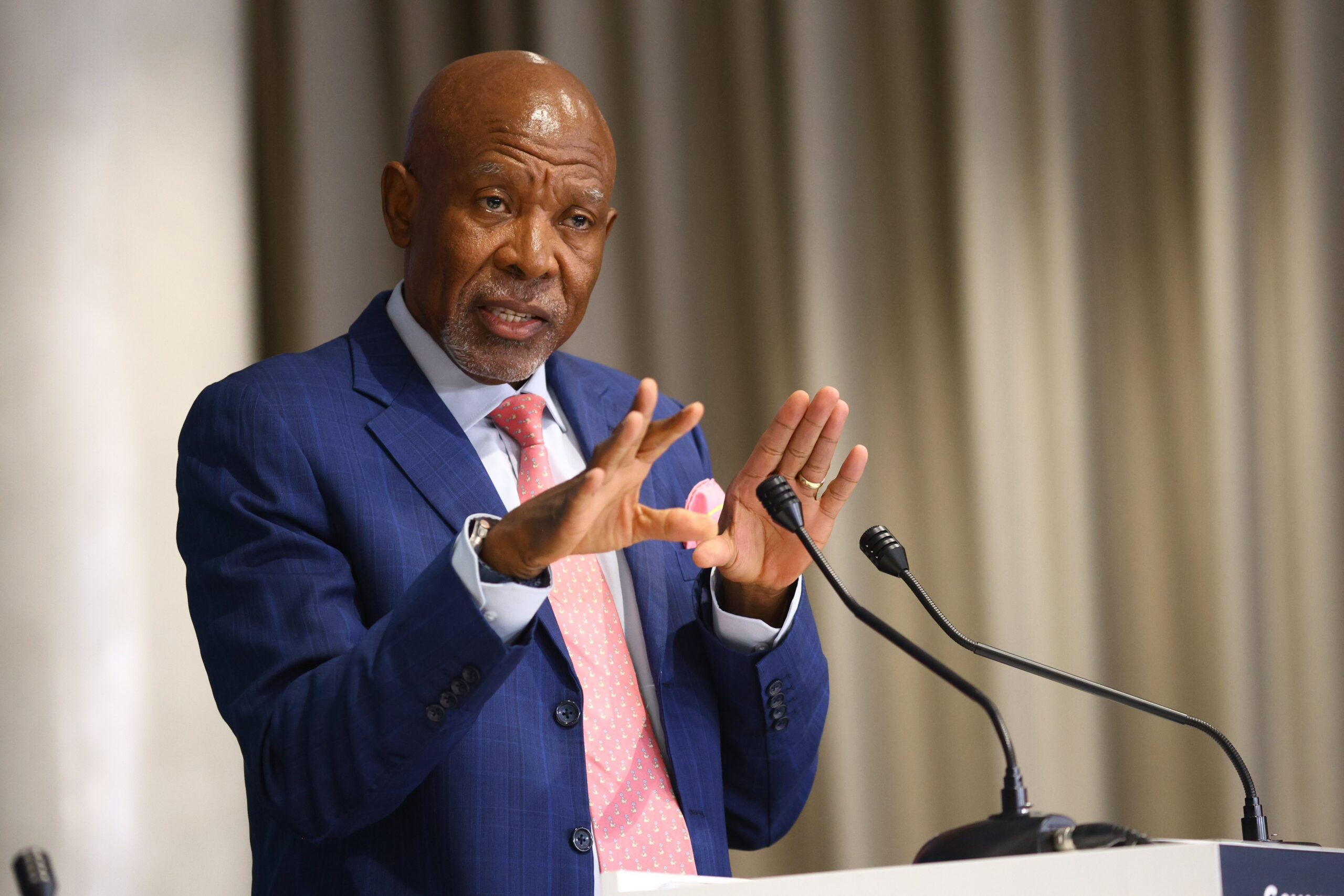
According to Reserve Bank governor Lesetja Kganyago’s MPC speech, he said, “We see upside risks to inflation.
“Against this backdrop, the committee decided to raise the policy rate by 25 basis points, to 7.25%, effective from 25 September. The decision was unanimous,” Kganyago added.
“A few months back, it seemed that the fuel-price shock might be unwinding, but now it has intensified. We are also seeing global rates moving higher,” he noted.
“We have taken a measured approach to rate setting, in conditions of high uncertainty, but we remain focused on our price-stability mandate. It is crucial that inflation reverts to 3% as the current shock fades, and we take responsibility for delivering that outcome,” he said.
He noted that fuel prices had begun rising again after moderating between June and August, while services inflation remained elevated.
“By contrast, food inflation is at its lowest level since 2010. This reflects strong harvests and more stable meat prices following the foot-and-mouth outbreak. The rand has stayed resilient, helping contain import prices,” Kganyago said.
At this meeting, the MPC considered a scenario involving higher global interest rates.
“Our baseline forecast has the major central banks raising rates by about half a percentage point, between this year and next. Our scenario doubled that, taking the increase to a full percentage point. This causes rand depreciation, which lifts inflation. The model responds with a tighter policy stance, with rates about one hike above the baseline path and slower cuts subsequently,” the Governor said.
The MPC also considered a scenario involving higher inflation expectations and wage increases.
This scenario also pointed to a tighter policy stance, with the policy rate rising by the equivalent of one to two additional hikes above the baseline peak and remaining higher for longer.
“Overall, this is proving to be a difficult year for the global economy, and for South Africa. Geopolitical conflicts have caused severe negative supply shocks, which weaken output and raise inflation. South Africa’s growth recovery has slowed, while inflation has increased well above our target.”
“Our approach is to look through the initial effects of price shocks, while ensuring that they do not entrench higher inflation. Unfortunately, large and sustained shocks, like those we are experiencing now, are more likely to trigger second-round effects, where individual price changes evolve into widespread increases. To prevent this, we are adopting a more restrictive monetary policy, with rates above longer-term levels,” Kganyago said.
The next MPC meeting, and final for the year, will be held in November 2026.