
By Lehlohonolo Lehana.
The Khampepe Commission of Inquiry investigating the political suppression of investigations and prosecutions of TRC cases, hit a snag after the Department of Justice and National Prosecuting Authority (NPA) raised concerns over the role of the evidence leader Ishmael Semenya.
Both parties cited Semenya’s previous involvement in prosecutorial matters involving the NPA, which could cloud his judgement.
Semenya was a central figure in the NPA policy, as one of its advisors.
Monday’s session was dominated by legal arguments over whether Semenya should be recused.
The opening statements by interested parties were due to commence at the Sci-Bono Discovery Centre in Johannesburg.
The Commission was expected to first address preliminary procedural matters, including whether witnesses may be led by their own counsel other than the evidence leader, an issue that became contentious during the pre-hearing meeting on 27 October 2025. Two days was set aside for opening statements by various parties.
Opening statements were to be followed with oral evidence from an initial group of witnesses, including Lukhanyo Calata (son of the late Fort Calata), Thembi Simelane (sister of the late Nokuthula Simelane), former TRC Commissioners Yasmin Sooka and Dumisa Ntsebeza, former NDPPs Bulelani Ngcuka and Vusi Pikoli, former head of the PCLU Anton Ackermann and senior prosecutor, Advocate Chris Macadam.
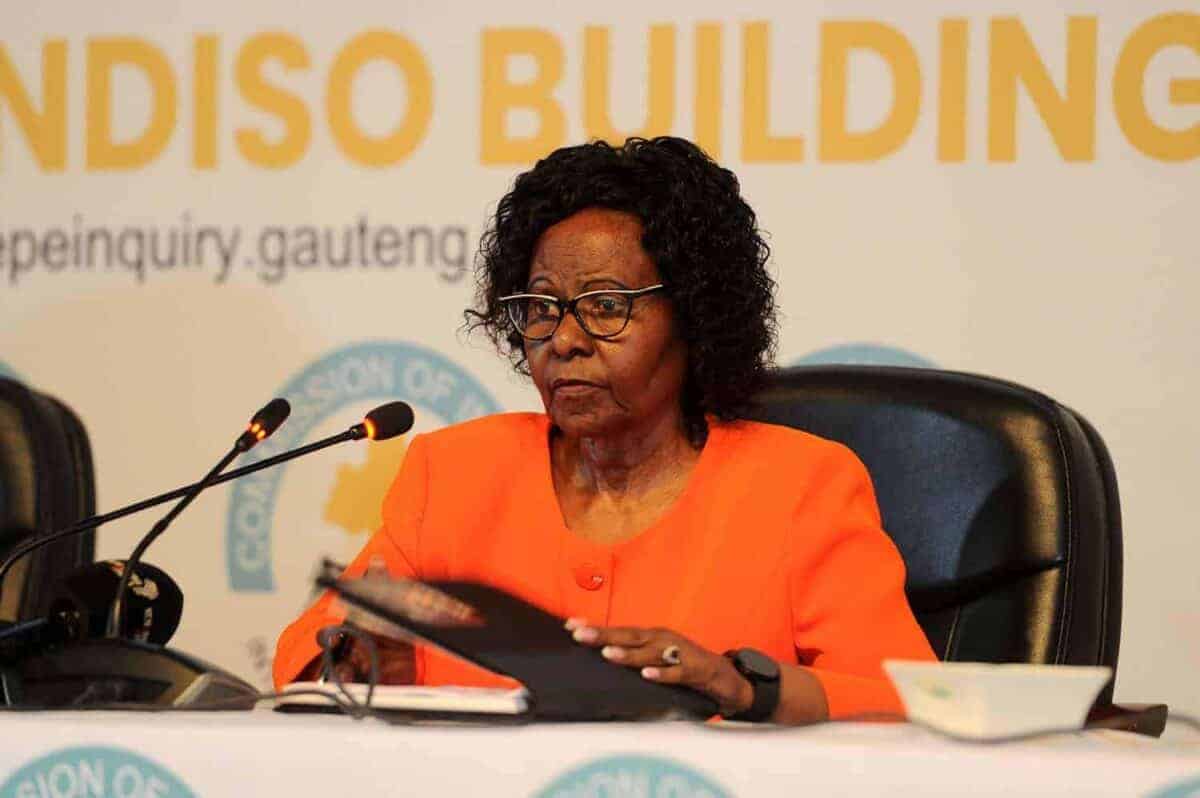
The Chairperson of the Commission, retired judge Sisi Khampepe, was forced to postpone Monday’s sitting to November 26.
The families have waited more than two decades for answers regarding hundreds of unresolved murders, disappearances, and other gross human rights violations that were handed over to the state after the Truth and Reconciliation Commission (TRC).
In January 2025, 25 families and survivors, brought an application to compel the President to establish a commission of inquiry into the interference in the investigation and prosecution of the TRC cases, together with a claim for constitutional damages.
Speaking on behalf of the Simelane family, Human Settlements Minister Thembi Simelane said the delay is painful and retraumatising for the 25 families involved.
Her sister, Nokuthula Simelane, was abducted and disappeared by apartheid security forces in 1983.
Her remains have never been found.
“On behalf of the Simelane family, well, it’s disappointment. We have been waiting since the announcement, to come here today and the proceedings get to be adjourned because still the state is not discovering today that there’s an enrollment of Advocate Semenya as part of the leaders of evidence, I think it’s actually taking us in our pain more and further.”
Commission spokesperson, Lionel Adendorf, acknowledged the delay, emphasizing the importance of a fair and transparent process.
Adendorf said that while Semenya’s involvement in the 2008 policy was known, it was not initially viewed as a conflict.
The TRC, established 30 years ago as part of South Africa’s restorative justice process, aimed to unite victims and perpetrators of apartheid crimes through truth, accountability, and forgiveness.