
By Lehlohonolo Lehana.
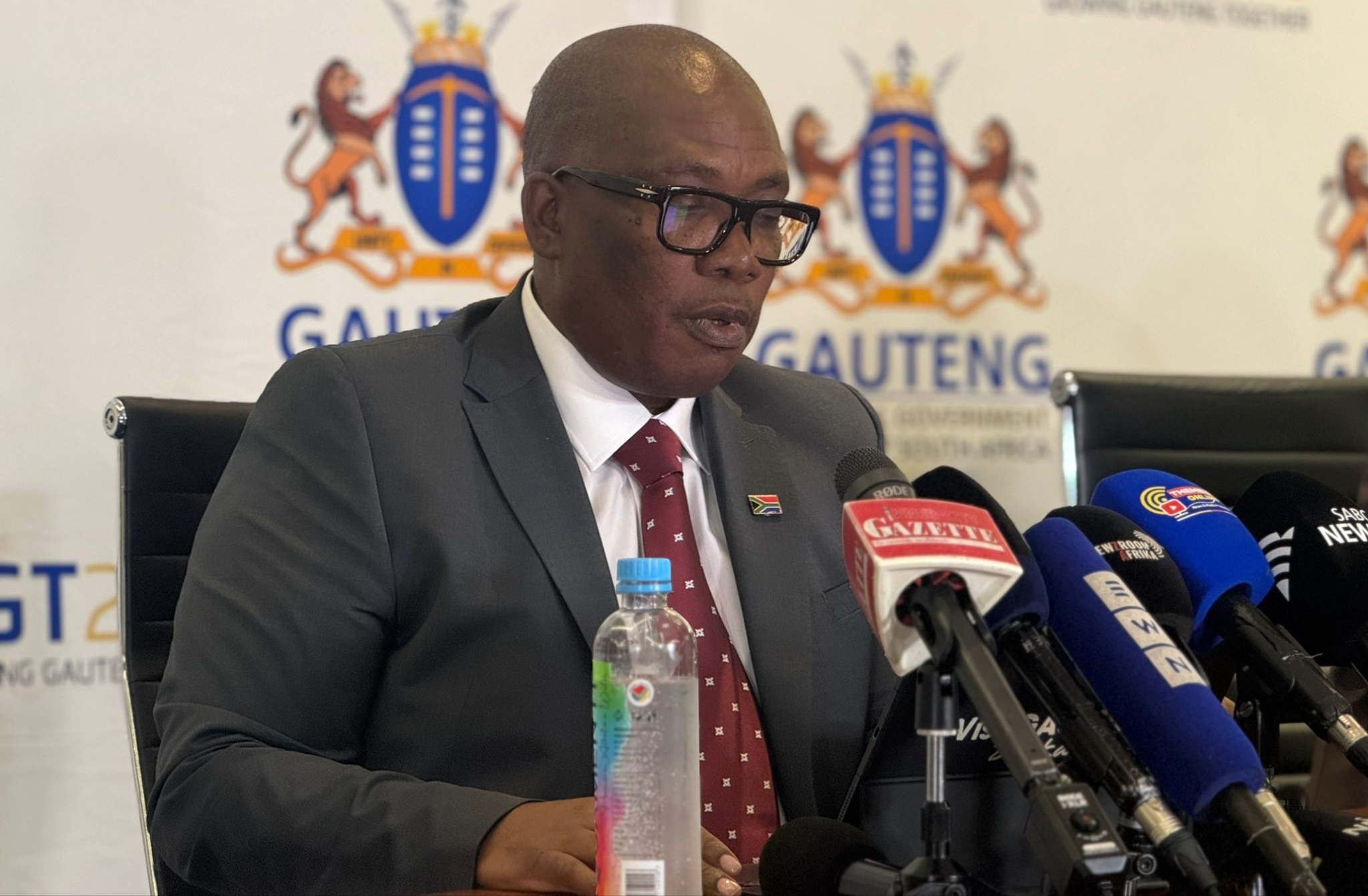
Gauteng premier Panyaza Lesufi pledged to safeguard women by deploying 1,022 Gender-Based Violence (GBV) response teams across 122 high-risk areas.
Speaking to the media at his office in Gauteng on Sunday, 1 November, Lesufi said the province had acted quickly in response to the murders, holding weekly progress meetings following President Cyril Ramaphosa’s directive to resolve cases against women, as well as forensic backlogs, alcohol-fuelled violence and municipal audits.
“Plans included deploying 1,022 GBV response teams across 122 high-risk areas, adding 56 social workers, strengthening seven specialised sexual offences courts and 144 victim-friendly facilities and fully involving the province’s 19 medical legal clinics to safeguard forensic evidence. Coordinated weekly by-law enforcement operations began in all municipalities from 1 October,” Lesufi said.
Lesufi said there were “18 shelters providing 363 beds, seven Thuthuzela Care Centres and expanded psychosocial support services to assist survivors of GBVF.” All centres are located near hospitals, including Old Natalspruit Hospital, Chris Hani Baragwanath Academic Hospital, Mamelodi Hospital, and Vosloorus Magistrates’ Court.
“Protecting our women and children is an absolute priority that demands immediate action, as delayed justice is no justice at all,” Lesufi said.
To strengthen evidence management, investigating officers are now required to carry crime kits to medical examinations to prevent delays and ensure that evidence is not left behind.
“Further interventions are focused on reducing forensic waiting lists, improving police station intake compliance, recovering lost dockets and strengthening the monitoring and reporting of missing-persons cases,” said Lesufi.
Lesufi said there are also efforts to address forensic backlogs.
The provincial government established an Identification Task Team to conduct a digital fingerprint audit of unidentified women and children. Priority DNA and forensic samples relating to cases of rape and murder of women and children have been secured for focused attention.
However, despite the progress, the province still lacks a forensic backlog baseline assessment and age profiling. These are targeted for completion by early November.
Gauteng acting police commissioner, Major-General Fred Kekana, said some of the murder cases had been resolved. “Let me start with the 11 incidences that affected women in Kempton Park or Ekurhuleni, in particular. Out of those cases, in five cases, we managed to resolve the suspect’s assailant in custody. When it comes to two cases of Olifantsfontein, they are still under investigation, [as well as] the one in Kwa-Thema, one in Moroka (Dam), and one in Springs,” said Kekana.
“The cases relating to the latest one of the famous runner, the late Elizabeth Moselakgomo, we managed to arrest three, but that’s not all. The investigation on that specific one is still ongoing to ensure that everybody who is involved in that specific case is brought to justice,” Kekana said.
The province has also reported progress in strengthening liquor law enforcement, with three of the eight directives completed and the remaining five being implemented.
Officials have conducted 7322 liquor outlet inspections, resulting in the closure of 20 outlets, the issuing of 459 non-compliance notices and the referral of 566 outlets to the Liquor Inspectorate for further compliance inspections.
A further 41 joint enforcement operations have been conducted with key stakeholders. The province has also submitted strategic inputs on the proposed Liquor Bill, while specialised warden training is scheduled to begin in early November.
Enforcement operations will continue to target unlicensed liquor outlets, repeat offenders and illegal trading beyond permitted hours.
Visible policing has also been intensified in high-risk areas, technical issues affecting the e-Panic Button application have been resolved, and integrated CCTV networks have been expanded while protecting survivors’ privacy. The province is also continuing with men’s programmes, trafficking support initiatives and partnerships with civil society and the private sector.