
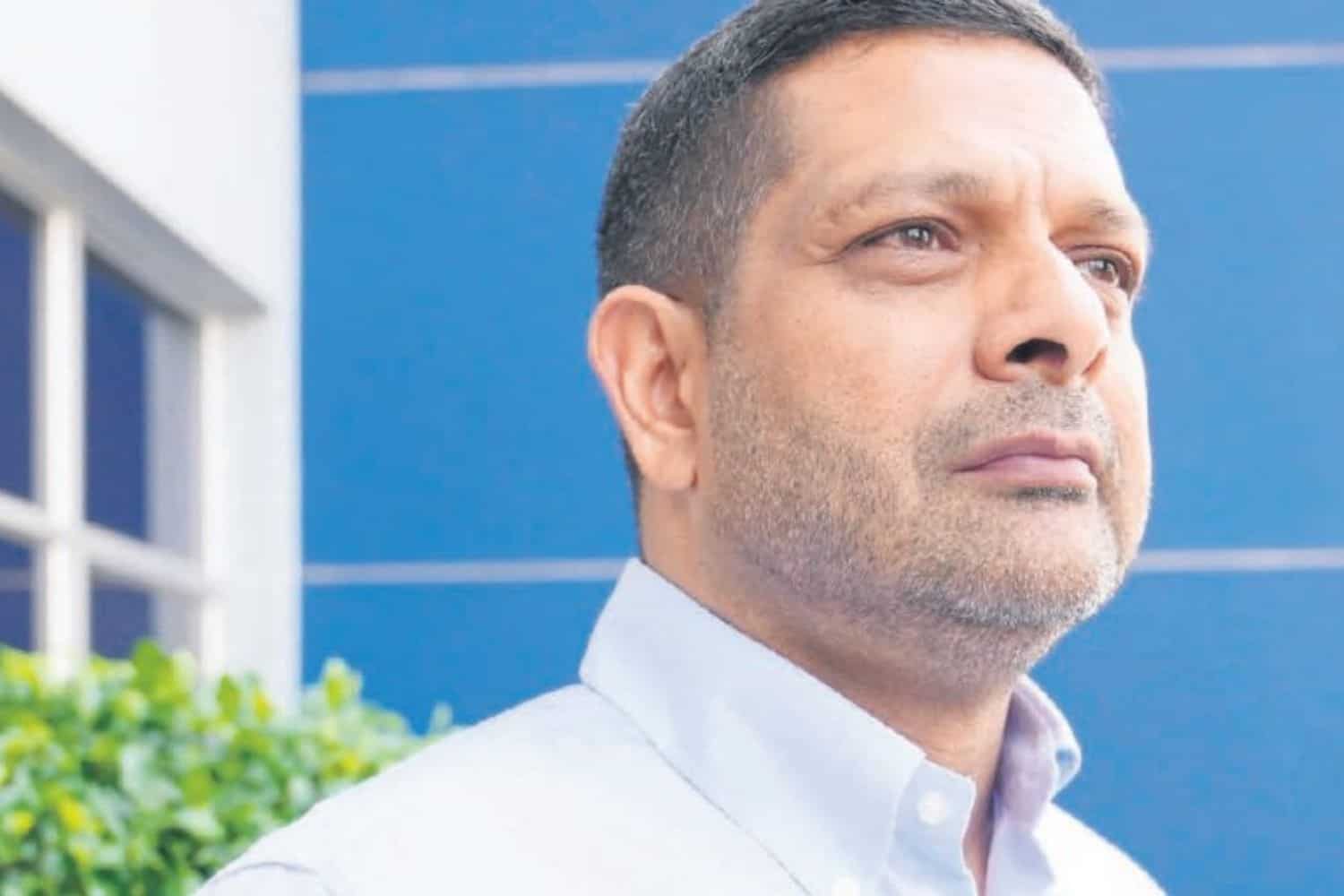
By Lehlohonolo Lehana.
The Madlanga Commission of Inquiry on Friday revisited 2014, the destructive SARS ‘rogue unit’ saga and criminal admissions made in a 2020 R25-million tax settlement between SARS and Adriano Mazzotti, the controversial cigarette manufacturer.
South African Police Service (SAPS) Crime Intelligence officer Major-General Feroz Khan remains in hospital and unable to testify as a key witness at commission.
Khan was illegally appointed in December 2020 by the now late Major-General Sindile Mfazi as acting national head of Crime Intelligence (CI). An established insider, Khan’s various roles included head of Gauteng CI and then later head of national counter security. He was then appointed deputy national head of CI.
SAPS national spokesperson Athlenda Mathe confirmed the death of Mfazi is now being investigated as murder and a person of interest is being questioned.
This after forensic examinations found a poisonous substance in his body.
The former DNC died in July 2021, initially thought to be from Covid-19 complications.
In early 2021, while Khan signed off on five irregular procurements, former president Jacob Zuma and his supporters were vocally heading for a showdown of note in July 2021.
The SAPS, the South African National Defence Force (SANDF) and the intelligence services had totally missed the moment, resulting in more than 300 deaths, mayhem and destruction.
The evidence leader advocate Adila Hassim resumed proceedings on Monday, reading into the record a series of deeply incriminating interactions between Major General Feroz Khan and auto spare parts businessman Ismail Vally.
Hassim submitted that the exchanges surrounding the Auto Parts tender indicated the arrangement was not intended to benefit Vally alone.
“In my submission, the WhatsApp conversations about the Auto Parts tender suggest the arrangement was not intended to benefit businessman Ismail Vally alone, but that Feroz Khan was also expected to benefit,” she told the commission.
According to Hassim, the messages showed Khan communicating with individuals inside the National Treasury while the procurement process was still underway.
“As we saw with the other tenders we were dealing with on Friday, there’s no direct communication between General Khan and Molefe Fani. The WhatsApp exchanges indicate Feroz Khan spoke with Molefe Fani to arrange a meeting involving himself and/or businessman Ismail Vally,” Hassim said.
The commission heard that SAPS supply chain boss Lieutenant-General Molefe Fani acted as Khan’s contact within the Treasury in relation to the procurement process.
WhatsApp messages showed Vally repeatedly asking Khan to seek updates from an individual referred to as “our man” regarding the progress of the tender.
The commission heard how conversations highlighted the monitoring of bidding competitors and the chase by Vally for further contracts with the SAPS. These logs suggested an attempt to influence the procurement process through “personal connections and discreet manoeuvres”.
The commission also examined evidence relating to R3.3 million private jet trip to London involving former City of Ekurhuleni manager Dr Imogen Mashazi, her husband Bonginkosi Mashazi, and two associates.
The inquiry heard that Carnilinx Chief Operating Officer (COO), Mohammad Sayed shared details of the trip with Khan.
Hassim questioned whether the trip had been properly declared to the municipality, arguing that such a benefit would require full disclosure.
“If this trip was declared by Dr. Mashazi, we believe it wasn’t. If this trip was declared by to the city, the council, or an ethics compliance structure within the city. If it was not declared, a failure to disclose a trip like this. As I said this is not just an ordinary trip or an economy flight with your family to a low budget hotel in London. The failure to disclose itself would be a matter of grave concern because it would mean a senior municipal officer accepted or was associated with a private benefit of extraordinary value without any transparency to the public institution,” said Hassim.
She argued that a multi-million rand private jet trip raises legitimate questions about whether the person who funded it expected influence, access or protection.
Hassim also expressed concern over Khan’s financial disclosures, saying evidence suggested he was earning significantly more than his state salary while serving as a senior Crime Intelligence official.
The commission is investigating the corruption and malfeasance in the South Africa’s criminal justice system.
Today marked exactly a year since KwaZulu-Natal (KZN) Police Commissioner Nhlanhla Mkhwanazi made explosive allegations of political interference in the criminal justice system.
His claims sparked national debate, prompted multiple investigations and renewed calls for accountability within law enforcement.
President Cyril Ramaphosa established the Madlanga Judicial Commission of Inquiry to investigate the claims.
Ramaphosa has praised the work of the commission and says he is open to extending its term.
The political fallout was swift: Police Minister Senzo Mchunu was placed on leave, Firoz Cachalia was appointed as the acting minister and the commission began hearing evidence from senior police officials and other witnesses.
Meanwhile the underworld kingpin Vusimuzi “Cat” Matlala will no longer appear before the commission on Tuesday after the evidence leaders requested that his testimony be deferred to a later date.
Matlala, who was subpoenaed to appear, remains a key figure in the commission’s investigation into allegations of corruption and interference within the criminal justice system.
Only his legal representatives are expected to attend Tuesday’s proceedings.
Commission spokesperson, Jeremy Michaels, said the issues to be canvassed with Matlala would only become clear once he eventually takes the witness stand.
“What we are saying for the moment so that the public understands is that Mr. Matlala has been subpoenaed to appear before the commission and you will then see how it unfolds from there. We try to draw a distinction between helping the public understand proceedings and protecting the sanctity of the process of evidence unfolding in the hearing of officially,” said Michaels.