
By Lehlohonolo Lehana.
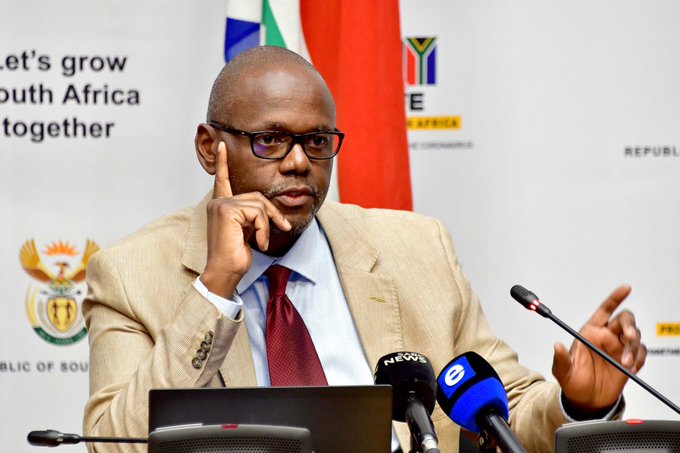
Presidency spokesperson Vincent Magwenya has dismissed the allegations that South Africa had a “sinister relationship” to develop nuclear weapons with Iran.
“South Africa does not have a sinister relationship with Iran. We do not have a nuclear weapons programme with Iran,” Magwenya told a media briefing.
Magwenya pointed out that the apartheid regime’s nuclear arms capacity was dismantled before the advent of democracy in 1994.
“The dismantling of that programme was verified by the United Nations,” he said.
“By the time a democratic government took over the leadership of this country in 1994 South Africa had ceased engaging in any form of nuclear capacity development for weapons purposes.”
This remained the case, he said.
“Again, we will reject the assertion that we have a sinister programme with Iran that is aimed at generating some form of nuclear weapons programme or capacity for South Africa.
He said the government challenged anyone who said otherwise to provide evidence to back up their claim.
“In the absence of evidence, we will reject any assertion of any claim.”
US state department spokeswoman Tammy Bruce earlier this week told a media briefing in Washington that South Africa was “reinvigorating its relationship with Iran to develop commercial, military and nuclear arrangements”.
Bruce said this was one of the reasons why the US was reviewing its relationship with South Africa, which reached a new low last week with the expulsion of SA’s ambassador to Washingto, Ebrahim Rasool.
The White House last month also listed South Africa’s relationship with Iran as one of the factors that informed President Donald Trump’s decision to sign an executive order suspending aid to South Africa, along with the alleged seizure of white-owned land.
Magwenya reiterated that this was a fiction and that the Expropriation Act signed into law by Ramaphosa in late January, and again by Bruce this week, did not enable land grabs.
Cape Independence Advocacy Group visit to US
President Cyril Ramaphosa takes a “very strong dim view” of a proposed visit to the United States of America by the Cape Independence Advocacy Group to seek the Western Cape’s secession from South Africa.
Our constitutional democracy that we forged in 1994, created a singular, non-racial state that recognises and protects our unity in diversity. From Musina to Cape Town, we are one democratic society that should never be allowed to fall under the chasm of race divide.
“There is no part of our beautiful land that can be allowed to secede. The President cautions everyone to exercise his or her Constitutionally given right, but to do so in the manner that does not undermine and subvert Constitutional democracy in South Africa.
“We should all be actively engaged in building a better South Africa in the face of unpredictable geo-political dynamics,” Magwenya said.
South Africa’s strained relations with US
South Africa has grappled with tensions with the United States of America, following the promulgation of the Expropriation Act of 2025 and, more recently, the expulsion of South African Ambassador to the USA, Ebrahim Rasool.
Magwenya explained that the Expropriation Act of 2025 replaces the Apartheid government’s 1975 Expropriation Act to align it to the country’s “land reform policies in line with our democratic Constitutional order”.
“The new Act introduces a transparent expropriation basis that strikes a healthy balance on land reform with legal protections. The Expropriation Act followed all legal prescribed channels to be enacted into law.
“Therefore, it leaves one to wonder what wrong have we done as a country with respect to this particular Act. We remain a rule of law society, and we adhere unwaveringly to the principles of our Constitutional democracy.
“We strongly reject any insinuation or assertion that through the Expropriation Act, we are committing acts of human rights violations, we are arbitrarily expropriating land,” Magwenya said.
On the return of Ambassador Ebrahim Rasool, Magwenya said government urges all political formations planning homecoming rallies for the ambassador to “refrain from partaking or engaging in actions that may seem inflammatory” and that may “worsen the already volatile diplomatic relationship with the United States”.