
By Lehlohonolo Lehana.
The National Commissioner of Police Fannie Masemola says the directive by suspended Police Minister Senzo Mchunu to disband a Political Killings Task Team (PKTT) was an overreach and disruptive.
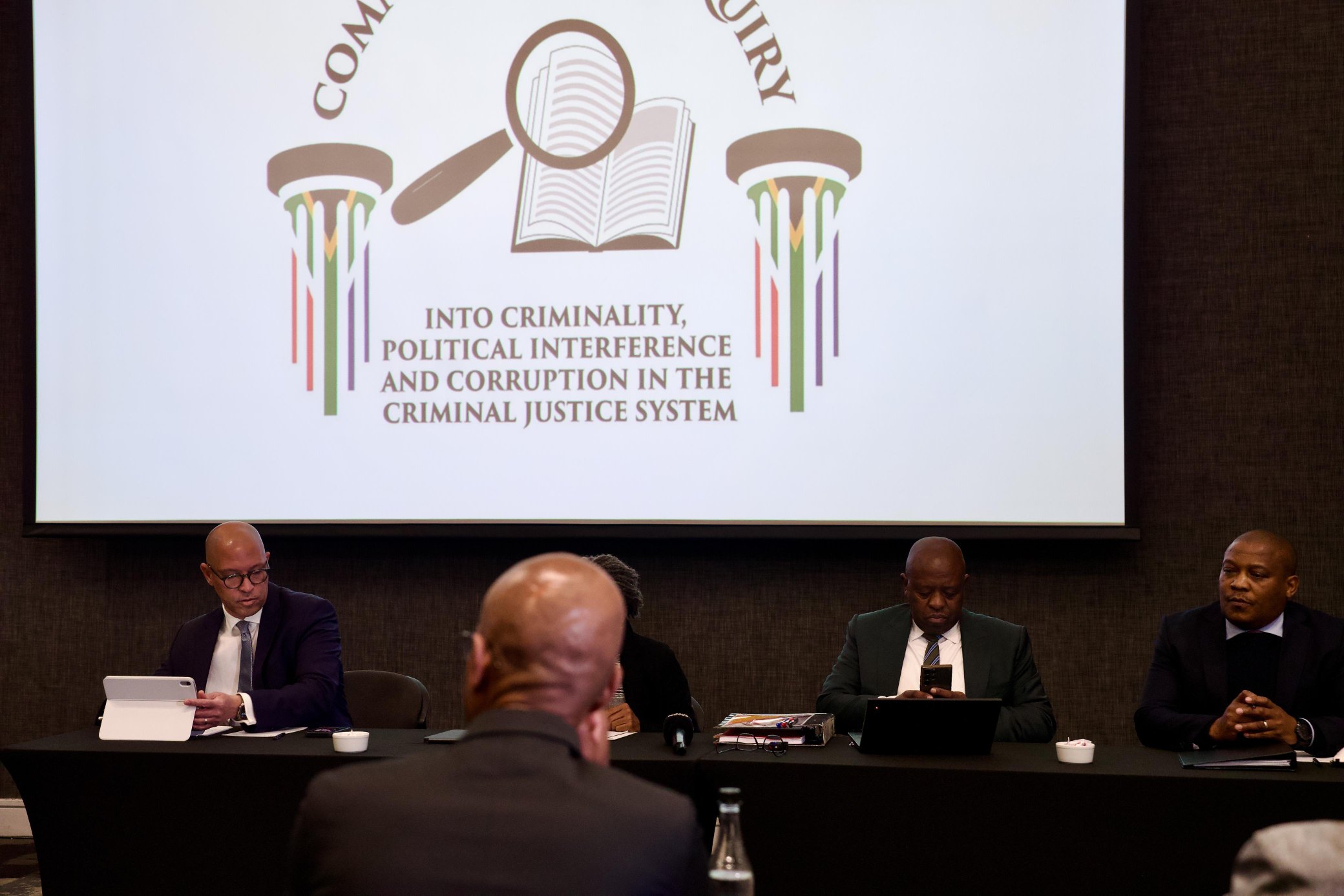
Masemola is testifying before the Madlanga Commission of Inquiry, on Monday, 22 September 2025.
The hearings are being held at the Brigitte Mabandla Justice College in Pretoria, where members of the public will also be allowed to attend proceedings.
The commission, chaired by Justice Mbuyiseli Madlanga, began its hearings on Wednesday, September 17, with general Nhlanhla Mkhwanazi as its first witness.
Mkhwanazi outlined several instances of how politicians meddled in the functioning of the SAPS.
The task team was established in 2018 to deal with politically motivated murders, particularly in KwaZulu-Natal. It played a central role in prosecuting cases linked to election-related violence and political rivalry.
President Cyril Ramaphosa set up the commission chaired by retired judge Mbuyiseli Madlanga after Mkhwanazi made allegations of corruption and political interference in the criminal justice system which implicated Mchunu.
During Monday’s proceedings, Evidence leader Terry Motau asked whether the Mchunu ever “expressed any dissatisfaction or concerns about the task team performance and its activities?”
Masemola said Mchunu had never expressed to him any “dissatisfaction or unhappiness” about the PKTT.
“This lack of prior warning made the subsequent developments all the more unexpected and perplexing, “he said.
A large part of Masemola’s testimony on Monday related to the PKTT.
He also referred to Shadrack Sibiya, the recently suspended deputy commissioner of crime detection, saying the “unsubstantiated allegations” that Sibiya had links to criminal suspects were under investigation.
Sibiya has denied wrongdoing in relation to another part of this saga.
Masemola testified on Monday that the PKTT started its work in 2018, was successful in its mandate and had “an unmatched success rate”.
Political killings were complex cases so the work the PKTT did was necessary.
Masemola explained that political killings usually involved someone ordering a hit and needing to source a hitman. A firearm or firearms needed to be accessed as well, and these had to be channelled to the hitman.
Masemola said that when the PKTT was directed to focus on specific crimes, there would be developments in those cases.
“They’re bound to make a breakthrough,” he said.
But based on a letter referenced during the commission last week, Mchunu ordered that the PKTT be “disestablished” because it was not “adding any value to policing in South Africa”. That was on 31 December 2024.
Masemola was of the view that Mchunu, who is on special leave over the accusations levelled against him, overstepped his mandate when signing off the directive to disband the task team.
He viewed this as a “total encroachment” on his job as national commissioner.
Masemola also provided some insight into what happened in the run-up to the PKTT disbandment directive.
In 2024, 10 PKTT members were dispatched to help an organised crime investigating unit in Gauteng.
Masemola told the commission that Mkhwanazi had contacted him wanting to know what was happening and Masemola told him that he had “nothing to do with the disbandment”.
He said he told Ramaphosa in February that dissolving “such a successful team” without due process was damaging. The president, he said, promised to speak to Mchunu, but never got back to him.
Masemola said if disbandment was necessary, it should have been a phased process: “If ever it has to be done it cannot be done in this abrupt manner.”
He said he asked Mchunu: “What is the reason for the disbandment of the team? I never got a reason as to why.”
Earlier during proceedings Masemola said that as the national police commissioner, if he was told to follow an unlawful instruction, he would not.
Mchunu’s directive had effectively been viewed as unlawful.
Masemola also testified that he realised he could not simply stop Mchunu, so he suggested phasing out the PKTT instead of abruptly disbanding it.
Motau SC, pointed out that Masemola’s stance was “inconsistent” with his previous statement that he would not follow an unlawful order.
Justice Madlanga, said that even though Masemola had testified earlier that he would not obey an unlawful instruction, it seemed that he had relented in the end.
Madlanga said it therefore seemed that Masemola should amend his earlier answer to: “I would not obey an unlawful instruction unless the minister breathes down my neck.”
Masemola made it clear that the PKTT was never actually disbanded. He is expected to continue testifying when the commission resumes on Tuesday, 23 September.