
By Lehlohonolo Lehana.
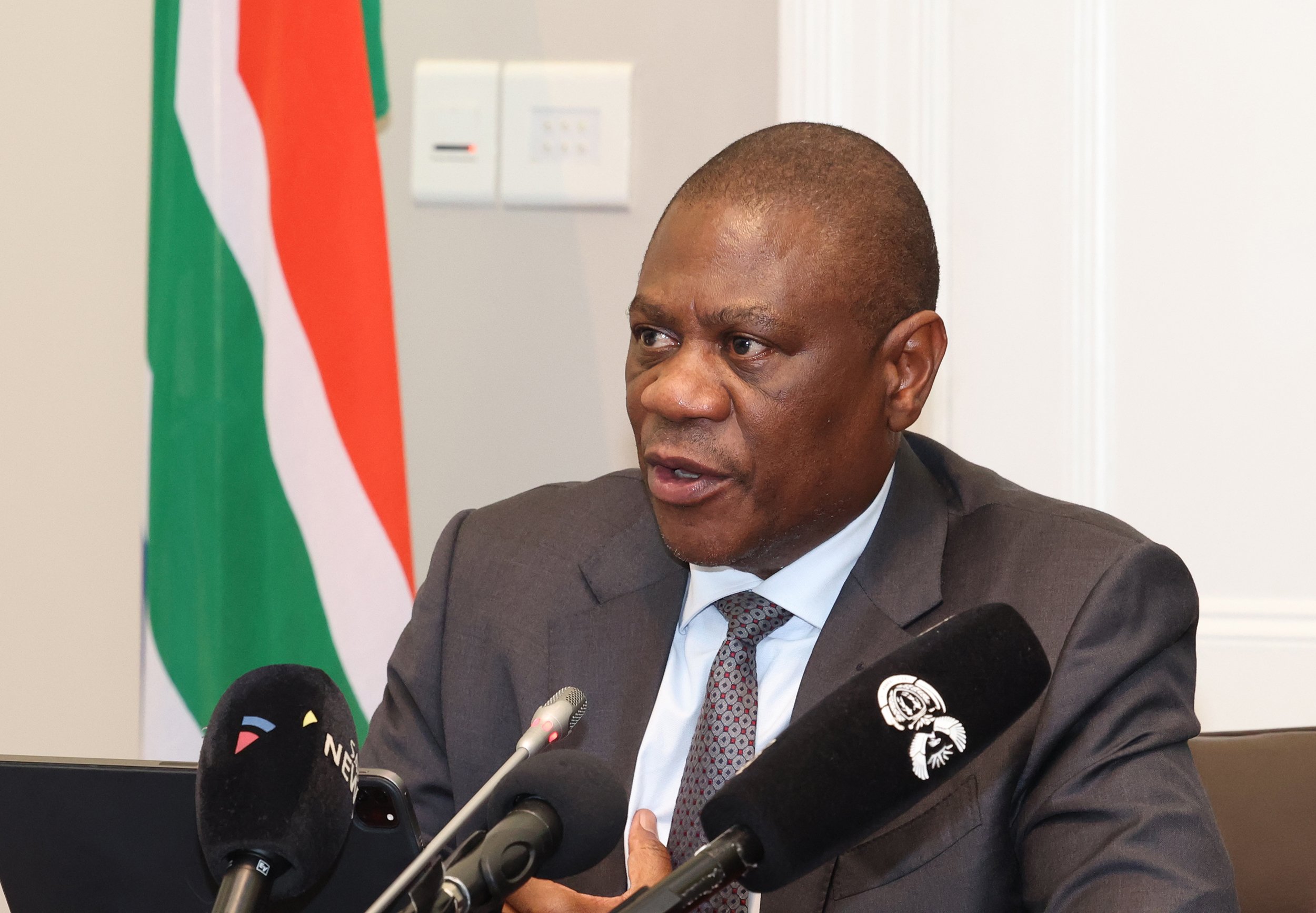
Deputy President Paul Mashatile promised swift action to remove the proverbial bad apples in the South African Police Service (SAPS) in Parliament on Thursday.
Explosive testimony heard this week before the Madlanga Commission of Inquiry provided more detail about the alleged web of corruption between top-ranking police officers and an alleged criminal cartel.
Mashatile stressed that these inquiries are crucial for identifying and addressing vulnerabilities, ensuring that SAPS can effectively combat gangsterism and other violent crimes.
Despite the challenges, the Deputy President moved to reassure MPs and the public that reforms are underway. “We will not win overnight. The police is a big force all over the country,” he said, noting the need for patience as the government works to purge corrupt officers.
Mashatile was responding to MPs on Thursday, 30 October, during a parliamentary question and answer session which focused on municipal governance and policing.
He was asked by DA chief whip George Michalakis whether he has found that the interventions to bolster crime intelligence in the police to stem gangsterism and other forms of violent crimes, have been effective.
He said under the Justice, Crime Prevention and Security (JCPS) cluster, several measures have been introduced to restore the integrity and performance of SAPS’ Crime intelligence.
The SAPS has developed what we call the National Anti-Gang Strategy aimed at dismantling gang related criminal networks through intelligence gathering, proactive policing, community engagement and stakeholder collaboration.
The Deputy President also said the SAPS was further extending the scope of the anti-gang units to include gang-related cases such as drug trafficking shootings.
“We are looking at this beyond just the Western Cape, but also now looking at the Eastern Cape and Gauteng. The units will also be supported by operations like Operation Shanela and Operation Vala Umgodi in the Free State, where you have mines.”
Mashatile said Acting Police Minister, Professor Firoz Cachalia, has announced a multi anti-gang plan in the Western Cape, already involving the National Prosecuting Authority, Asset Forfeiture Unit, Special investigating Unit and SAPS.
This is to ensure that we combat gangsterism and extortion. This plan has already been finalised with funding allocated for implementation.
“Furthermore, SAPS has increased what we call digital analytics, surveillance and data-driven policing resources to enhance intelligence-led operations, particularly in hotspot areas.”
South Africa’s crime statistics remain alarming, with over 27,000 murders reported annually and gangsterism fueling violence in provinces.
The deputy president also dismissed the notion that Western Cape’s municipal governance model is the best in the country as it fails to address the legacy of apartheid.
He insisted that while several municipalities in the Western Cape were doing well in terms of audit outcomes, there was a significant and persistent disparity between the well-being of many residents residing in townships and informal settlements of the Western Cape.
“Although the province is often recognised for strong financial governance, overall, this does not reflect the lived experience of many black communities who continue to struggle with social and economic challenges,” he said.
The DA has consistently been criticised over a perceived lack of service delivery in largely former township areas such as Khayelitsha, Langa and Gugulethu.
During the 2023/2024 audit cycle, 41 municipalities received clean audits. Many are either run outright by the DA or DA-led coalitions. The City of Cape Town (which is DA-led) was the only metro municipality that received a clean audit.
Watch Live in the video below:
Video Courtesy of Parliament.