
By Lehlohonolo Lehana.
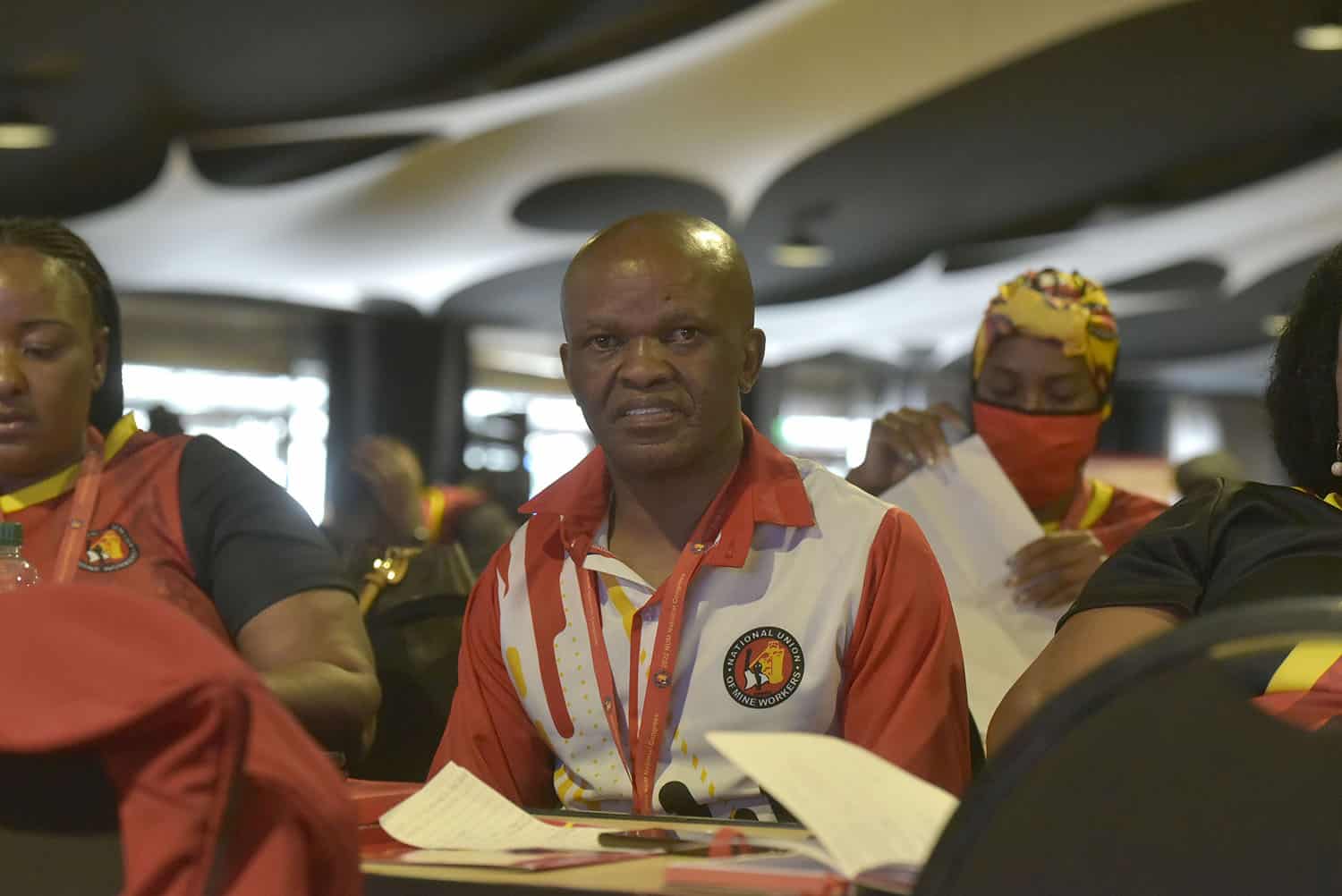
The National Union of Mineworkers (NUM) is hosting its 18th National Elective Congress at Birchwood Hotel in Boksburg, East of Johannesburg.
The three-day congress will see delegates debate the challenges confronting workers in the mining, construction, energy, and metal sectors among other issues.
NUM President Dan Balepile, in his opening address, questioned how the African National Congress (ANC) could claim to serve workers while entering into partnerships with parties that oppose working class interests.
Balepile said NUM had no intention of cutting ties with the ANC. However, it believed that the political organisation has changed from what it was in 1994.
He raised concern that the policies of other Government of National Unity (GNU) parties were mostly not aligned with what the ANC stands for.
NUM continues to be plagued by warring factions, vying for control of the union’s vast financial resources.
Its past two conferences were characterised by debilitating factional fights. The union, SA’s oldest at more than 43 years, is now a shadow of the mighty organisation that led the historic 1987 strike that lasted 21 days and paved the way for the eventual fall of the apartheid regime.
Delivering a message of support on behalf of the ANC, the party’s Secretary-General Fikile Mbalula pledged ongoing support for fair wages, improved housing, and industrial transformation to ensure South Africa’s mineral wealth benefits the majority.
He also acknowledged NUM’s historical role in the liberation struggle and post-apartheid transformation.
“The history of NUM and the ANC is an intertwined narrative of resistance and resilience. From the depths of the mines to the frontlines of political change, NUM has stood as a bulwark against exploitation and oppression,” Mbalula said.
The Congress comes at a time of profound challenge for South Africa’s working class.
Against this backdrop, the Congress aims to reassert NUM’s leadership and deepen worker solidarity, both locally and globally.
Mbalula emphasised the ANC’s continued commitment to the working class, describing it as the “primary motive force” of the National Democratic Revolution (NDR).
He acknowledged the ANC’s electoral decline in the 2024 general elections but defended the party’s decision to form a GNU as a strategic necessity rather than a retreat.
“We didn’t choose a narrow coalition. We opted for inclusive governance to recover from a major setback. The revolution must adapt to conditions—without surrendering its goals, “he said.
Mbalula praised NUM’s long-standing role in the liberation struggle. He commended its continued importance in advocating for workers.
The ANC does not take these invitations lightly. We recognise the National Union of Mineworkers as the single union that shaped the contours of the very fabric of our revolutionary struggle,” said Mbalula.
Meanwhile after two quarters of declining production, mining is now officially in recession. The once mining-heavy JSE now hosts just 35 mining companies, seven of which have no operations at all in South Africa.
In 1987, there were more than 600 listings on the JSE, with mining accounting for more than half of them. This was the engine that powered the industrialisation of SA.
Mining houses such as Anglo American and AngloGold Ashanti have fled SA, body and soul. Some such as Lonmin quietly exited, and nearly all have diversified abroad.
Glencore is suspending operations at two plants in the Glencore-Merafe Chrome Venture, citing high electricity prices, logistics challenges with Transnet rail and ports, and a downturn in the global ferrochrome market.
This comes at a cost of billions of rands in export earnings and highlights the potential difficulties of promoting minerals beneficiation when electricity prices have shot up 700% in the last decade.