
By Lehlohonolo Lehana.
Cabinet has expressed its heartfelt condolences to the families that lost their loved ones during the devastating storms and heavy floods in the Eastern Cape.
The death toll has risen to 71, with more than 1,000 people displaced.
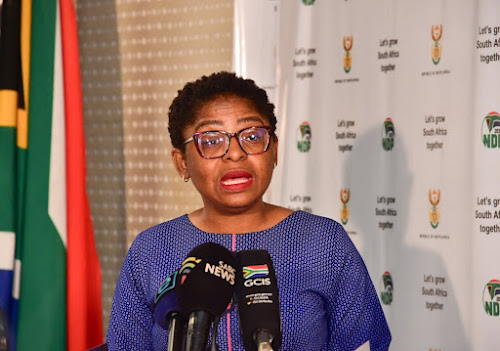
Minister in The Presidency, Khumbudzo Ntshavheni briefed members of the media on the outcomes of the Cabinet meeting held on Wednesday, 11 June 2025.
Ntshavheni, said government is coordinating rescue and support operations through the inter-Ministerial Committee (IMC) on Disaster Management.
“Emergency teams have also been deployed from Gqeberha, East London and the Chris Hani District to the affected areas to support local first responders. Cabinet extends its condolences to the families of those who lost their lives in the flooding across various areas in the Eastern Cape,” Ntshavheni said.
Earlier this week, a severe winter weather system resulted in a significant and dramatic drop in daytime temperatures in all provinces. This resulted in severe incidents of extremely cold weather, with coastal provinces experiencing rough seas and rainfall.
The Eastern Cape was the hardest hit by the severe weather conditions.
In neighbouring KwaZulu-Natal, 68 schools across nine districts have been damaged but no fatalities have been recorded.
The heavy snow, rains and gale force winds have also left nearly 500,000 homes without electricity since Tuesday – and state-owned power provider Eskom says efforts are being made to restore connections.
Travel Expenses
Ntshavheni, says she will not compromise national security for political expediency by disclosing information not meant for the public.
The minister was responding to ActionSA, which on Tuesday wrote to the Speaker of Parliament, Thoko Didiza, to demand urgent intervention and “defend the integrity of Parliament’s oversight role”.
The party sent a parliamentary question to the minister, requesting a breakdown of all her official travel and that of her deputy ministers since they assumed office on 3 July 2024.
Ntshavheni said she does account for her actions, just not in the way ActionSA wants.
The minister said her work on state security requires that some of her travel plans be kept confidential, as sharing them could compromise national security.
Ntshavheni said the state security only discloses summits that the ministers are attending, not private meetings.
“It’s just not the travel to say which country you have gone to, it’s to say what meetings and all those other details. If you understand the nature of my work, you’ll realise that 80% of my travel is for work related to state security. If we release it in public, it would compromise some of the initiatives we’re working on,” said Ntshavheni.
You’ll recall when the Russia-Ukraine war started and the African leaders initiative led by Ramaphosa to go to Ukraine, it required some of us to take that type of preparatory work for that and if you disclose such details, you compromise the operations that you are running as a country and thus fail national security.
Terbofos
Cabinet has approved banning all Terbofos imports following suspected food poisoning incidents last year across the country.
Scores of children in Soweto died after eating snacks contaminated with Terbucycline, commonly used to kill rats.
Cabinet received a report of the Inter-Ministerial Committee on food-borne Illnesses, which focused especially on organophosphate pesticides, which farmers commonly use.
Preliminary investigations revealed that the Soweto children died from eating food contaminated with Terbofos.
“Cabinet has approved the ban and the importation of Terbufos in South Africa, a chemical compound classified as an organophosphate, commonly used as an insecticide and pesticide.
“While specifics to determine the exposure by the children remain uncertain, the possibility that the children consumed food contaminated with Terbufos purchased from a local spaza shop remains the most viable explanation.”
Ntshavheni said the government will work with experts to provide safer alternatives to Terbufos for farmers to ensure food security.
“The Department of Agriculture will lead the consultation process on the ban in line with its 2010 Plan to eradicate poisonous insecticides and pesticides over a period of time, and also work on identifying safer alternatives to Terbufos,” the minister added.
Terbufos has been banned in several Southern African Development Community (SADC) countries, including Mozambique, Namibia, Angola and Zambia.