
By Lehlohonolo Lehana.
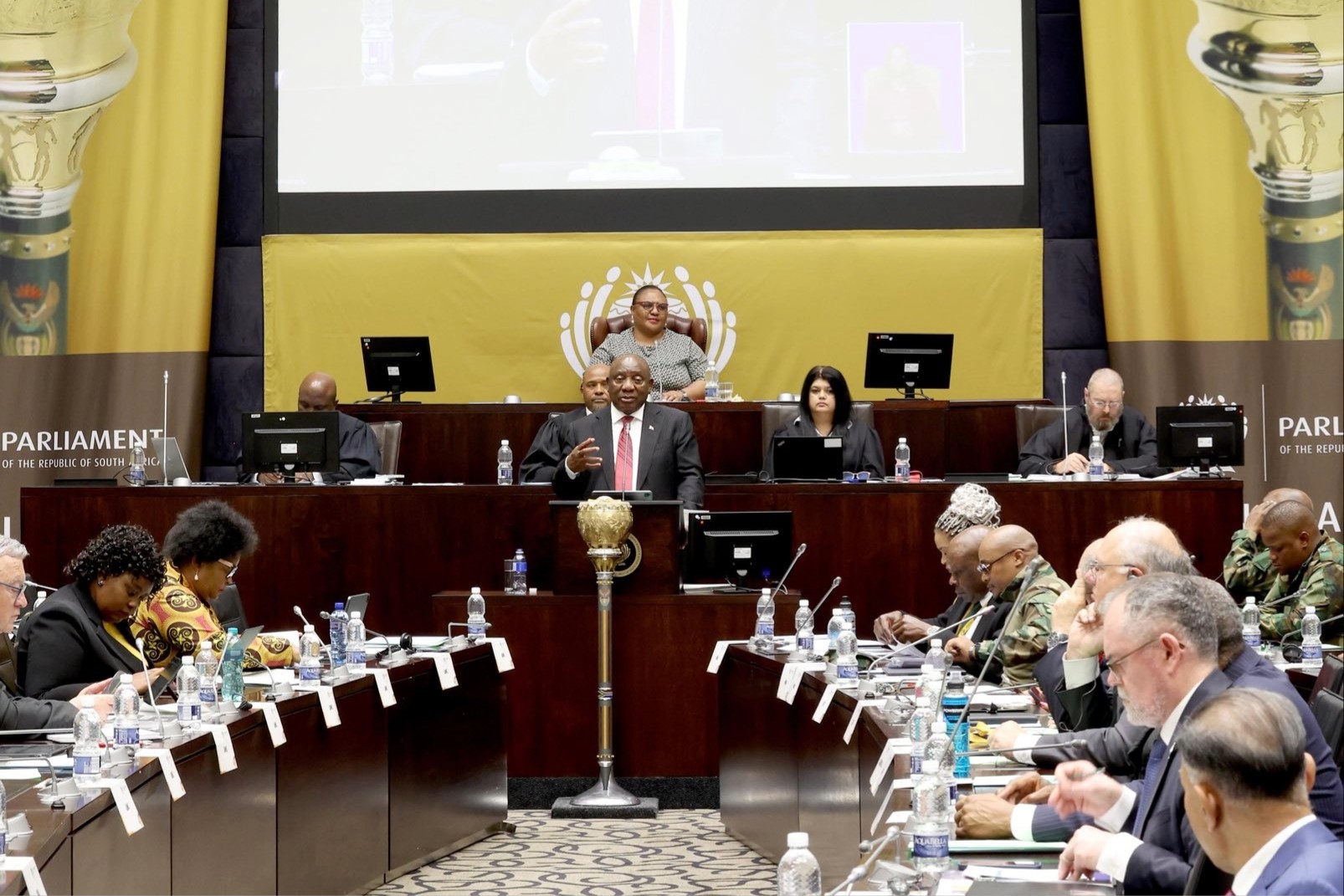
The parliamentary ad hoc committee established to investigate the explosive allegations by KwaZulu-Natal Police Commissioner Lieutenant General Nhlanhla Mkhwanazi got off to a rocky start on Tuesday, 07 October 2025.
The ad hoc committee is running a parallel hearing with the Madlanga Commission of Inquiry, which is also investigating Mkhwanazi’s accusations.
The delay was because MPs, were unhappy that Mkhwanazi’s initial statement presented at the committee on Tuesday was the same as the one provided to the Madlanga Commission.
Mkhwanazi was the first witness to testify.
The oral hearings before the ad hoc committee will also feature many of the witnesses at the Madlanga Commission. Key players, including Mkhwanazi, Senzo Mchunu, Lieutenant General Shadrack Sibiya, Brown Mogotsi, Vusimuzi Matlala.
While the ad hoc committee has given itself 30 days to finish its work, that seems unlikely. It’s still finalising its witness list, but it could include more than 30 people.
Former Limpopo MEC for Cooperative Governance, Human Settlements and Traditional Affairs, Soviet Lekganyane is the committee’s chairperson, elected during the first meeting of the committee in August.
Lekganyane holds a secondary teacher’s diploma, an LLB degree, a bachelor’s degree in politics, an honours degree in politics and a post-graduate diploma in leadership and public management.
Well-renowned Cape Town advocate Arendse is leading the team of evidence leaders. He has practised extensively in constitutional public interest law since 1989.
Arendse is assisted by two advocates. The first, Maria Mokhaoetsi, and Advocate Lerato Zikalala serve as an evidence leader alongside Mokhaoetsi.
After a lengthy adjournment, the ad hoc committee resumed at 3pm, finally beginning its official public hearings.
Mkhwanazi has detailed to Parliament how Senzo Mchunu, the police minister who is on special leave, and his chief of staff got to know each other.
Mchunu was appointed police minister in June 2024, Mkhwanazi visited his home and they chatted over coffee.
The individual who facilitated the introduction and who was also present at that get-together was Cedrick Nkabinde, an acquaintance of Mkhwanazi’s who went on to become Mchunu’s chief of staff in the police ministry.
Mkhwanazi told Parliament that Nkabinde and Mchunu may have known each other because of a police watchdog investigation involving accusations that Mchunu destroyed evidence in a now years-old investigation into a death.
This was part of Mkhwanazi’s testimony on the first day of Parliament’s ad hoc committee that is looking into accusations that Mkhwanazi initially made public in July.
During the evening, Mkhwanazi doubled down on a key accusation, previously made at the Madlanga Commission, that the Investigating Directorate Against Corruption (Idac) had good investigators, but also a rogue structure within it.
He said this rogue structure was responsible for arresting Crime Intelligence head Dumisani Khumalo and several colleagues in June this year, after allegations of irregular appointments, which they denied.
“Khumalo’s arrest is a project,” Mkhwanazi insisted on Tuesday, saying it had been executed to disrupt investigations into criminal activity in Gauteng.
He said the Idac investigator who arrested Khumalo was a former Crime Intelligence officer and that it was also a coincidence that the husband of the Idac head (presumably Andre Johnson) also worked at Crime Intelligence.
Mkhwanazi told Parliament that Nkabinde was identified as the person who may have been involved in a letter, dated the end of 2024, that states Mchunu was disbanding the Political Killings Task Team (PKTT).
Mkhwanazi told the ad hoc committee that he knew Nkabinde as a colleague, not as a close friend, because of Nkabinde’s stint at the Independent Police Investigative Directorate (Ipid), then headed by Robert McBride.
Nkabinde had initially been an officer with the South African Police Service, but left it for Ipid’s “greener pastures”.
Mkhwanazi testified that Nkabinde had told him he “couldn’t stand the wrong” that was happening at Ipid involving McBride and forensic investigator Paul O’Sullivan.
He said that while he did not believe much of what Nkabinde had told him, he asked him about the nature of the Ipid investigation linked to Mchunu.
“He said there was a death of someone in KZN and [Mchunu] at the time was accused [of having] interfered, with the destruction of … a crucial [piece of] evidence that was there,” Mkhwanazi said.
The investigation apparently happened when Mchunu was KwaZulu-Natal premier, between 2013 and 2016.
Police officers and bodyguards had been working with Mchunu, and this was how the Ipid, which investigates accusations relating to police, became involved.
“As to the reason why they never arrested [Mchunu, who was the KwaZulu-Natal premier at the time, I don’t have the details of it, “Mkhwanazi said.
“It’s part of the things I’m still making inquiries on.”
Mkhwanazi said when Mchunu became police minister, he appointed Nkabinde as his chief of staff.
The ad hoc committee is expected to continue on Wednesday, with MPs having an opportunity to question Mkhwanazi on his explosive claims.