
By Lehlohonolo Lehana.
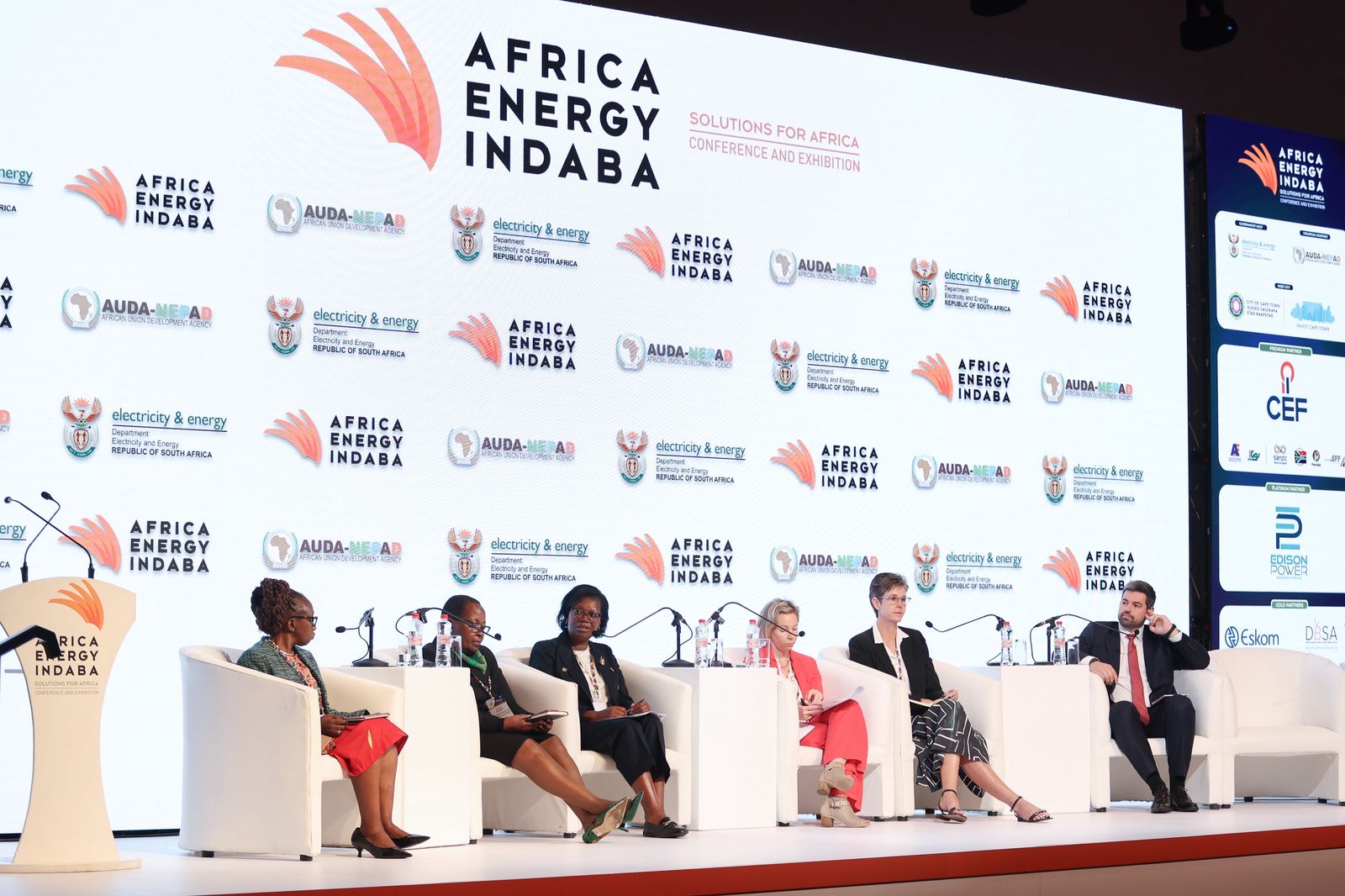
President Cyril Ramaphosa delivered a keynote address at the 18th Annual Africa Energy Indaba, in Cape Town on Wednesday, 4 March 2026.
The three-day Indaba takes place from 3 to 5 March 2026, at the Cape Town International Convention Centre (CTICC).
The Indaba takes place under the theme: “Africa Energy – Pathway to Prosperity (Choices for Capital, Community, Commerce and Climate).”
The Indaba brings together African energy leaders, policymakers, investors and development partners to advance energy security, regional integration and investment across the continent.
Ramaphosa said, “The main focus in our country has really been the energy landscape and the reform thereof.” Electricity is an absolute necessity in the lives of all South Africans. Today, 93% of South African households have electricity.”
However, most of his address was concerned with Africa.
Africa’s aim was to be able to meet its energy needs, with affordable and sustainable energy, which allowed development, while also being resilient and competitive in the export of energy, he affirmed.
“Energy is not a luxury; it is a must,” he asserted. “Without energy, the broader aspiration of development, of integration, of the African continent, of access and inclusion, cannot be achieved.”
It was also a matter of equity and equality. It could not be allowed that so many Africans had no access to electricity. This was an issue that needed urgent attention. Electricity allowed development, job creation and improved lives. When the continent talked about energy, it also needed to talk about industrialisation.
“Africa’s energy agenda must be linked to an industrial agenda,” he stressed. “When this continent speaks about critical minerals, it must also speak about beneficiation [and] value-addition.”
Developed countries have agreed that minerals should be beneficiated in the countries that produce them, he noted. For the energy transition in Africa to be just and inclusive, it had to support industrialisation and development. “The energy transition must be just!”
African countries needed to develop together, he emphasised. Energy integration was an objective of the African Union and was a necessity.
“Across Africa, the logic of integration is visible in regional power pools ” he cited. “It’s already happening. An integrated system allows resources to be used more efficiently.” Such a system would also allow more competitive electricity markets and spread risk.
The President also reflected on the heightened volatility in global energy markets in light of the war in the Middle East, which had resulted in the Strait of Hormuz – an important maritime trade route for cargo and oil and gas shipments – being inaccessible.
“Africa is already experiencing the impact of the escalating conflict in the Middle East, which strains supply chains and [contributes to] higher energy prices. As we have seen with Russia-Ukraine and during the Covid-19 pandemic, shifting geopolitical sands underscore the vulnerabilities of import-dependent economies across Africa.
South Africa has called for immediate ceasefire and an end to “this madness,” he said, adding that while US President Donald Trump is preoccupied with the war, Pretoria will press for dialogue if the opportunity arises.
Ramaphosa stressed that “dialogue is always the best way” to end the war and prevent further “unnecessary” loss of life.
Tensions have escalated across the region since the US and Israel launched large-scale attacks on Iran on Saturday, which have since killed over 1,000 people, including Supreme Leader Ali Khamenei and top military officials.
The strikes came as talks between Washington and Tehran over the latter’s nuclear program were ongoing under Oman’s mediation.
Iran has responded with drone and missile strikes targeting Israel as well as Gulf countries, which are home to US military assets.
Ramaphosa called the situation in the Middle East “calamitous” and warned that it is the “most dangerous development,” with the potential to spill beyond the region as more countries become involved.
“The world is facing a very dangerous period at the moment,” he added.
The president said he has spoken to several heads of state in the region to convey South Africa’s commiserations, express hope for the safety of their citizens, and request protection for South Africans in their countries.