
By Lehlohonolo Lehana.
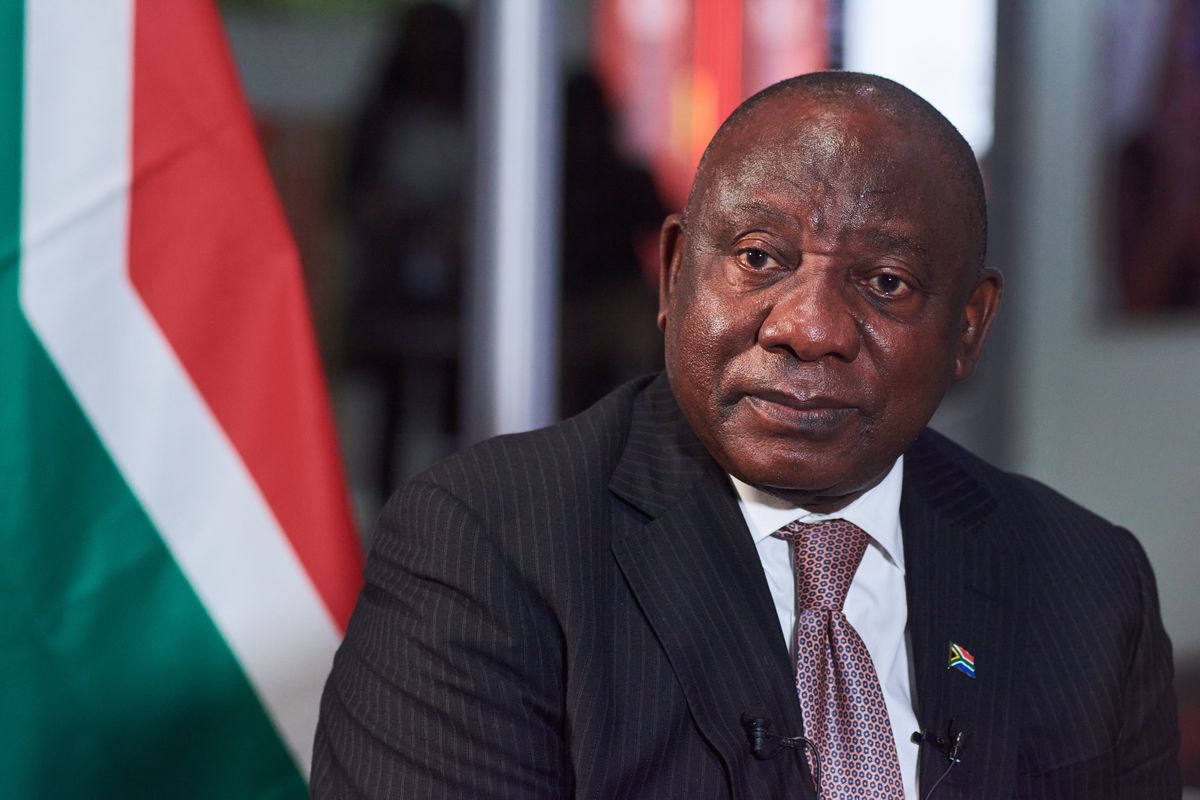
President Cyril Ramaphosa has reiterated a strategic shift in government spending, moving from consumption to the long-term investment, highlighting the construction industry as a vital force to drive South Africa’s economy.
Ramaphosa delivered a keynote address at the 2025 National Construction Summit held at the Birchwood Hotel in Ekurhuleni on Thursday.
Themed “Unlocking Infrastructure Delivery: Raising Construction Industry Performance”, the annual Summit brings together leaders from government, business, labour and civil society to deliberate on how to improve the efficiency of infrastructure delivery and performance.
The two-day National Construction Summit 2025 gathered key players like Minister of Public Works and Infrastructure Dean Macpherson, Deputy Minister Sihle Zikalala, Ekurhuleni Executive Mayor Nkosindiphile Xhakaza, premiers, MECs, mayors, and reps from business, academia, labour, and civil society.
Ramaphosa stated that the R1 trillion medium term budget allocation by Finance Minister Enoch Godongwana is central in his administration’s bold plans for the country.
On Wednesday, Godongwana announced that the government will allocate over R1 trillion to public infrastructure projects over the Medium-Term Expenditure Framework (MTEF).
“We have placed infrastructure at the centre of economic progress and human development. We look forward to the outcomes of this summit, the president said.
Ramaphosa described infrastructure as the engine of economic growth and social transformation, warning that inadequate infrastructure could leave South Africa vulnerable to collapse and unattractive to investors.
He stressed the importance of a thriving construction industry, saying it “drags along the rest of the economy” and that stagnation in the sector would derail the country’s development ambitions and fuel social ills.
Earlier this week, Statistics South Africa (Stats SA) reported in its Quarterly Labour Force Survey that the construction sector created 130,000 new jobs — nearly half of all jobs generated in the latest quarter.
Ramaphosa also delivered a firm rebuke to construction mafias and other disruptive elements.
These groups, he stressed, pose a threat to the delivery of essential infrastructure services within communities.
“We will not negotiate with construction mafias, and we will certainly not yield to cable thieves. In fact, we should say we have declared war on construction mafias and they will not stop us. I am pleased by the progress we are making and our law enforcement agencies are making in dealing with those who want to hold us back,” he said.
Construction mafias have been a problem for 15 years and in addition to impacting construction and development in South Africa.
Macpherson said law enforcement and industry partnerships had begun to turn the tide against the criminal networks that had long disrupted building projects, extorted contractors and delayed public infrastructure delivery.
Government’s response began with the signing of the Durban Declaration, in Durban, KwaZulu-Natal, on November 19, 2024, a joint initiative between Department of Public Works and infrastructure (DPWI), the South African Police Service and the National Treasury.
“The declaration was government’s line in the sand, a commitment to restore law and order to construction sites and end the reign of terror that was choking investment, delaying delivery and putting lives at risk.
“Since then, we’ve seen over 770 cases of construction-related extortion and intimidation reported across the country. Of those, 241 arrests have been made and, most importantly, 176 individuals have been convicted,” Macpherson said.
Macpherson attributed this reduction to a coordinated response between the police, business stakeholders and public entities.
He also highlighted reforms to support emerging contractors through a revitalised Construction Industry Development Board National Contractor Development Framework. The initiative includes a R300-million budget allocation to help smaller builders enter the formal system with better compliance and support.
Macpherson acknowledged that, despite the progress made in stabilising the construction industry, further action was required to restore investor confidence and ensure efficient project delivery.
He said one of the biggest challenges had been government’s slow payment processes and project approval delays.
He added that Procurement War Rooms would be established in all nine provinces and that a national blacklisting database is being developed to prevent repeat offenders from securing contracts. A new electronic resource planning infrastructure tracking system is also being piloted.