
By Lehlohonolo Lehana.
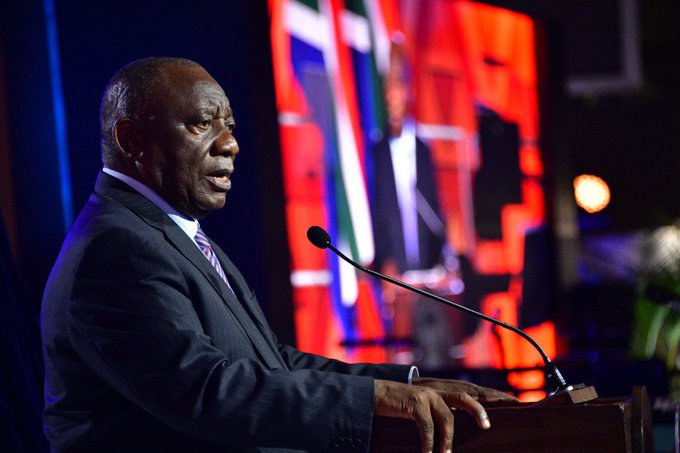
President Cyril Ramaphosa conducted an oversight visit to Nuclear Medicine Research Infrastructure (NuMeRI) Facility, a one-stop-shop medical imaging facility dedicated to Cancer and TB drug development and imaging-based clinical research, housed at the Steve Biko Academic Hospital in Pretoria.
This is a world class facility that showcases a successful partnership between Department of Health, Department of Science and Innovation, and the University of Pretoria with significant support from the private sector.
Ramaphosa also visited cardiac cathetherisation laboratory, which is part of the radiology department.
The visit highlighted South Africa’s commitment to scientific innovation, equitable access to healthcare, and integrated infrastructure investment.
He was accompanied by Ministers and Deputy Ministers including Minister of Health, Dr Aaron Motsoaledi; Gauteng Premier, Panyaza Lesufi; and Gauteng Health and Wellness MEC, Nomantu Nkomo-Ralehoko.
Ramaphosa said he was impressed to see that this was the only centre on the African continent that had this nuclear medicine capability, noting a high level of security at the facility.
“They’ve got this wonderful machine and the beauty about this machine is that they designed it themselves and then got the manufacturers to do it, like Siemens,” he explained.
Ramaphosa noted the talent, engineering, knowledge and capability in the facility, to be able to produce such medical technology, while also applauding the cleaners and security at the hospital.
The president noted referrals from private hospitals, arguing that this was proof that the hospital was a model for “all the good things”.
“and this is the future of what NHI is all about, because they would not be coming here if Steve Biko Academic Hospital was not as good as it is,” he said, expressing satisfaction with research work done in the facility.
In May 2024, Ramaphosa signed the National Health Insurance (NHI) Act into law.
Despite the ongoing legal challenges facing the law, Motsoaledi published the first draft of the regulations under the NHI Act in March and invited public comment over a three-month period.
Several stakeholders, including the Board of Healthcare Funders, the South African Private Practitioners Forum, and the South African Medical Association, have also initiated legal actions against the NHI Act.
Estimates show that the NHI would cost between R900 billion and R1.3 trillion, based on the assumption that the same level of private healthcare would be afforded to all South Africans.
The Department of Health has repeatedly refuted this figures, indicating that the NHI will not provide private-equivalent levels of healthcare.
Ramaphosa also pointed out diversity in the facility, with the rise in the number of women in senior key positions, which he said was impressive.
And this is something that we need to celebrate. I have seen it in action here. That women run this facility, or a woman runs this facility, and other women run other facilities attached to this. That women are researchers, are professors, they are nurses, they are doctors,” he said.