
By Lehlohonolo Lehana.
President Cyril Ramaphosa warned that without sustained action, youth unemployment could derail the Southern African Development Community’s vision 2050.
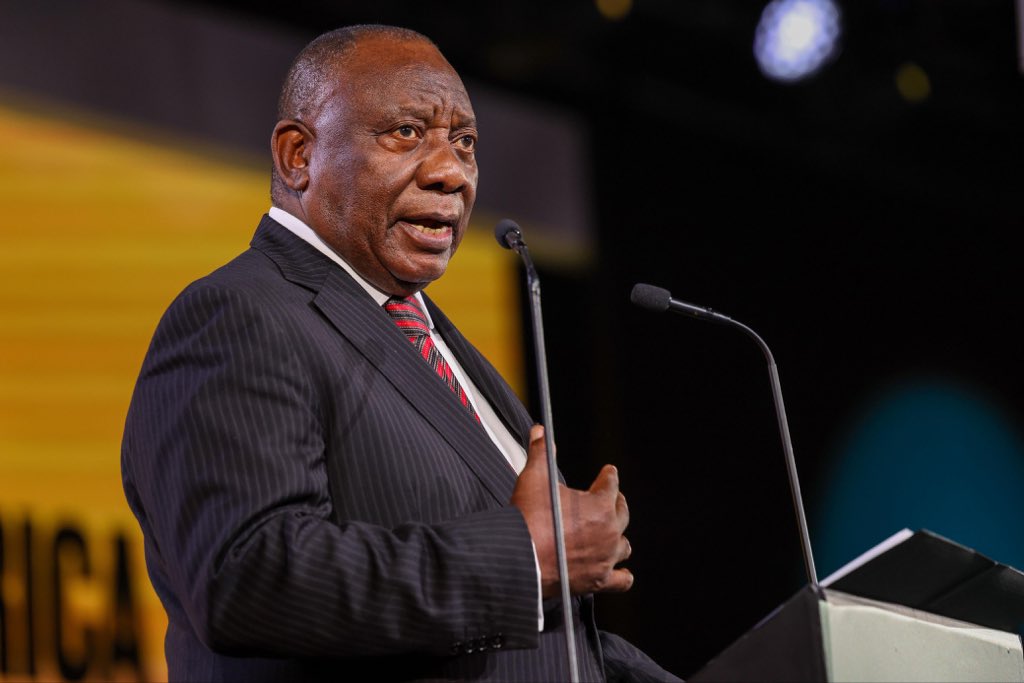
Ramaphosa was addressing a Public Lecture at the University of KwaZulu-Natal (UKZN), Westville Campus, on Friday, 14 August 2026.
Ramaphosa said the region’s young and growing population represents its greatest strategic asset, but warned that this potential would only become a demographic dividend through deliberate and sustained investment.
More than half of SADC’s population is under the age of 30, making the creation of economic opportunities for young people essential to the region’s stability, cohesion and long-term development.
“Our population is young and growing. More than half the people of this Community are under the age of 30. This is our greatest strategic asset. It is the engine of our region’s future,” Ramaphosa said.
The President said youth unemployment remains one of the most serious threats facing countries in the region and one of the biggest obstacles to the attainment of Vision 2050.
“Youth unemployment is one of the gravest threats to the stability, cohesion and progress of every country in our Community, and it is one of the foremost obstacles to the realisation of Vision 2050,” he said.
He said young people across the region are acquiring qualifications but are struggling to find employment, underscoring the need to link education and skills development to economic opportunities.
“Across this region are young people who did everything that was asked of them. They stayed in school. They passed. They borrowed money to study. Many graduated, but now too many young people sit at home with a qualification and no employment, “Ramaphosa said.
He said schools, universities, technical and vocational colleges and research institutions had a critical role to play in developing the skills required for the future economy.
Ramaphosa said investment in human capital needs to begin well before young people entered tertiary education or the workplace.
He warned that childhood deprivation, particularly stunting, could have lifelong consequences.
“A child whose growth is stunted carries that loss for a lifetime. No university can adequately undo it. No industrial policy can properly compensate for it,” he said.
Under the Human and Social Capital Development pillar of Vision 2050, he called for greater investment in maternal health, early nutrition and basic services.
“We must ensure that all children have food, water and shelter, that they are kept safe and that their development needs are met,” he said.
Ramaphosa said the region also needed to invest in digital literacy and health services for adolescents, while addressing barriers including child marriage, teenage pregnancy and the digital divide affecting young people in rural areas.
“Each of the barriers we remove adds to the productive capacity of our economies,” he said.
Ramaphosa said Vision 2050 could not be achieved without a healthy population and called for a harmonised regional health system.
“We seek a harmonised regional health system, in which the standard of care a person receives does not depend on which side of a border they happen to live,” he said.
He expressed concern over the continued burden of maternal, neonatal, child and adolescent deaths in the region, many of which he said were preventable.
The President also called for SADC Member States to strengthen health financing, including through the commitments made under the Abuja Declaration to allocate at least 15 percent of national budgets to healthcare.
Meanwhile Ramaphosa will chair a high-level meeting of Global Leaders Network (GLN), convened on the margins of the 46th Ordinary Summit of Heads of State and Government of the Southern African Development Community (SADC) kicking off in eThekwini.
Saturday’s meeting will focus on high-level commitments to secure the health and well-being of mothers and future generations.
The meeting brings together GLN Heads of State and Government, with participation open to SADC Member States and accredited observers.
Leaders will also consider the changing global health financing environment and the need for greater domestic resource mobilisation, health sovereignty and country-led approaches to sustain progress in women’s, children’s and adolescents’ health.
The gathering comes as South Africa is set to host the high level SADC summit taking place on 16-17 August 2026.
The summit is one of the highest-level diplomatic and decision-making platforms in the region, with leaders, diplomats, government officials, and delegates from the 16 Member States poised to attend.
This week, International Relations and Cooperation Minister Ronald Lamola accepted the SADC Chairpersonship for 2026 – 2027 on behalf of South Africa, during the SADC Council of Ministers meeting.