
By Lehlohonolo Lehana.
The African leaders were unanimous that the continent must become self-reliant and economically integrated through the African Continental Free Trade Area (AfCFTA) to drive growth and find solutions to its own problems — including achieving peace and stability in conflict regions.
The heads of State, CEOs of leading African and global companies, visionary entrepreneurs, investors, and changemakers from across the continent and beyond meet at the Africa CEO Forum 2025 in Côte d’Ivoire .
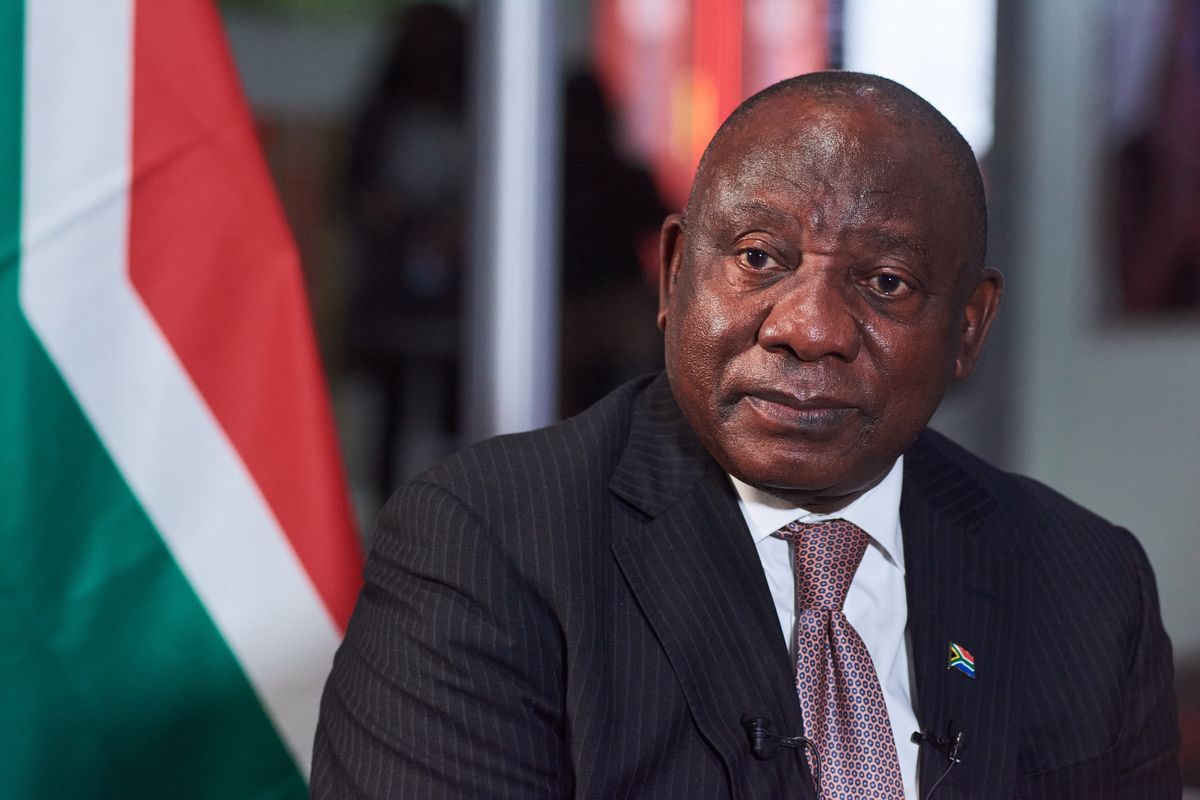
President Cyril Ramaphosa spoke during a presidential panel discussion, which also touched on Donald Trump’s tariff war and his cutting of development aid to Africa and the rest of world.
Other panelists included Rwandan President Paul Kagame, Côte d’Ivoire leader Tiémoko Kone and Mauritanian President Mohamed El Ghazouani.
To do this Africa must take ownership and seek solutions to its problems, Ramaphosa said, concurring with Kagame, and joking that people may have expected friction between the two presidents who were seated together after their disagreements earlier this year on the war in the Democratic Republic of Congo.
“On the peace process, particularly the conflict that’s been happening on our continent, and particularly the eastern DRC, I’d like to compliment rather than contradict what President Kagame is saying. People may think that President Kagame and I are in conflict, and some of you may have thought that there’s going to be fireworks as we’re sitting close to each other,” Ramaphosa said.
“The processes that have been happening on the continent, either the Nairobi process or the Rwanda process or the AU [African Union] process, have been very, very essential in building a foundation of peace making and also confidence, building up to and including agreements that have been reached for a cease fire between the belligerents, up to and including the withdrawal of the SADC [Southern African Development Community] forces, as they are withdrawing now.
“Our countries on the continent are not islands, we don’t live alone in this God given world. We have to interface and interact with others. So whatever contribution others can make who are extra African is important, but in the end, we must also remember the principle that we have adopted as Africa — African solutions for African problems.
“In the end any agreement has to be signed off, owned and appropriated by us as Africans, because this is our continent. We are in charge of the future of this continent, and we must build peace ourselves … We have the deep responsibility to ensure that peace does indeed prevail.”
Ramaphosa said he was concerned only 17% of business people surveyed at the Africa CEO Forum believed the continental free trade agreement was working.
“It’s quite concerning if that is the perception … Just as I entered this room, I could smell money, and I welcome this opportunity to sit here and look at people who have money or control money,” he said.
“These are people who control a lot of money on the continent … I want them to smell the coffee and go beyond their 17% scepticism, because the Africa Continental Free Trade Area is a fundamentally transformative mechanism.”
He said the AfCTA was a move towards “scaling the fortunes of Africa up” and moving “beyond just talking about politics and the unity of the continent” to install building blocks to support unity and progress.
“[It] is an engine of growth and we invite the private sector to embrace it, to participate in it because it gives the African continent an opportunity to integrate, and it gives business people the opportunity to see the 1.4 billion people market and GDP of the continent adding up to $3.4 trillion,” Ramaphosa said.
With this agreement, we are able to get the private sector working with the public sector to embark on meaningful projects such as infrastructure, because for trade to happen infrastructure projects must be embarked upon. Roads must be built, our airlines must work properly, our ports must work properly, our rail network must work properly. And this is where the private sector can partner with the public sector,” Ramaphosa said.
He said investors’ money should be “put to good use … we should not just smell it, we must see it”.
Ramaphosa said the continent had integrated during the Covid-19 pandemic when it set up a personal protective equipment supply organisation to order supplies and worked on solutions to produce vaccines rather than relying solely on the West.
Kagame said the peace processes put in place on the continent had been essential to avoid being “fully dependent” on external countries, but added that he was “frustrated” with the mindset of some that Africa should be dependent on external sources for assistance.
“In terms of peace and security we find many troubles and there are all kinds of efforts going on back and forth, succeeding in some places, succeeding in others, and continued efforts going on,” he said.
“Even if we’re able to do things ourselves, we still have to bring in partners who have something to offer, but Africa must define which direction we want to take.”
He said Africa should not have allowed itself to be in the position where it would just “wake up one morning” to announcements such as Trump cutting aid and introducing tariffs.
“We should have been building up momentum in terms of what we need to do to make Africa self-dependent and resilient, and also in how Africa works with other continents and other countries … it is as well that President Trump decided to do what he did, if that was only to add to many other reminders that should wake us up [that], as Africa, we can do what we ought to do, he said.”