
By Lehlohonolo Lehana.
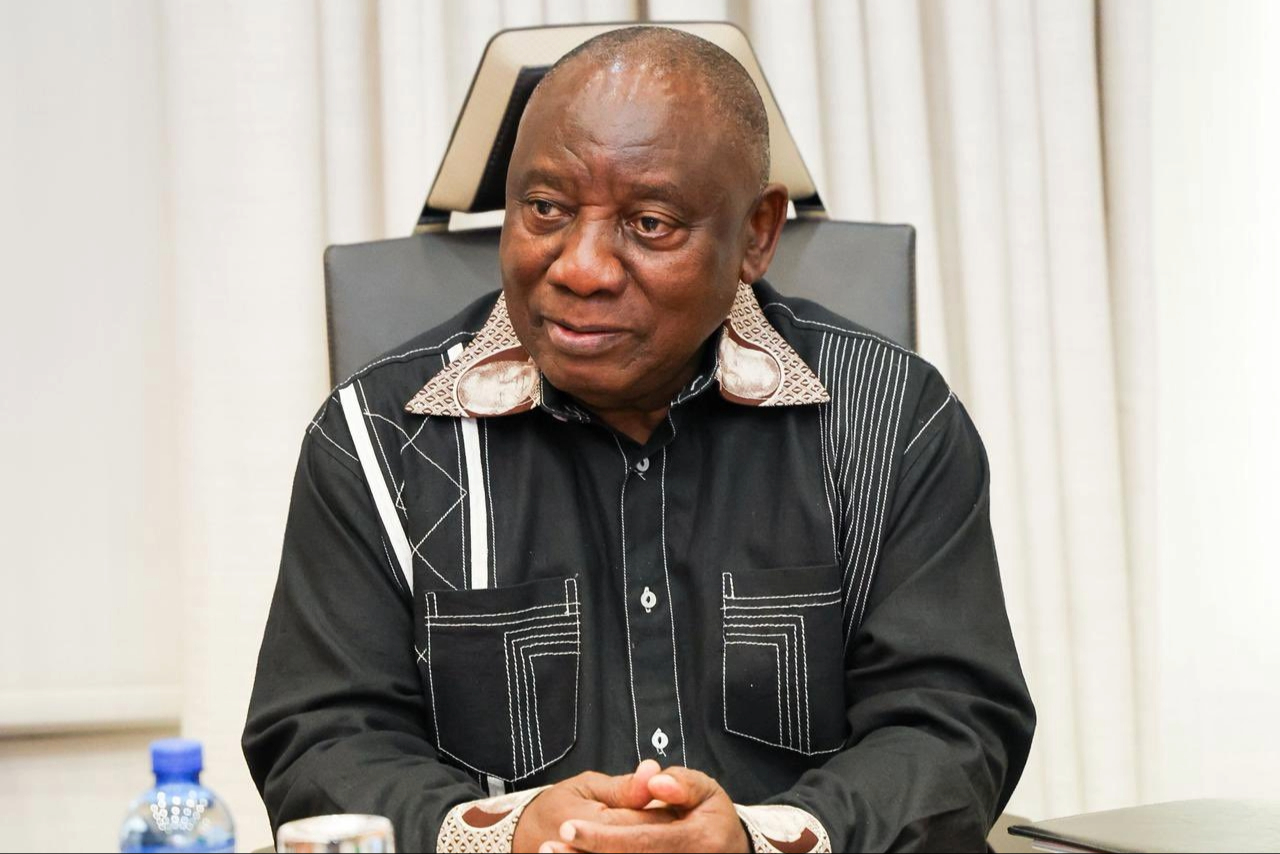
President Cyril Ramaphosa led the national Freedom Day Commemoration held in the Mangaung Metropolitan Municipality in Bloemfontein, Free State.
This year’s event, marking 32 years of democracy, was held at the Dr Rantlai Molemola Stadium.
The day commemorates the country’s freedom from the brutal Apartheid regime and the day all citizens were allowed to vote in 1994, ushering in democracy.
Thirty-two years ago, South Africans across the generations and racial palette gave way to the rebirth of a nation that was later dubbed “The rainbow nation”.
The day is being marked under the theme “Freedom and the Rule of Law, 30 years of democratic citizenship”.
Its focus is anchored on the supremacy of the constitution, the rule of law and the journey towards a non-racial and non-sexist South Africa.
Freedom Month provides an opportunity for South Africans to reflect on the gains of democracy, honour the sacrifices of those who fought for freedom, and recommit to building a united, inclusive and just society. It also serves as a platform to promote active citizenship, deepen understanding of constitutional rights, and strengthen social cohesion, particularly among young people.
In her welcome remarks, Free State Premier Maqueen Letsoha-Mathae said Freedom Day is an important day in the history of South Africa.
“This day ushered in a new dawn, It was the day when South Africans showed their determination for a new government.”
Letsoha-Mathae said since the President’s visit to the province in December, much has been done to improve people’s lives. We have doubled our efforts to improve people’s lives.”
The Freedom Day celebration was attended by senior government officials, Cabinet Ministers, politicians and members of the public, who came in their numbers.
Sports, Arts and Culture Minister Gayton McKenzie praised Ramaphosa for his leadership, saying that despite ongoing criticism,
Ramaphosa will remain in office until 2029.
This year’s national event takes place within the context of several significant national milestones, including the 30th anniversary of the adoption of the Constitution, 70 years since the Women’s March if 1956, and 50 years since the Soweto youth uprising.
These milestones continue to shape South Africa’s democratic journey by inspiring continued transformation.
The President said the Government of National Unity (GNU) is determined to drive inclusive growth and job creation, reduce poverty and tackle the high cost of living, and build a capable, ethical and developmental State.
“This means we must address and overcome the many challenges facing South Africans today. Failing water infrastructure, collapsing municipalities and deteriorating services are not mere inconveniences. They directly affect the quality of daily life. They constrain the growth of businesses and the creation of jobs.”
Ramaphosa said in the 32 years of democracy, South Africa has built a progressive constitutional democracy firmly anchored in the rule of law, with an independent judiciary that serves as a guardian of the rights of all.
“We have expanded access to healthcare, housing, education, water and electricity on an unprecedented scale.”
Ramaphosa said government has also transformed the education system that was used to perpetuate oppression to ensure universal access to education by introducing no-fee schools to expand access to education to children from poor households.
“Our National School Nutrition Programme feeds more than nine million learners every single day. Through the National Student Financial Aid Scheme, we have made tertiary education accessible to students from low-income households.”
The President said since the dawn of democracy, government has steadily worked to expand access to quality health care for all.
“We have built clinics and hospitals, provided free health care to pregnant women and young children, reduced child mortality and increased life expectancy.”
“Now we are working together to establish the National Health Insurance so that every person in this country has equal access to quality health care, regardless of their ability to pay.
“We are making progress on land reform, restoring land to many of those dispossessed since the introduction of the 1913 Natives Land Act and continuing to support its productive use.”
Municipalities and Service Delivery
Ramaphosa also said that freedom in South Africa is diminished if its citizens’ lives have not improved. To do this, he said, the state must solve the challenges of poor service delivery and failing municipalities.
“This is important because the truest test of our democracy is whether freedom translates into material change in people’s lives,” he said.
“The government of national unity is determined to drive inclusive growth and job creation, to reduce poverty and tackle the high cost of living, and to build a capable, ethical and developmental state.”
“Failing water infrastructure, collapsing municipalities and deteriorating services are not mere inconveniences. They directly affect the quality of daily life. They constrain the growth of businesses, the economy and the creation of jobs.”
“Our resolve to strengthen local government provides an opportunity to transform municipalities, making them better run, more efficient and more responsive to the needs of our people.”
Illegal Immigration
Ramaphosa said that while immigration challenges are real, they must not lead to xenophobia or discrimination against people from other countries.
He reminded South Africans of the solidarity they once received during the struggle against apartheid.
“We must not allow these concerns to give rise to xenophobia, to give rise to hatred that is directed towards people from other African countries or any part of the world. We are South Africans, we cannot be driven by hatred towards others. Others gave us compassion, they gave us support and we cannot be driven by hatred towards them,” he said.
Ramaphosa warned that the correct approach is to allow the law to take its course, noting that government is acting against illegal migration and businesses that employ undocumented workers unlawfully.
“Instead, we must insist that the law of our country be upheld and enforced. That is why we are clamping down on illegal migration and on businesses that flout the law by hiring undocumented persons at the expense of our citizens.”
He also highlighted efforts to address corruption within the immigration system, saying authorities are working to root out officials who enable illegal entry into the country.
Political Parties Reflect on Freedom Day
The African National Congress (ANC) said that the 27th of April 1994 will be a day remembered as the culmination of human sacrifice, resilience and the beginning of a new, free South Africa.
Democratic Alliance (DA) Leader Geordin Hill-Lewis said that freedom is not only the right to vote.
“For far too many South Africans, that freedom has been stolen by criminals, and too often it has been surrendered by a State that has become weak, compromised and slow.”
The South African Communist Party (SACP) called for the continued defence of our national democracy; the continued defence of the national transformation programme in all its aspects; the deepening economic unity and revitalisation of the people’s camp; the reconfiguration of the Alliance; and deepening of collective struggle against corruption and neoliberalism.
Inkatha Freedom Party (IFP) spokesperson Mkhuleko Hlengwa stated that while political freedom has been attained, many South Africans still face economic and social challenges, adding that instead of celebrating, the country should use the day to reflect and tackle pressing national issues.
BOSA spokesperson Roger Solomons warned that freedom is undermined when 57% of children live in poverty and youth unemployment remains high.
The warning reflects a broader national concern, apartheid’s legal structures may have fallen, but its economic footprint remains deeply entrenched.