
By Lehlohonolo Lehana.
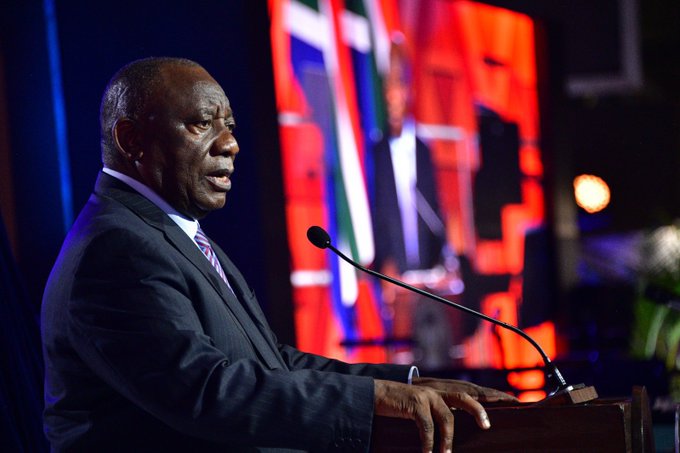
President Cyril Ramaphosa’s national executive engaged with the North West provincial executive committee in the most populous city, Rustenburg on Friday.
The Joint National and North West Provincial Executive engagement was held under the theme “A Nation that Works for All”, forms part of a series of engagements between the President and provinces aimed at enhancing intergovernmental coordination and improve service delivery in line with the priorities of the 7th Administration.
The meeting is the seventh engagement between the National Executive and Provinces following interactions between the President and the Provincial Governments of KwaZulu-Natal, Limpopo, Mpumalanga, Gauteng, Eastern Cape and Northern Cape.
Ramaphosa said that while the province has made progress in growing public infrastructure, major challenges remain.
“Communities are bearing the brunt of instability at local government level,” he said.
“Municipalities have repeatedly been placed under administration – Ditsobotla Local Municipality being the most recent of these.”
Earlier this week, the municipality, which serves thousands of residents in and around Lichtenburg, was placed under administration for the ninth time, over years of financial mismanagement, service delivery collapse and deepening political instability.
Co-operative Governance and Traditional Affairs (COGTA) Minister Velenkosini Hlabisa confirmed the appointment of a six-member intervention team under Section 139(7) of the Constitution.
He said the move followed repeated failed attempts by the provincial government to stabilise the municipality.
A specialised task force, including the SAPS, State Security Agency and the National Prosecuting Authority (NPA), will investigate longstanding allegations of fraud, corruption and misconduct.
Residents of the municipality continue to endure erratic water supply, uncollected refuse, potholed roads, dysfunctional infrastructure and pervasive corruption.
Ramaphosa vowed that national and provincial authorities would intervene decisively.
“The national executive, working with the provincial government, is determined to arrest the current situation and turn the municipality around so that it once again delivers consistent services and enjoys the respect of communities.”
He issued a clear warning to officials.
Ramaphosa stressed that elected leaders have a duty to serve the people above personal interests, warning against the erosion of basic rights through poor service delivery.
“We were all elected to serve the people and not our own interests. Failure to deliver services is an infringement of the basic rights of residents and our citizens more broadly. No one should go more than a day without running water while there is a deafening silence from the municipal offices about when the water will be restored, “the President said.
Ramaphosa also raised concern over water shortages nationally.
“Let me address the issue of running water as an example. No one should go more than a day without running water while there is a deafening silence from the municipal offices about when water will be restored.”
This comes after residents of Westbury, Coronationville and Ivory Park in Tembisa staged violent protests over water outages that have persisted for more than seven years.
Ramaphosa said the National Treasury’s 2024 provincial socio-economic review, noted an increase in poverty levels and a decline in household access to basic services such as water.
“We need to recognise that fiscal constraints are holding back a number of projects and programmes, particularly at municipal level,” he said.
But nothing can excuse poor governance, maladministration, financial mismanagement, wastage and corruption.
“If a municipality is put under administration, we need to know what the elected representatives and municipal officials are doing to earn their salaries.”
Ramaphosa urged all spheres of government to act decisively to restore community trust and accelerate delivery, particularly in sectors such as agriculture, tourism, manufacturing and infrastructure.
He also addressed broader economic challenges, including the impact of 30% US tariffs on South African exports, saying these demand a stronger focus on the Government of National Unity’s (GNU) three strategic priorities.
The priorities include driving inclusive growth and job creation, reducing poverty and tackling the high cost of living and building a capable, ethical and developmental state.