
By Lehlohonolo Lehana.
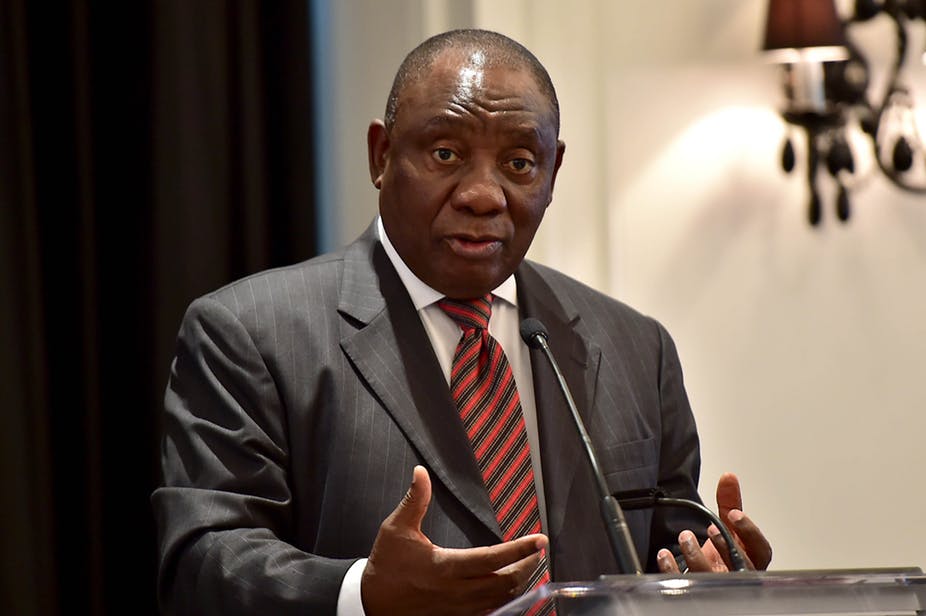
President Cyril Ramaphosa has urged Brics to finalise an economic strategy aimed at strengthening trade and investment among the bloc’s countries.
Ramaphosa addressed urgent meeting, convened by Brazilian President Luiz Inácio Lula da Silva as part of Brazil’s ongoing BRICS chairship, which provided a platform for heads of state to address urgent international matters, with a particular emphasis on economic headwinds and strengthening multilateral cooperation.
The meeting was also addressed by Chinese President Xi Jinping and Russian President Vladimir Putin, but India’s External Affairs Minister, S. Jaishankar, spoke in place of Indian Prime Minister Narendra Modi.
Ramaphosa told a virtual summit of Brics leaders that the seismic shift from a unipolar to a multipolar world has been increasingly marked by geopolitical tensions and “intensifying global competition”.
He spoke as South Africa and several other countries grappled with the negative effect of punitive tariffs levied by President Donald Trump on United States imports, a move he says is intended to protect American manufacturers and jobs.
“The uncertainty of the new trading regime has already negatively affected employment levels in my own country South Africa and is an obstacle to our economic growth,” Ramaphosa said.
“We are therefore supportive of meaningful Brics initiatives that improve the resilience of our economies as Brics countries and those of the Global South and also strengthen the global multilateral system.”
Relations between Pretoria and Washington are strained over South African policies and laws that Trump’s administration says racially discriminate against white people. South Africa has denied this, and has also strongly rejected unfounded US charges of a white genocide in the country.
Trump said on Sunday he would not attend the G20 heads of state summit in Johannesburg but would send his deputy, JD Vance.
Ramaphosa reiterated that the 30% US tariffs on South Africa posed an obstacle to its economic growth.
“We are therefore supportive of meaningful Brics initiatives that improve the resilience of our economies as Brics countries and those of the Global South and also strengthen the global multilateral system.”
He said the bloc’s focus should be on strengthening collaboration, diversifying trade and investment partnerships with Africa, Asia, the Gulf, the Americas and Europe.
“Our vision is of Africa that is the beating heart of global trade, engaging the world not as a mere exporter of raw materials, but as a creator of value, a connector of regions and a catalyst for shared prosperity.”
Ramaphosa reaffirmed South Africa’s commitment to the African Continental Free Trade Area, saying the multilateral trading system, with the World Trade Organisation (WTO) at its core, must be preserved “until all member states are able to reach their developmental goals”.
He acknowledged that although the WTO has, for 30 years, sought to ensure predictable, rules-based global trade, “imbalances persist”, with developing economies locked into the lower end of value chains.
“South Africa, therefore, reaffirms its support for the reform initiative that is being spearheaded at the WTO level. But we also say Brics countries must participate in championing the reforms that must take place at the WTO level, “he said.
Ramaphosa linked this to the need for broader reform of multilateral institutions, including the United Nations, “to ensure that it is inclusive, representative, and fit for purpose”.
He noted that as part of its G20 presidency, South Africa has launched an extraordinary committee of independent experts on global wealth inequality chaired by a Nobel laureate, Joseph Stiglitz. This committee will deliver the first-ever report on global inequality to G20 leaders, assessing its effect on growth, poverty and multilateralism, while offering solutions.
Ramaphosa urged Brics to “use our growing voice to advance a global order that improves the lives of the world’s people and safeguard the planet for future generations”.
On global security, Ramaphosa backed Brazil’s call for a ceasefire in Gaza and reiterated South Africa’s support for a two-state solution, linking peace and development as mutually reinforcing goals.
Lula backed South Africa[‘s genocide case against Israel at the International Court of Justice and also called for stronger climate governance, suggesting a UN council on climate change to coordinate fragmented global mechanisms.
Xi Jinping said economic globalization was an “irresistible trend of history,” stressing multilateralism, amid US tariffs.
Hegemonism, unilateralism, and protectionism are getting more and more rampant,” Xi said, stressing that the “trade wars and tariff wars waged by some countries severely disrupt the world economy and undermine international trade rules.”
“We should… safeguard the international system with the United Nations at its core and the international order based on international law, so as to cement the foundations of multilateralism, “Xi said.