
By Lehlohonolo Lehana.
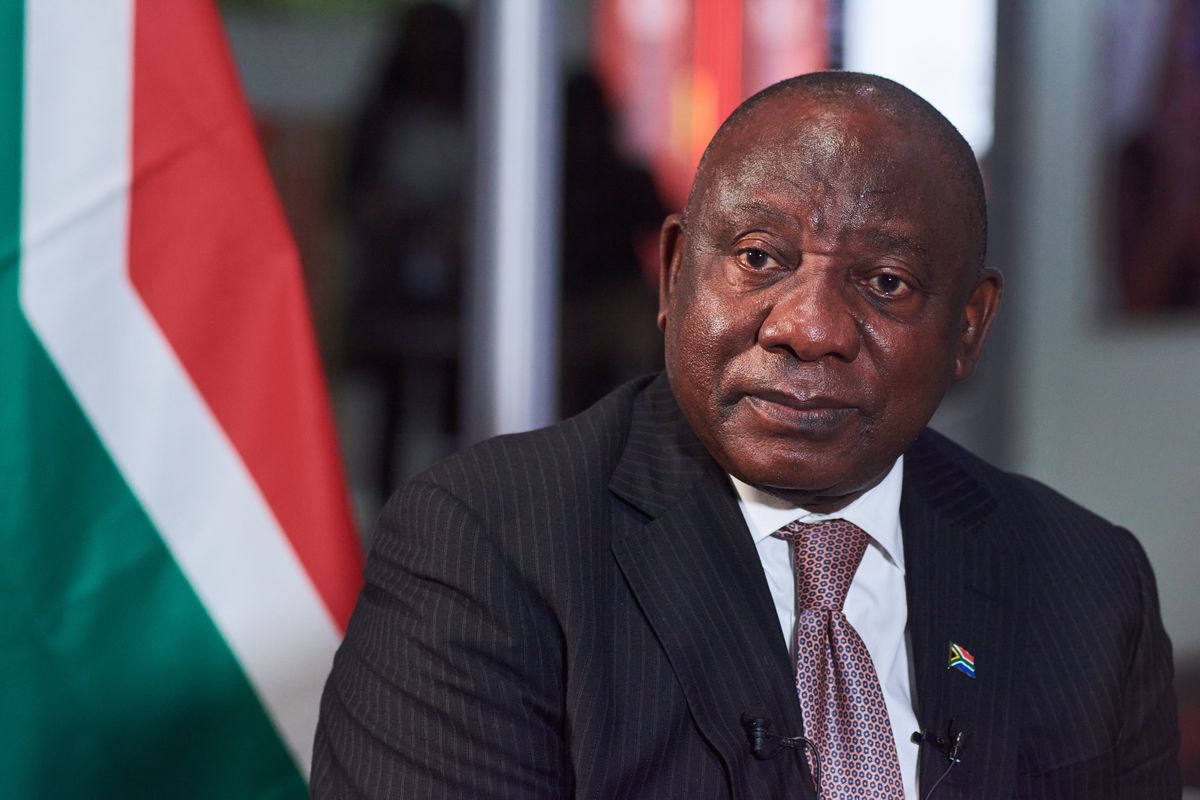
President Cyril Ramaphosa received the G20 Inequality Committee Report on global inequalities at Tuynhuis in Parliament on Tuesday afternoon.
The G20 Presidency of South Africa gave a unique opportunity for the country to launch a new Extraordinary Committee of Independent Experts – commissioned by Ramaphosa, and chaired by Nobel Prize-winning economist Joseph Stiglitz.
This initiative was earmarked to deliver the first ever-report on global inequality to G20 to world.
The six independent experts were Stiglitz (USA); Dr Adriana E. Abdenur (Brazil); Winnie Byanyima (Uganda); Professor Jayati Ghosh (India); Professor Imraan Valodia (South Africa); and Dr Wanga Zembe-Mkabile (South Africa).
The proposed panel on inequality was inspired by the UN’s expert Intergovernmental Panel on Climate Change (IPCC), which analyses the risks of global warming and proposes solutions.
The World Bank has dubbed South Africa the most unequal country in the world in a number of reports, starting as far back as 2018.
South Africa has sought to use its G20 presidency to foreground issues affecting predominantly African and Global South nations, including rising inequality, sovereign debt burdens and the cost of capital.
When receiving the report on Tuesday, Ramaphosa said he would call for an institution to be set up to deal with inequality when he opens the G20 Leaders’ Summit in 18 days’ time.
Ramaphosa said that much of the inequality stems from a history of colonialism and apartheid.
He welcomed the report compiled by a panel he appointed in August, saying it provided a blueprint for putting matters of inequality on the global agenda.
“It correctly asserts that inequality is, in the end, a betrayal of people’s dignity, an impediment to inclusive growth, and a threat to democracy itself.”
“Inequality is a choice. It is something we can do something about,” Stiglitz said .
Stiglitz said it was possible for governments of the world to close the gap in inequality through their economic policies.
The report has urged the formation of a new International Panel on Inequality (IPI) to support policymaking internationally, in its first report on inequality to the global forum.
“Today’s inequalities are not the result of the laws of nature. They are the result of what we, as nations and the global community, have done. Inequality is a choice. It is not inevitable and can be reversed with political will, ” reads the 69-page report published on Tuesday, 4 November.
“A very different set of feasible policy choices is not only possible but necessary if we are to address the inequality crisis. These choices would not only reduce inequality but would also promote economic resilience, inclusive development and social justice.”
The G20 Inequality Committee experts said in their report that the establishment of such a panel “would be a permanent legacy” of South Africa’s G20 presidency, “in helping the world address one of the major scourges of our time – moving the world towards our ideal of a globally shared common prosperity”.
The report reviews the latest data and trends on the state of inequality worldwide, revealing, among other things, that 83% of all countries, which account for 90% of the world’s population, meet the World Bank’s definition of high inequality. Countries with high inequality are seven times more likely to experience democratic decline than more equal countries, according to the report.
According to the report there is “considerable empirical evidence connecting rising levels of economic inequality to the erosion of democracy and increasing authoritarianism.”
“There are many channels through which this occurs. Inequality erodes trust in institutions, fuels political polarisation, can reduce participation among poorer citizens and residents, and creates social tensions of different kinds. These were the concerns highest in the minds of the Committee and many with whom the Committee consulted,” it adds.
The report states that the extent to which economic inequality translates into political inequalities and contributes to the deterioration of democracy “depends on the political rules of the game”.
The committee found that policymakers often lack “sufficient, dependable or accessible” information on inequality trends and the impacts of certain policies on inequality.
“We therefore recommend – as the immediate and priority request of this Committee to the G20 – the establishment of a new body, an ‘International Panel on Inequality’ (IPI), to support governments and multilateral agencies with authoritative assessments and analyses of inequality,” reads the report.
The experts said this IPI could be inaugurated under South Africa’s G20 leadership and supported voluntarily by “champion countries”, who are not only members of the G20, with multilateral agencies as key stakeholders.