
By Lehlohonolo Lehana.
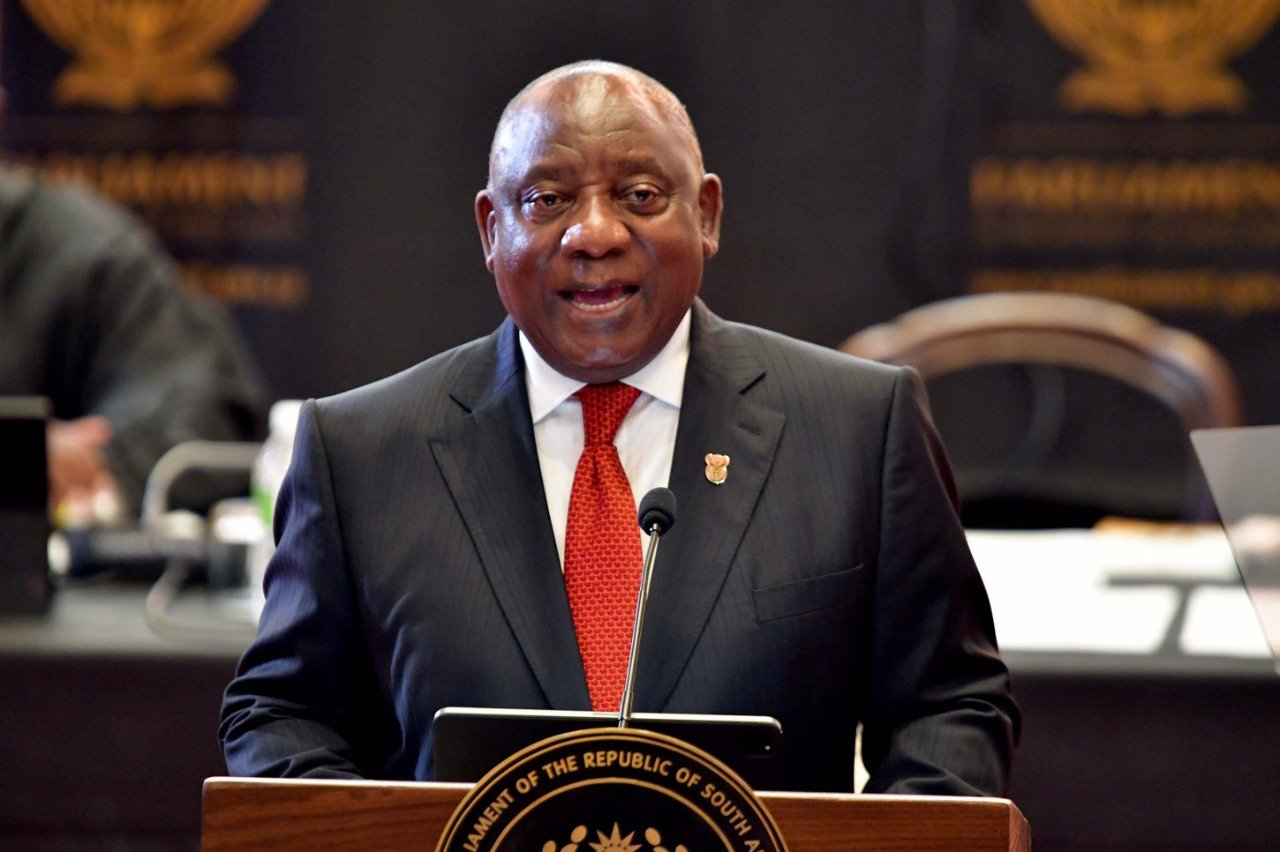
President Cyril Ramaphosa was responding to questions in Parliament on Tuesday, 25 August 2026, on South Africa’s standing on the continent and the measures government is taking to restore confidence in the country as a Pan-African voice.
Ramaphosa sounded tired, after a busy weekend wearing his ANC president hat launching the 2026 local government manifesto.
Earlier he had addressed – also via virtual link with the same backdrop – the Sustainable Infrastructure Development Symposium of South Africa (Sidssa), under way in Cape Town.
Ramaphosa said government has firmly rejected xenophobia, Afrophobia, vigilantism and all forms of discrimination against people from other countries.
“South Africa remains a respected member of the African Community of Nations and a principled Pan-African actor. We continue to participate actively in continental as well as regional bodies and processes, while some African countries have raised concerns about the anti-migrant actions by some groups in our country. As a government, we have firmly and publicly rejected xenophobia, Afrophobia, vigilantism, and all forms of discrimination against people from other countries,” he said.
South Africa has reinforced its commitment to Pan-Africanism through cooperation with the Southern African Development Community (SADC), the African Union (AU) and partner States on migration governance, regional integration and burden sharing.
The President said government has also engaged directly with a number of Heads of State and Government to explain South Africa’s position and approach to migration.
He highlighted the 46th Ordinary SADC Summit, which South Africa hosted in eThekwini earlier this month, saying government had proactively placed migration on the agenda, rather than waiting for regional leaders to raise concerns.
“Last week, at the 46th Ordinary SADC summit that we hosted in eThekwini, we took the opportunity to brief the leaders of the region on the situation in the country, and this we did without being asked either to account or to explain. We took it upon ourselves to put the matter on the agenda, and I also addressed it in my inputs and we explained precisely what the situation had been in our country,” Ramaphosa said.
He said the approach had allowed South Africa to explain the measures it was taking, while also encouraging the region to work collectively on the broader migration challenge.
Ramaphosa said government is pursuing a comprehensive approach to migration management based on the rule of law, respect for human dignity and stronger State institutions.
He said this includes reforming and modernising the country’s migration governance framework through stronger border management, action against corruption within the immigration system, improved legal migration pathways and implementation of the White Paper on Citizenship, Migration and Refugee Protection.
“Through our comprehensive approach to managing migration, we have emphasised that migration challenges must be addressed through the rule of law, respect for human dignity, and the strengthening of State institutions, not through unlawful actions targeting foreign nationals.”
“An important part of this approach is the reform and modernisation of South Africa’s migration governance framework, and this includes strengthening border management, addressing corruption within the immigration system, improving legal migration pathways, and implementing the white paper on citizenship, migration, and refugee protection,” he said.
The President said the measures were intended to strengthen public confidence in the state’s ability to manage migration while ensuring that South Africa continued to uphold its constitutional and international obligations.
Responding to questions from EFF leader Julius Malema, who asked why these perpetrators had not been arrested and prosecuted when, “We know who the instigators and the perpetrators of this violence are. They have a face.”
“In certain instances, we have seen perpetrators unleashing their violence against African immigrants in the presence of the police. And yet not one of these perpetrators is arrested.”
Ramaphosa insisted that some perpetrators of violence had already been arrested and that there would be further arrests and prosecutions when the police had gathered enough evidence. He emphasised that action would be taken, especially against those who had caused injury or death.
“And of course those others who were seen to be leading these processes are also people who are of direct interest to the police, and that is a process that is going to be followed up,” he added.
Malema demanded what concrete steps the government was taking to ensure prosecution of perpetrators to protect foreign nationals “and to reassure the continent that this government does not condone xenophobia”.
Ramaphosa replied, “The commitment I can make is that those who are perpetrating and have perpetrated acts of violence against foreign nationals are going to be dealt with.”
He also rejected suggestions that South Africa was becoming isolated diplomatically as a result of tensions over migration and attacks against foreign nationals.
Ramaphosa gave Build One South Africa (Bosa) leader Mmusi Maimane short shrift over his question on accountability for the 40 deaths in connection with a cholera outbreak and the inadequate and troubled water supply at Hammanskraal outside Pretoria.
“Yes, people should be held accountable,” replied Ramaphosa.
Ramaphosa corrected DA MP Marina van Zyl’s claim that nothing was being done to ensure criminal accountability for sewage spillage by pointing out that the water and sanitation department had laid 96 charges involving 53 municipalities by June 2026, with officials at eMalahleni and Thaba Tshweu already having pleaded guilty.
But he also steered around the MK party’s raising of the Marikana massacre in August 2012, when police killed 34 miners at Lonmin, where Ramaphosa, then a businessman, was a non-executive director.
“The blood has dried from the 16th August massacre, but the taps are still dry”, said MK party parliamentary leader John Hlophe before asking where the national water action plan’s water monitoring portal was.
Ramaphosa replied straight-up-and-down that while the part of the system government used was done, the comprehensive public-facing system was still in development, pointing out other information dashboards including “a water security dashboard that covers Gauteng and eThekwini”.