
By Lehlohonolo Lehana.
Eastern Cape Premier Oscar Mabuyane says the import tariffs imposed by the US will have a devastating impact on the province’s automotive sector.
US President Donald Trump announced a baseline tariff of 10% on all trading partners, threatening higher tariffs for some countries.
This followed a decision to impose a 25% import tariff on cars.
The automotive industry contributes just over 5% to South Africa’s GDP, with a significant portion coming from the Eastern Cape.
President Cyril Ramaphosa and his National Executive met with Mabuyane and his executive council at the Nelson Mandela Bay Stadium to discuss conditions and opportunities in the province.
The meeting formed part of strengthening intergovernmental cooperation, collaboration and consultation.
In his opening remarks, Mabuyane said the country needs to think long and hard about its position on the tariffs imposed on the country by Trump.
In a wide-ranging address, Mabuyane mentioned receiving a phone call from the CEO of Mercedes-Benz South Africa regarding the tariff issue.
“The automotive sector remains a pillar of our economy. We are worried about the tariffs being imposed by the U.S on our country, added Mabuyane.
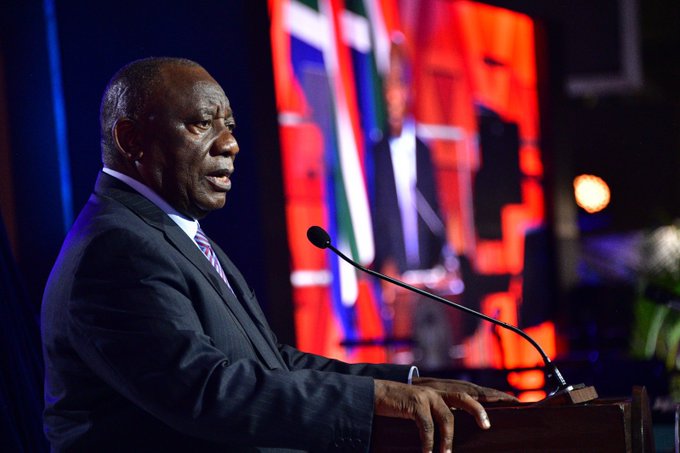
Ramaphosa emphasised the importance of collaboration in the face of mounting external pressures.
“We would like today to be a productive engagement in sustainable solutions that will uplift our communities and, in the end, improve the lives of our people. Yes, as we deal with the impact of what is happening at the geopolitical level, with tariffs that are imposed on us which will have an impact on a number of companies that operate here in Eastern Cape as well as nationally.
“Those are the challenges that we need to deal with and address, and it is only with collective effort that we will be able to succeed, and by working together we can confront and indeed overcome the challenges that are holding us back, “the President said.
“We will continue addressing the challenges we face. It is only when we have these types of engagement and put our thoughts together that we will be able to achieve our true potential,” he said.
Ramaphosa reaffirmed his government’s commitment to strengthening intergovernmental relations. The President said the engagement marked the fifth formal meeting between the national and provincial executives since November last year, following similar sessions in Limpopo, Mpumalanga, KwaZulu-Natal, and Gauteng.
“We hope to conclude our first round of visits to all the provinces in the next few months. This is part of our commitment as the Government of National Unity to engage with provinces on a more regular and structured basis. The purpose of these engagements is to open a new frontier for inter-governmental cooperation,” he said.
He said the engagements are meant to complement existing structures like the President’s Coordinating Council and foster a more integrated and effective governance model, in line with the District Development Model (DDM).
The DDM, he explained, seeks to break down silos in government and enable smarter, more efficient delivery of services across all spheres of government.
The President acknowledged the strategic alignment between the Eastern Cape’s Provincial Development Plan and the national priorities of the seventh administration, which include inclusive economic growth, job creation, reducing poverty and the cost of living, and building a capable, ethical, and developmental state.
“We are pleased that the Eastern Cape Provincial Government has aligned its Provincial Development Plan with these priorities. In your State of the Province Address in February, you identified a number of ‘growth frontiers’ that will be the focus for the Eastern Cape for the coming financial year.
He expressed concern over the findings of the Auditor-General’s 2023/24 Consolidated General Report, which showed that although there had been progress in clean audits, increasing from five to nine departments, the Eastern Cape had the highest number of material irregularities among all provinces, amounting to an estimated R197 million in financial losses.
“Despite progress in many areas, the province’s growth and development is also significantly hampered by poor governance, mismanagement of public resources, and corruption – particularly at a municipal level,” President Ramaphosa said.
He cited specific failures in the education and health departments, where performance indicators were not met, warning that financial management must be coupled with improved service delivery outcomes.
“We must be concerned when we see the collapse of services and the deterioration of infrastructure in our metros, cities and towns.
“We must be concerned at the sight of pensioners being forced to cross raging rivers in drums because there are no bridges, or sick patients lying on the floors of hospitals because there are no beds,” the President said.
The President urged both national and provincial leaders to work together to ensure that the province’s natural wealth and potential are translated into meaningful development for its people.
Meanwhile spokesperson for the presidency, Vincent Magwenya, who was speaking on Tuesday during a briefing at Nelson Mandela Bay Stadium where Ramaphosa held a joint cabinet meeting to discuss critical matters affecting the Eastern Cape with provincial leaders.
Magwenya spoke about the relations between South Africa and the US and Mcebisi Jonas’ earlier comments about Trump following his appointment on Monday as Special Envoy to the US.
Magwenya said the presidency believes that Jonas will be able to fulfill his tasks
“Jonas made those comments in his private capacity, while the former ambassador Ebrahim Rasool made those comments in his professional capacity,” Magwenya said, adding that the presidency believes he will fulfill his tasks.