
By Lehlohonolo Lehana.
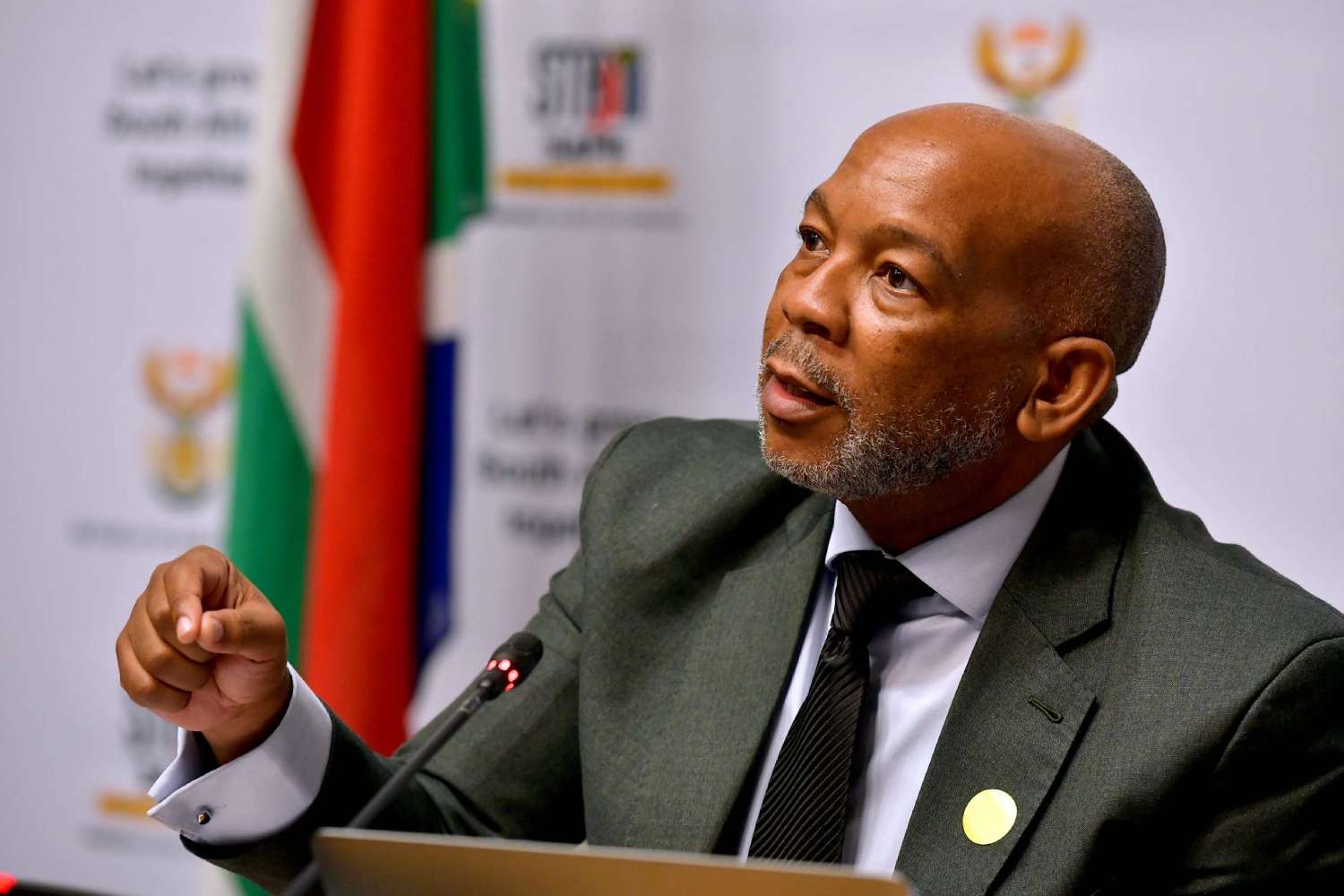
Minister of Electricity and Energy, Dr. Kgosientsho Ramokgopa announced Mulilo and Scatec as the preferred bidders to develop 616 MW/2 464 MWh of new battery storage capacity at a cost of R9.5-billion across five substation sites in the Free State province.
This announcement aligns with the Integrated Resource Plan (IRP 2019) and relevant Ministerial Determinations that govern procurement under the Independent Power Producers Procurement Programme (IPPPP).
In 2020, the Department of Mineral Resources and Energy (DRME) established a target to procure 28GW of new generation capacity through the IPPPP. To date, eight bid windows have been released, including the Risk Mitigation Independent Power Producer Procurement Programme (RMIPPPP), Renewable Energy IPP Procurement (REIPPPP) Bid Windows 5, 6, and 7, Battery Energy Storage IPP Procurement (BESIPPPP) Bid Windows 1, 2, and 3, and the Gas to Power Independent Power Procurement Programme (GASIPPPP) Bid Window 1.
A total of 33 bid responses were received by the November 28 bid submission date and Ramokgopa announced that South African IPP Mulilo had emerged as the preferred bidder across four of the sites, with the following projects:
- The 124 MW Bloemhoek BESS project at the Theseus substation, which had an evaluation price of R1 801.24/MWh;
- The 123 MW Erfdeel BESS project at the Everest substation, with an evaluation price of R2 157.29/MWh;
- The 123 MW Vanilla BESS project at the Harvard substation, with an evaluation price of R2 169.80/MWh; and
- The 123 MW Retreat BESS project at the Merapi substation, with an evaluation price of R2 477.86/MWh.
Meanwhile, Scatec, of Norway, which has a large South African presence, prevailed with its 123 MW Haru BESS project at the Leander substation, with a R2 037.10/MWh evaluation price.
All the projects would use lithium-ion battery technology, and the Minister indicated that the projects were expected to reach commercial close in the coming eight months and enter into commercial operation by January 2028.
Ramokgopa said any additional battery procurement would be based on the 2025 edition of the IRP, which was currently being discussed at the National Economic Development and Labour Council (Nedlac).
He indicated that the Nedlac process should be concluded during June and that he was optimistic that Cabinet would approve the update before the end of July, making no reference to ongoing disquiet both over the content of the draft and unhappiness with the lack of consultation.
Besides storing mostly solar-generated electricity for use during the morning and evening peaks, the Minister said the projects would also provide ancillary services to the National Transmission Company South Africa, which had selected the five sites, as had been the case in the previous rounds.
The ancillary requirements include instantaneous reserves, regulating reserves, ten-minute reserves, and supplemental reserves.
He also announced that the IPP project companies would have a minimum 40% shareholding by black-empowerment entities, while there would be a minimum 30% black shareholding by construction contractors, and up to 42% in operations contractors.
However, he expressed a desire for the emergence of fully-fledged black-owned IPPs in future.
The two successful project companies had also committed to preferential procurement of R3-billion from broad-based black economic empowerment companies and to a local content spend of R3.7-billion.
Watch Live in the video below:
Video Courtesy of GCIS.