
By Lehlohonolo Lehana.
South Africa intends launching a pilot programme for the procurement of 1 164 km of 400-kV powerlines, involving seven corridors in three provinces (Northern Cape, North West and Gauteng) in November.
The newly established National Transmission Company of SA (NTCSA) will be the buyer of the key infrastructure as the government ramps up its reform of the network industries.
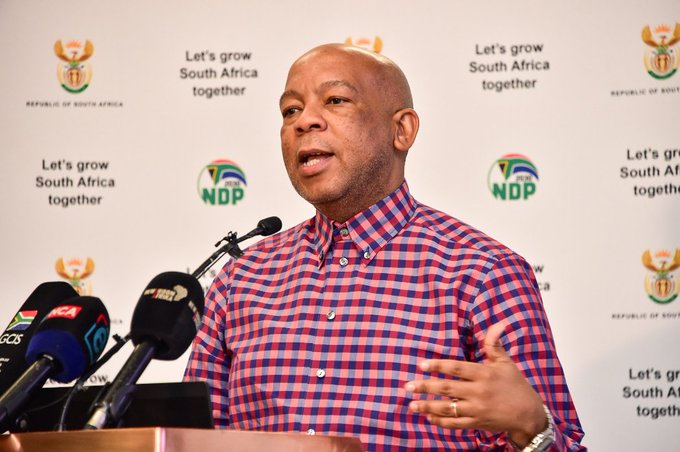
The Minister of Electricity and Energy, Kgosientsho Ramokgopa on March 28, gazetted a Ministerial Determination under Section 34 of the Electricity Regulation Act.
During the media briefing earlier today, Ramokgopa said that only “late-stage” projects had been chosen for the pilot so as not to burden Independent Transmission Project (ITP) investors with the often-difficult task of securing the servitudes and finalising the enviromental-impact assessments needed for transmission infrastructure.
Besides 1 164 km of powerlines, 2 630 MVA of transformation capacity will be procured across the following corridors: Aries-Aggeneis, Groeipunt and Boundary-Ferrum, in the Northern Cape; Mookodi-Hermes and Mahikeng Integration Phase 1, in the North West; and Hera-Westgate, in Gauteng.
Once completed in 2029, the pilot ITPs would unlock grid capacity for a further 3 200 MW of new solar and wind capacity.
Ramokgopa stressed that the grid infrastructure built by the ITPs would be additional to the capital expenditure under way at the NTCSA and were being pursued largely because neither the NTCSA nor government had the finacial resources in hand to address the prevailing grid backlog.
Describing it as a “step change”, the Minister said the ITP programme was one of the mechanisms that the Government of National Unity (GNU) aimed to use to place South Africa on a higher growth trajectory by addressing the electricity constraint to economic activity.
Ramokgopa indicated that after the pilot phase it was likely that future procurement could be managed by a unit that was proposed for establishment at the Development Bank of Southern Africa (DBSA).
Meanwhile Eskom has warned solar users in South Africa that they have only until March 2026 to avoid hefty registration fees for their systems.
Failing to do so could see costs shoot up to over R50,000 to meet the utility’s installation and registration requirements.
The utility has launched a new campaign to help residential owners of SmallScale Embedded Generation (SSEG) systems—including photovoltaic (PV) installation systems—become compliant with national regulations.
National regulator Nersa requires that all SSEG owners register with Eskom or their local municipality, depending on who supplies the area.
Since March 2023, Eskom has not charged any registration fees or the cost of a bidirectional Smart Meter for households with installations of up to 50kVA.
Eskom stressed that customers with installations below 50kVA have been exempted from connection charges and tariff conversion fees, which typically cover costs such as quotations, physical connections, and meter installations.
However, these exemptions will only remain in place for eligible households until March 2026, including those who have not yet installed PV systems, it said.
The Minister of Forestry, Fisheries and the Environment, Dr Dion George said, Eskom’s decision aligns with his decision, announced yesterday, to impose stringent conditions on Eskom’s coal-fired power stations under the Minimum Emission Standards exemptions, signaling a broader push for environmental accountability and energy transformation.
“If Eskom is serious about reducing emissions and advancing the just transition to a low-carbon economy, it must eliminate obstacles for households eager to embrace renewables. Permanently waiving registration and associated costs for residential systems up to 50 kVA would unequivocally demonstrate Eskom’s commitment to empowering South Africans to reduce reliance on coal-fired power and support the Minister’s call for faster renewable energy integration into the grid, Dr George said.
“We stand ready to collaborate with Eskom, and the private sector to deliver practical, long-term solutions that hasten this energy transition. A sustainable future is within reach, but it demands bold, consistent action—starting with the permanent removal of financial disincentives that hinder residential renewable energy adoption,” added Dr George.