
By Lehlohonolo Lehana.
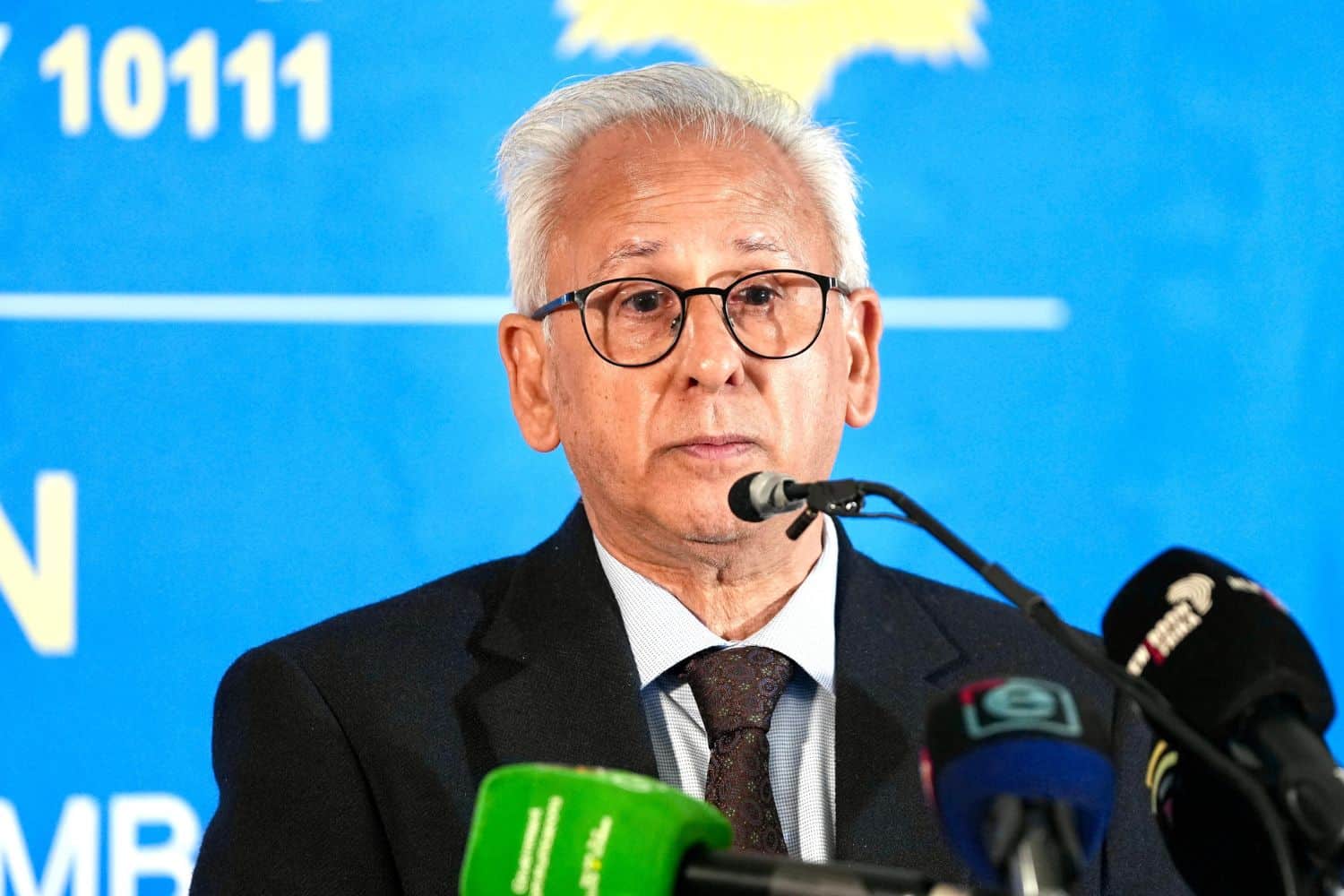
The Minister of Police Professor Firoz Cachalia released crime statistics for the 2026/2027 financial year (covering April to June 2026) on Friday, August 28, 2026 in Tshwane.
The data highlights a consecutive quarterly drop in murders alongside the substantial reductions in highly feared organised crimes.
Cachalia said murder has declined, marking yet another consecutive quarter in which this crime has shown a downward trajectory.
He said there have also been significant reductions in carjackings, residential robberies, business robberies, and cash-in-transit robberies.
Cachalia said these improvements were not insignificant.
“These are crimes that create fear in our communities. Many are committed by organised, heavily armed criminal groups that operate with planning and sophistication.”
“Others are interpersonal crimes, perpetrated by people known to their victims, reflecting deeper challenges within our social fabric and the breakdown of trust and relationships in communities,” he said.
Murder decreased by 5.9%, from 5 770 to 5 427 cases, which is 343 fewer murders compared with the same period last year.
Sexual offences declined from 11 630 to 11 532 (-98); carjacking declined from 4 657 to 3 811 (-846); robbery at residential premises declined from 5 360 to 4 416 (-944), while robbery at non-residential premises declined from 3 099 to 2 733 (-366). Robbery with aggravating circumstances declined from 31 475 to 26 839 (-4.636).
Cachalia said seeing sustained declines across the various categories demonstrates that intelligence-led policing, targeted operations and improved collaboration between law enforcement agencies are beginning to have an impact, while also underscoring the importance of broader social interventions to address the root causes of violence.
“At the same time, we must remain honest with ourselves and with the South African public. While percentage decreases are encouraging, they do not erase the reality that far too many South Africans continue to lose their lives through violent crime. Every murder remains one too many. Every victim deserves justice.”
“We are also concerned about crime categories that have increased during the reporting period, particularly those affecting women, children and other vulnerable members of society. Gender-based violence and femicide continues to demand urgent attention from every sector of society,” the Minister said.
Cachalia said the protection of women and children and other vulnerable persons remains a national policing priority requiring sustained investment and prevention, victim support, investigation and prosecution.
Deputy Minister Dr Polly Boshielo is actively leading the National GBVF Action Plan to spearhead response efforts.
The Ministry pledged sustained financial and operational investments focusing on prevention initiatives, victim support structures, thorough investigations and rigorous prosecution.
The statistics reaffirmed that crime in South Africa is highly localised.
SAPS plans to leverage this data to ensure operational decisions and resource allocations are driven entirely by crime intelligence and hard evidence rather than assumptions.
Responding to the data, Human rights organization Amnesty International South Africa executive director Shenilla Mohamed stressed that minor percentage drops should not be mistaken for real progress.
“Despite a slight decrease in the number of reported sexual offences, including rape, the number of these cases still remains a concern,” she said.
Mohamed has decried the ongoing omission, stating that tracking who is being targeted is fundamental to stopping the violence.
“Reliable data is not a technical detail, it is a prerequisite for accountability,” Mohamed emphasised.
“When critical information about the killings and assaults of women is missing from official statistics, it undermines efforts to prevent violence, allocate resources effectively and hold those responsible to account.”
Without granular data, non-governmental organisations, social workers, and policy planners are left in the dark regarding which communities require urgent interventions, emergency shelter funding, or targeted policing resources, she added.