
By Lehlohonolo Lehana.
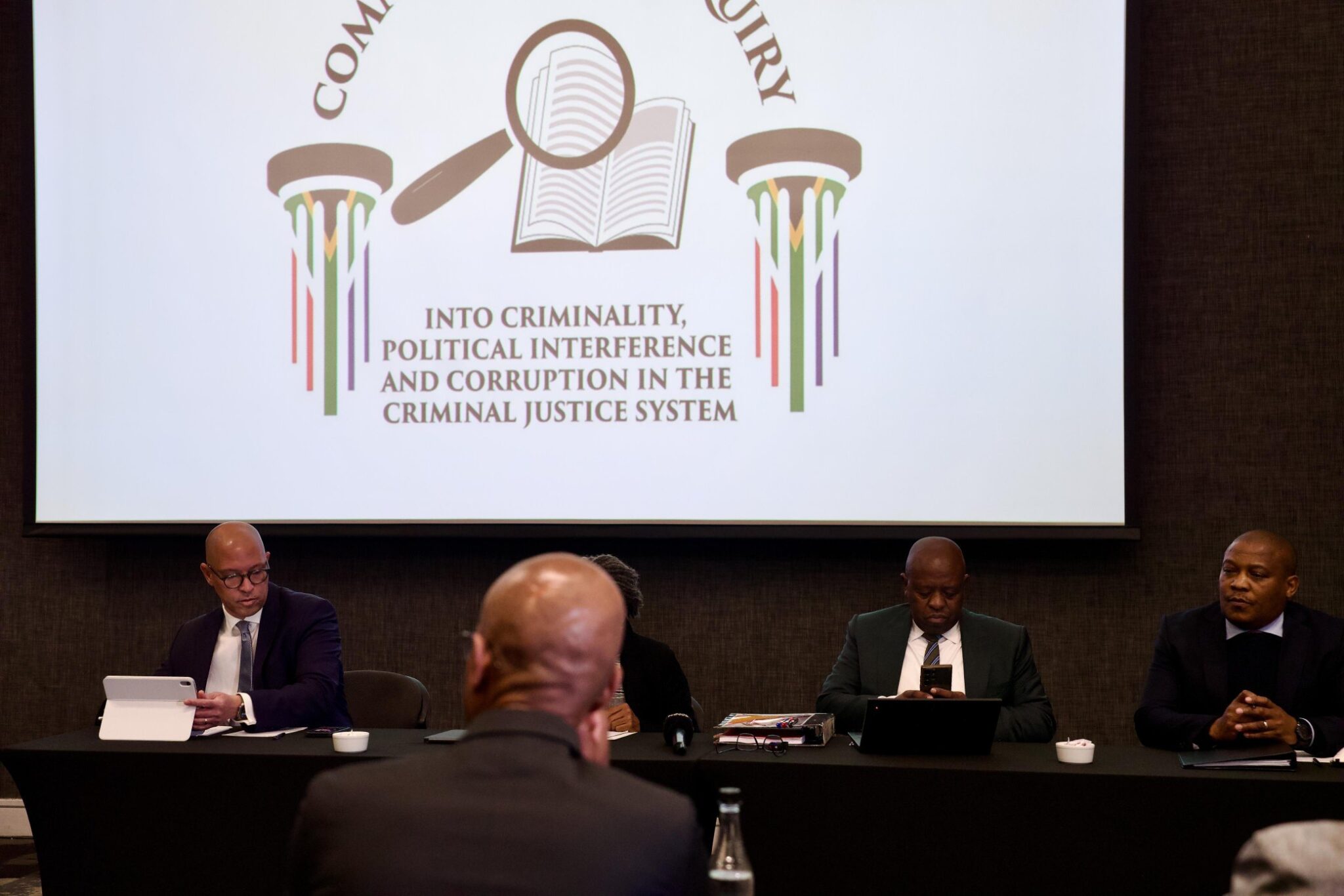
Suspended KwaZulu-Natal Hawks head Lesetja Senona returned to the Madlanga Commission of Inquiry on Friday, 19 June 2026 where he was being represented by advocate Dali Mpofu.
Senona has been cleared of all charges linked to the alleged kidnapping and torture of suspected Mozambican kidnapping kingpin, Esmael Nangy, following an internal South African Police Service (SAPS) disciplinary process.
SAPS confirmed that, after a comprehensive disciplinary process and consideration of all the evidence presented, all five officers were found not guilty on all charges. The proceedings have now been finalised, with the officers formally cleared of any wrongdoing.
He appeared in high spirits following the commission’s lunch break, confirming that he had received notification that the disciplinary matter had been concluded in his favour.
Senona was cross-examined on his role within the Directorate for Priority Crime Investigation (DPCI), following allegations made by previous witnesses on drug seizure in Port Shepstone.
Mpofu, clarified that the disciplinary hearing was unrelated to the controversial June 2021 drug bust involving the seizure of at least 541 kilograms of cocaine bricks, with an estimated street value of R200 million.
Senona is still under intense scrutiny by the commission about the operation, which was mishandled by officers.
He maintains that he relied on information provided by his subordinates regarding the handling of the scene, adding that disciplinary action should be taken against those responsible if wrongdoing is established.
Senona further accused the commission of treating him unfairly, with his lawyers expressing concerns about how the proceedings have been conducted.
Mpofu, said his client is dissatisfied with what he describes as the commission’s inadequate response to requests for information relating to allegations made against him, claiming Senona received dismissive, unreasonable, or at times no responses at all.
“In fact, without getting into much detail, one of those responses was something like; well you don’t have to know what other people have said about you, just say what you know, kind of thing, and it will be hard to believe that this is a policy of this commission because, as we know, people have the right of reply. I mean that’s one of the fundamental rights under the rubric of our constitution,” said Mpofu.
Mpofu also argued that Senona is being denied a fair opportunity to respond to allegations, saying while some witnesses may have implicated him, he still has the right to know the case against him and defend himself.
However, evidence leader Advocate Mahlape Sello rejected the suggestion that Senona had been denied information or a chance to respond.
Sello said she would not address every concern raised by Mpofu immediately, as some matters would be dealt with when Senona presents his own evidence.
But she disputed the claim that documents had repeatedly been withheld from the General.
“There is not a single document that the evidence leaders have been required to produce and have failed to produce,” Sello said.
Sello also addressed concerns around Senona’s right of reply, explaining that Rule 3.5 notices are issued when a witness is implicated by evidence before the Commission.
She said, according to the evidence leaders’ understanding, witnesses who had appeared before the inquiry had not implicated Senona.
“There may be a difference in response to the same question in that General Senona would have given a different response. But that does not in itself imply that he is implicated, “she said.
Sello said what had instead been issued to Senona was a Regulation 10.6 document, which allows a person to provide information that may assist the Commission.