
By Lehlohonolo Lehana.
Suspended Deputy National Police Commissioner Shadrack Sibiya has denied any wrongdoing in the procurement of crime-fighting equipment at City of Johannesburg.
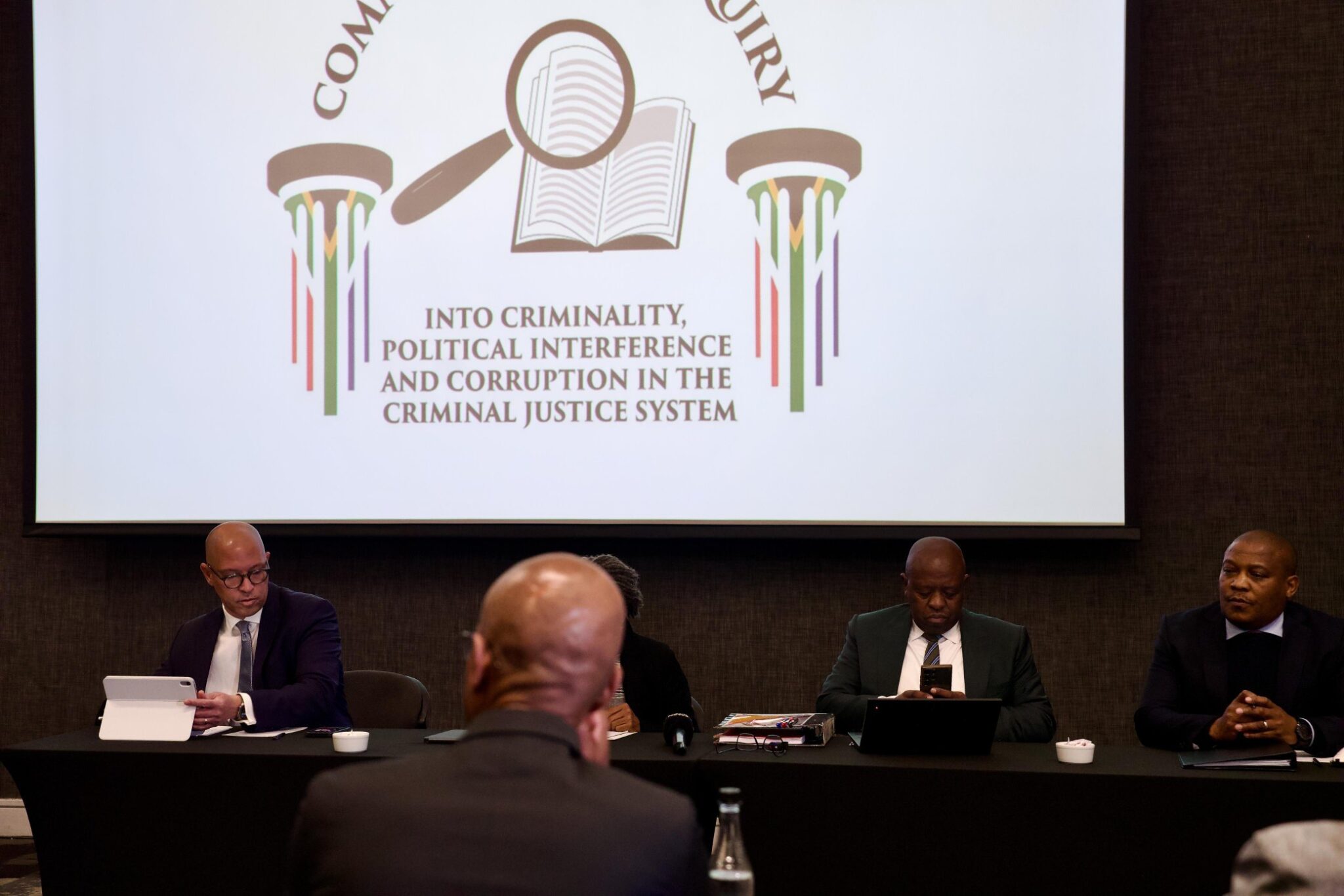
Sibiya made his first appearance before the Madlanga Commission of Inquiry on Tuesday.
He worked at the City of Joburg as head of the group forensic and investigation services, from 2016 to 2022.
He was accused of procuring a R20 million Israeli “spy machine” capable of intercepting communications.
He was later cleared after the State Security Agency found the equipment was for detecting surveillance devices, not conducting espionage.
Throughout hours of testimony, Sibiya maintained his innocence, insisting his record speaks for itself.
The commission is investigating claims of criminality, political interference and corruption within South Africa’s criminal justice system.
Sibiya has also rejected charges of serious misconduct relating to the removal of 121 case dockets from a task team on political killings, arguing that the unit was never intended to exist indefinitely and he had acted within an approved restructuring framework.
The charges stem from allegations that Sibiya ordered the withdrawal of the dockets, along with personnel and resources, from the task team after suspended Police Minister Senzo Mchunu disbanded the unit on 31 December 2024.
Sibiya said he had acted within the law and with the full knowledge of his superior, national police commissioner Fannie Masemola.
“Task teams are ordinarily established for a defined purpose and are intended to operate for a finite lifespan. The PKTT [political killings task team] was no different. It was constituted to address a specific operational objective and was never intended to exist indefinitely,” he said.
Sibiya added that he was aware of a police report recommending the establishment of a dedicated murder and robbery unit to take over cases handled by the task team.
He pushed back against previous testimony by Masemola that Mchunu’s disbandment letter came as a surprise, saying the national commissioner was present at a November 2024 executive meeting which discussed the human resource and organisational structures of the South African Police Service (SAPS).
“In this meeting, Minister Mchunu directed the executive committee of the SAPS to reconsider and review certain operational capabilities, specifically including the PKTT, on the basis that these task teams were said to duplicate capabilities already existing elsewhere in the SAPS,” he said. Masemola had admitted that the task team was meant to evolve into a unit at a later stage.
“He could not have been surprised because he participated in the discussions and there are minutes in that regard … I was not surprised and I don’t agree with the national commissioner,” he said.
Mchunu had emphasised that the SAPS must guard against creative structures that duplicated existing capabilities, Sibiya said.
“What is also of concern is that despite numerous attempts by different national commissioners, little to no effort was made by provinces to resource and to implement the approved recommendations. This has significantly contributed to the poor performances of detective services,” he said.
Sibiya said he was being targeted politically, telling the commission: “There’s so much pressure mounting on me being pushed out of office when I’ve done nothing wrong.”
He described allegations relating to a Johannesburg spyware saga, labour disputes within the Directorate for Priority Crime Investigation (the Hawks) and the removal of the 121 dockets as fabricated attempts to force him out of the police service.